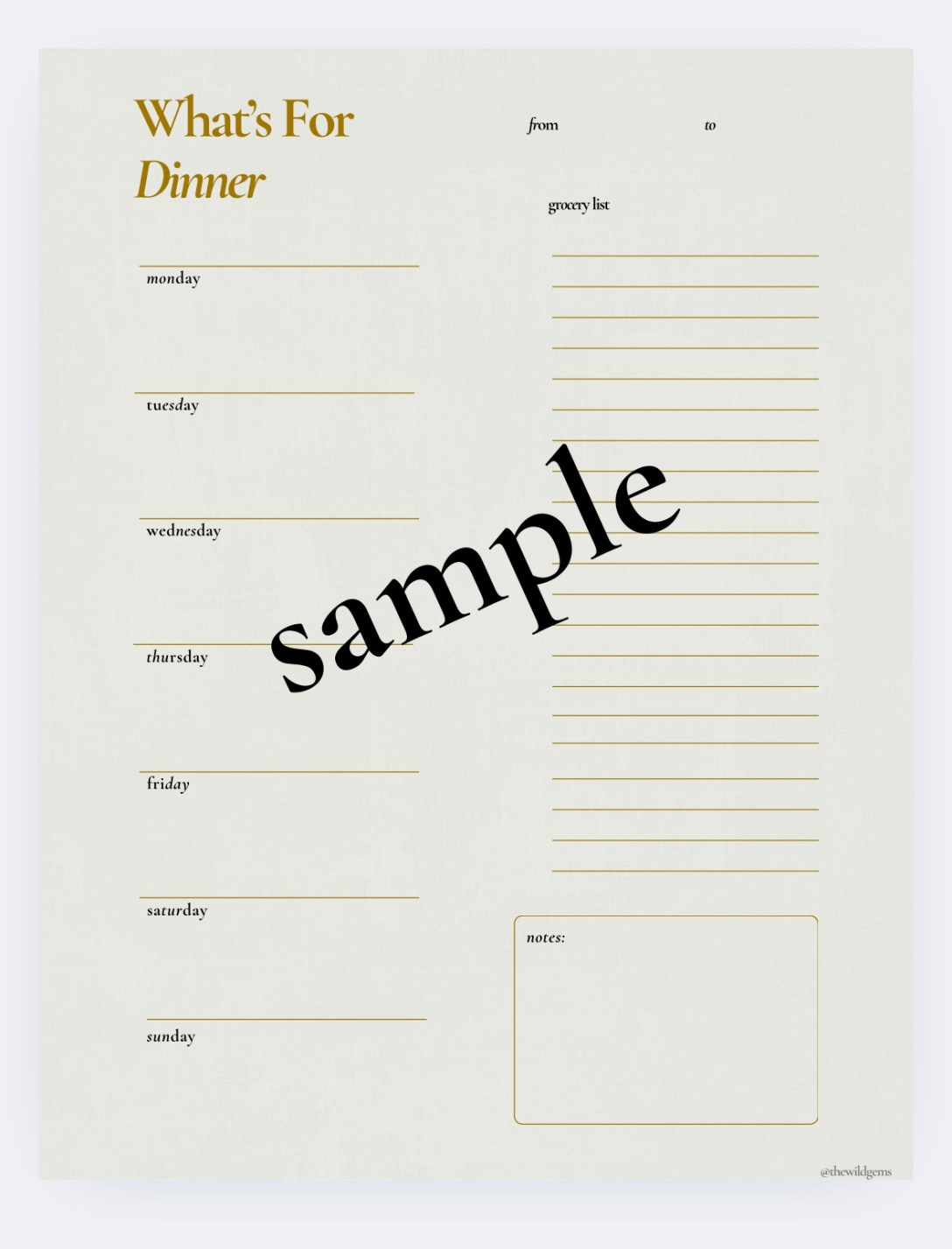
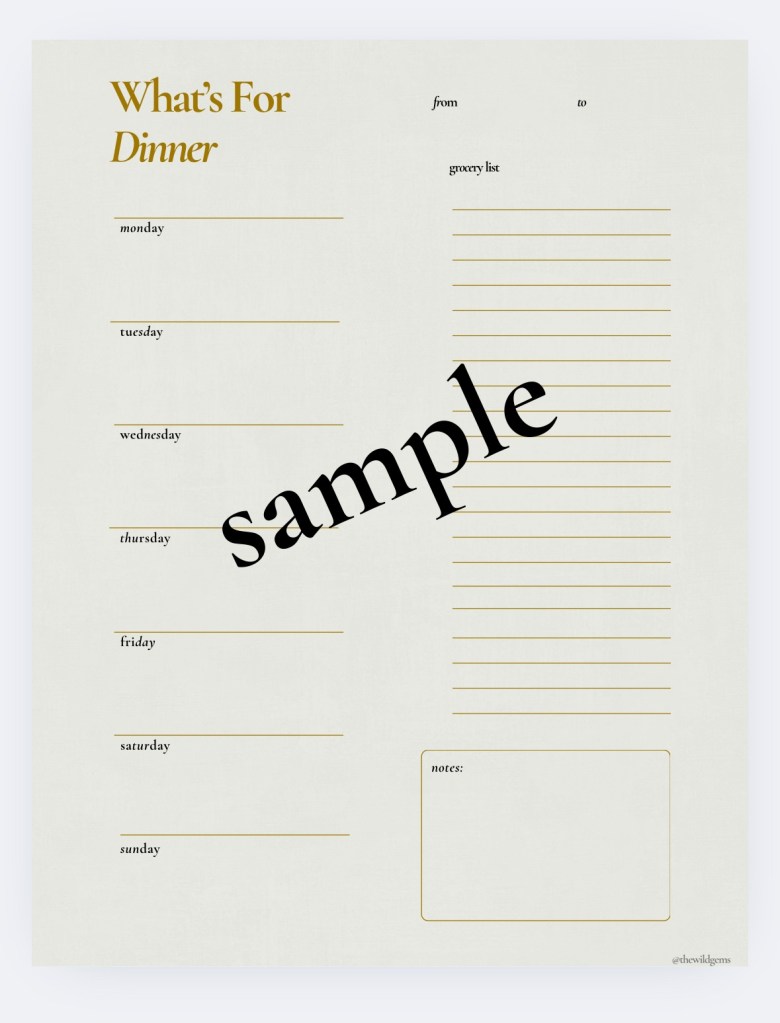
“What’s For Dinner?” Meal Planner — Digital Download Available

Take the Stress Out of Mealtime with the “What’s for Dinner Meal Planner”!

Struggling with the age-old question, “What’s for dinner?” Let this meal planner help you organize your meals for the week with ease! Whether you’re meal prepping for the week or just trying to save time, this planner is designed to make your life easier and your evenings more enjoyable.

Features:

✔ A weekly layout to plan your dinners

✔ Shopping list section to streamline your grocery shopping

✔ Easy-to-use and printable design

Perfect for busy families, meal planners, or anyone looking to save time and reduce stress in the kitchen! Just print it out and start planning your week—say goodbye to last-minute dinner chaos!


CLICK HERE FOR DIGITAL DOWNLOAD

What’s Included:

• 1 High-Quality PDF (8.5×11”) – Ready to Print

• 1 PNG/JPG File – For Digital Use

Make mealtime simple, organized, and stress-free!

Feng Shui Tips For Your Purse To Attract Positive Energy And Abundance

Your purse is more than just a place to carry your essentials—it’s a symbol of your wealth, energy, and personal flow.

In Feng Shui, the way you organize and care for your purse can influence your financial abundance, opportunities, and overall sense of harmony.

By treating your bag with intention, you invite prosperity and positive energy into your life. Ready to align your purse with good fortune? Here are some simple yet powerful Feng Shui tips to keep your bag (and your energy) in balance!


1. Choose the Right Purse

• Opt for a purse in colors associated with prosperity, such as red, gold, green, or purple. Black is also considered a powerful color for attracting wealth.

• Avoid worn-out or damaged purses, as they symbolize financial instability.

2. Organize Your Purse

• Keep your purse clean and clutter-free. Chaos inside your purse can block energy flow and symbolize financial disorganization.

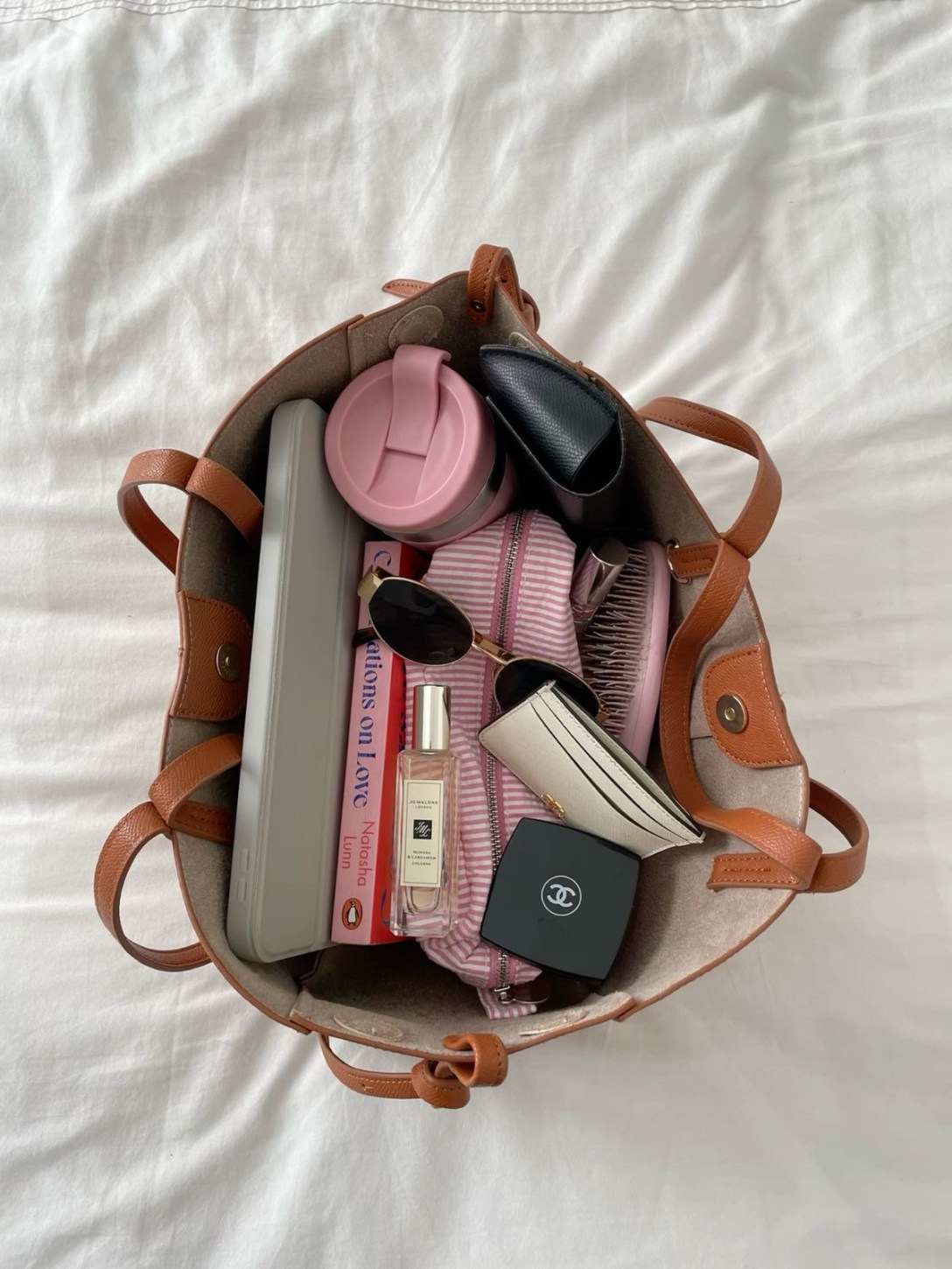
• Only carry what you need to avoid unnecessary weight, as a heavy purse can symbolize being burdened by financial stress.

3. Use a Wallet for Money

• Invest in a high-quality wallet that reflects your respect for money.

• Keep cash flat and organized by denomination, as it symbolizes order and attracting more wealth.

4. Include Wealth-Attracting Items

• Place a small piece of citrine, jade, or pyrite (known as “fool’s gold”) in your purse to symbolize abundance.

• Carry a red envelope (hongbao), which is a traditional Chinese symbol for good fortune. You can put a small amount of money in it for prosperity.

5. Keep Important Items Only

• Avoid carrying old receipts, expired cards, or unnecessary items that may symbolize financial “baggage.”

• Only include things that spark joy or serve a purpose.

6. Treat Your Purse with Care

• Store your purse in a clean, elevated space when not in use. Never leave it on the floor, as this symbolizes disrespect for money.

7. Affirm Abundance

• When placing money into your purse, consciously express gratitude and visualize more abundance flowing into your life.

Refresh Your Spirit: Simple Techniques to Cleanse and Rebalance Your Energy

Our energy is deeply connected to our physical, emotional, and spiritual well-being, and just like our spaces and bodies need regular cleaning, our energy does too.

Over time, stress, negative emotions, or even the fast pace of life can leave us feeling heavy, stagnant, or out of balance. Luckily, there are simple, intentional practices we can use to release this buildup and restore a sense of lightness and clarity.

From grounding rituals to water-based cleansing and sound-based techniques, these methods can refresh your energy, calm your mind, and help you feel reconnected to yourself and the world around you.

Whether you’re looking to reset after a challenging day or simply maintain a healthy flow of energy, these practices are easy to incorporate into your daily life.


Water-Based Cleansing

1. Taking a Shower or Bath

• Visualize the water washing away negativity, stress, or heavy emotions. Add Epsom salt, essential oils, or herbs like lavender for extra cleansing.

2. Swimming in Natural Water

• Swimming in the ocean, a lake, or a river is believed to have purifying effects due to the natural flow of water.

3. Splashing Your Face

• A quick way to refresh your energy, especially if you feel emotionally or mentally drained.


Earth-Based Cleansing

4. Walking Barefoot

• Also called “grounding,” walking barefoot on grass, sand, or soil connects you to the earth’s energy and releases stress.

5. Holding Crystals

• Crystals like black tourmaline, selenite, or amethyst can help absorb negativity and promote energetic balance.

6. Gardening

• Working with soil and plants is a grounding activity that can clear stagnant energy.


Fire-Based Cleansing

7. Candle Meditation

• Light a candle and focus on its flame. Imagine its light burning away any negativity.

8. Burning Sage or Palo Santo

• Smudging your space or yourself with smoke is a traditional practice for clearing stagnant or negative energy.


Air-Based Cleansing

9. Deep Breathing Exercises

• Inhale deeply and exhale slowly to release tension and create a sense of calm.

10. Opening Windows

• Letting fresh air flow through your space helps remove stagnant energy.


Energy and Movement Cleansing

11. Dance or Yoga

• Moving your body helps release trapped emotions and restores energetic flow.

12. Meditation

• Focus on letting go of negativity and reconnecting with your inner calm.

13. Clapping or Snapping

• Walk around a room clapping or snapping your fingers to break up heavy energy.


Intentional Practices

14. Journaling

• Write down your worries or frustrations, then rip or burn the paper as a way to let them go.

15. Visualization

• Imagine a bright light surrounding you, pushing out anything heavy or negative.

16. Sound Cleansing

• Use a singing bowl, chimes, or even uplifting music to clear and refresh your energy.


How Often Should You Cleanse Your Energy?

The frequency of energy cleansing depends on your lifestyle, emotional state, and personal needs, but here are some general guidelines:

Daily Cleansing

• If you’re highly sensitive, empathic, or easily affected by others’ emotions, daily cleansing can help you stay balanced and grounded.

• Quick practices like a mindful shower, deep breathing, or visualization are great for daily resets.

Weekly Cleansing

• A more intentional, deeper cleansing—like smudging, using crystals, or a sound bath—can be done once a week to clear accumulated energy.

After Intense Experiences

• Cleanse after high-stress situations, conflict, or being in crowded spaces where the energy feels overwhelming.

• Also, after emotionally heavy conversations or intense work environments, a cleansing ritual can help release residual tension.

Monthly or Seasonal Cleansing

• Do a big energetic reset at the start of a new month, season, or moon phase to realign yourself with fresh intentions and clear old patterns.

*******Ultimately, listen to your intuition—if you feel drained, off-balance, or like you’re “carrying” energy that isn’t yours, it’s a sign to cleanse. Everyone’s rhythm is unique, so trust what feels right for you!**********

How To Use *COLORS* With Healing, Design, And Spiritual Use

Colors are more than just visual elements—they carry energy that can influence our emotions, environment, and overall well-being.

From vibrant reds that ignite passion to soothing blues that foster calm, each color holds unique properties that can be harnessed in various ways.

Whether you’re designing a space, seeking spiritual alignment, or exploring the healing power of color, understanding these energies allows you to intentionally shape your surroundings and inner world.

In this post, we’ll explore how colors can be used for design, spiritual practices, and healing, offering insights to help you create harmony and balance in your life.


Spiritual Uses of Colors

Colors are often tied to spiritual practices, such as chakra work, meditation, and ritual:

1. Chakras:

• Each chakra is associated with a color that corresponds to its energy:

Root (Red): Stability and grounding.

Sacral (Orange): Creativity and emotions.

Solar Plexus (Yellow): Confidence and willpower.

Heart (Green/Pink): Love and compassion.

Throat (Blue): Communication and truth.

Third Eye (Indigo): Intuition and insight.

Crown (Purple/White): Spiritual connection.

2. Meditation:

• Visualizing a specific color can help you tune into its energy:

• Green for healing.

• Blue for clarity and calm.

• Gold for spiritual illumination.

3. Rituals:

• Incorporate candles, crystals, or fabrics in your chosen color to enhance the energy of an intention (e.g., gold for abundance, lavender for peace).


Healing with Colors (Chromotherapy)

Colors can influence emotions, energy levels, and even physical well-being. Here are a few examples of how they’re used in healing:

1. Red: Stimulates energy and circulation. Often used for combating fatigue, but too much can be overwhelming.

How to use: Wear red when you need a confidence boost or extra vitality.

2. Orange: Uplifts and energizes the mind. It can help with feelings of depression or creativity blocks.

How to use: Decorate creative spaces with orange accents or light a candle with an orange hue.

3. Yellow: Balances the solar plexus chakra and supports mental clarity.

How to use: Sit in sunlight or use yellow lighting when working on intellectual tasks.

4. Green: Soothes and restores balance. It’s associated with heart chakra healing.

How to use: Meditate in nature or use green crystals like jade or malachite.

5. Blue: Calms the mind and supports throat chakra communication.

How to use: Wear light blue for peaceful interactions or use it in bedrooms to encourage restful sleep.

6. Purple: Connects to intuition and spirituality, balancing the crown chakra.

How to use: Burn lavender incense or decorate a meditation corner with violet hues.


Using Colors in Design

Colors can completely shift the energy of a space or piece of art. Here are some tips:

1. Warm Colors for Energy:

• Red, Orange, Yellow: Use in areas where you want activity and interaction, like a kitchen, dining room, or social area.

2. Cool Colors for Calm:

• Blue, Green, Teal: Perfect for bedrooms, bathrooms, or any space for relaxation.

3. Neutral Tones for Balance:

• Gray, Beige, White: Great for minimalist designs or grounding busy areas.

4. Pops of Color:

• Add small accents of bright colors like coral, lime green, or turquoise to liven up a neutral palette.

5. Color in Art and Fashion:

• Use color strategically in your wardrobe or creative projects to evoke specific emotions (e.g., black for sophistication, pink for gentleness).


Practical Suggestions to Work with Colors

1. Color Journaling:

• Reflect on how certain colors make you feel. Write about the emotions and memories they evoke.

2. Crystal Therapy:

• Use crystals that match the energies of the colors you’re drawn to (e.g., amethyst for purple, citrine for yellow).

3. Wardrobe Alignment:

• Wear colors that align with the energy you want to project or cultivate that day.

4. Seasonal Shifts:

• Embrace different color palettes throughout the year. Warm colors in fall and winter, cool tones in spring and summer.

5. Art Therapy:

• Paint or draw with the colors you’re most drawn to. Notice what themes or emotions emerge.

Happy *coloring* !

*COLORS* And Their ENERGIES

Here’s a list of colors and the energies often associated with them, drawing from psychology, spirituality, and cultural symbolism:

Warm Colors

1. Red – Passion, energy, courage, strength, love, and determination. Can also symbolize anger or intensity.

2. Orange – Creativity, enthusiasm, joy, adventure, and vitality. It’s energizing and inspires social connections.

3. Yellow – Optimism, clarity, intellect, confidence, and warmth. It’s linked to happiness but can also represent caution.

4. Gold – Abundance, success, power, enlightenment, and spiritual wisdom.

Cool Colors

5. Green – Growth, balance, renewal, harmony, and health. It’s connected to nature and abundance but also envy.

6. Blue – Calmness, communication, trust, serenity, and loyalty. It represents introspection and emotional depth.

7. Turquoise – Healing, clarity, refreshment, and spiritual attunement. It’s linked to creativity and protection.

8. Purple – Intuition, spirituality, royalty, mystery, and ambition. It connects to higher wisdom and imagination.

9. Indigo – Perception, introspection, truth, and integrity. It’s associated with deep contemplation and the third eye.

Neutral and Earthy Tones

10. White – Purity, peace, clarity, simplicity, and new beginnings. It can also signify spiritual enlightenment.

11. Black – Protection, mystery, power, and sophistication. It represents the unknown and transformation.

12. Gray – Neutrality, balance, wisdom, and maturity. It can evoke calm or detachment.

13. Brown – Stability, reliability, grounding, and connection to the Earth. It signifies warmth and wholesomeness.

14. Beige – Practicality, simplicity, calm, and understated elegance.

Vivid and Ethereal Tones

15. Pink – Love, compassion, nurturing, playfulness, and romance. It’s soothing and tied to gentle emotions.

16. Magenta – Transformation, self-respect, emotional healing, and spirituality. It’s a blend of red’s passion and purple’s depth.

17. Lavender – Tranquility, grace, intuition, and femininity. It has a soft, calming energy.

18. Silver – Reflection, intuition, sensitivity, and lunar energy. It’s linked to the feminine and the mystical.

19. Copper – Creativity, grounding, and connection to Earth’s energy. It symbolizes warmth and transformation.

Bright and High-Energy Tones

20. Teal – Renewal, emotional balance, rejuvenation, and open communication.

21. Lime Green – Freshness, energy, and spontaneity. It carries a youthful, vibrant feel.

22. Coral – Joy, nurturing, and positivity. It bridges the energy of pink and orange.

23. Scarlet – Passion, vitality, and strong determination. It’s a fiery and intense color.

Rare and Mystical Colors

24. Violet – Spiritual connection, inspiration, higher purpose, and transcendence.

25. Crimson – Power, courage, and deep passion. It has a regal, bold energy.

26. Peach – Warmth, comfort, innocence, and friendship. It evokes a gentle, sweet nature.

27. Ivory – Elegance, calm, and spiritual purity. It’s softer than white but retains a sense of lightness.
The Benefits Of Talking To Yourself In *Third Person*

Talking to yourself in the third person, also known as distanced self-talk, can offer several psychological and emotional benefits. This technique involves referring to yourself by your name or as “you” rather than “I” when thinking or speaking about your emotions, decisions, or challenges. Here’s how it helps:

1. Emotional Regulation

• Talking to yourself in the third person can create psychological distance between you and your emotions, which helps you better manage intense feelings like anger, anxiety, or sadness.

• Example: Saying, “Why is [your name] feeling so stressed right now?” instead of “Why am I so stressed?” can help you analyze the situation more calmly.

2. Improved Decision-Making

• Referring to yourself in the third person promotes objectivity and clearer thinking because it encourages you to view your situation as if you were giving advice to a friend.

• This can reduce impulsive reactions and help you make more rational choices.

3. Enhanced Self-Compassion

• It can make it easier to speak kindly to yourself. For example, saying, “You’re doing your best, [your name],” feels more supportive and less self-critical than “I’m doing my best.”

4. Better Problem-Solving

• Viewing your problems from an outsider’s perspective allows you to see the bigger picture, which can make solutions more apparent.

• Example: “What does [your name] need to do to move forward?”

5. Reduced Stress and Anxiety

• Studies suggest that this type of self-talk can calm your mind during stressful situations by shifting your focus from feeling overwhelmed to thinking constructively.

• Example: Before a big presentation, saying, “You’ve prepared for this, [your name], and you’ll do great,” can ease nerves.

6. Boosted Confidence

• Encouraging yourself in the third person can feel like receiving support from someone you trust, which can be particularly helpful before tackling challenges or when self-doubt creeps in.

7. Strengthened Resilience

• By separating yourself from negative self-talk patterns, you can reframe setbacks and focus on growth and learning rather than dwelling on failures.

Practical Tips to Try It:

• Use third-person self-talk during moments of stress, decision-making, or self-reflection.

• Try writing journal entries in the third person for deeper insights.

• Speak to yourself as if you were a compassionate coach or friend.

This simple shift in language can have a profound impact on your emotional well-being and mental clarity. It’s a powerful tool for building self-awareness and inner strength!