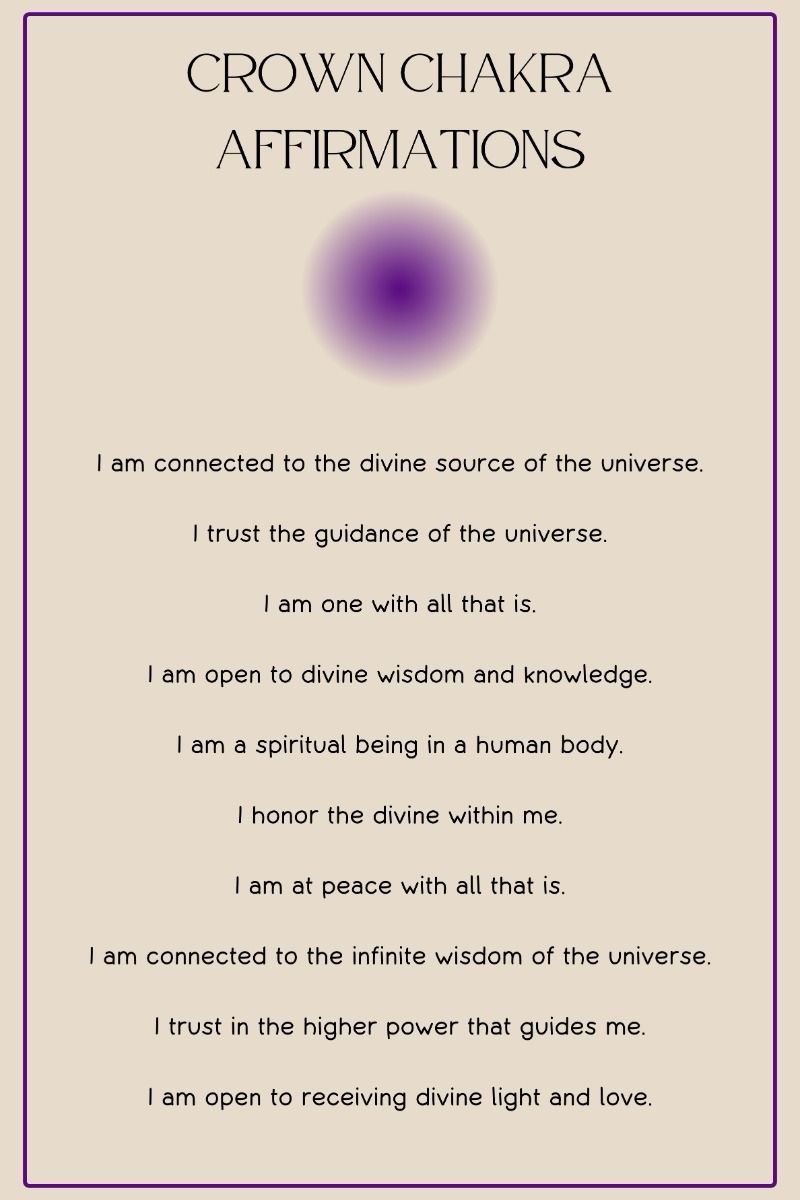
Crown Chakra: Your Connection to the Divine

At the top of the chakra system lies the Crown Chakra, known in Sanskrit as Sahasrara, meaning “thousand-petaled lotus.” Located at the crown of the head, this chakra represents spiritual connection, enlightenment, and the vastness of the universe. It is the bridge between your individual self and something greater—whether you see it as divine energy, the universe, or pure consciousness.

If the Third Eye Chakra is about seeing truth, the Crown Chakra is about becoming one with it. It is where wisdom, peace, and transcendence reside.


A Glimpse into the History

The Crown Chakra has long been associated with higher states of consciousness. In Hindu and Buddhist traditions, it is linked to spiritual awakening and enlightenment, symbolizing the dissolution of ego and the merging with universal energy. In many depictions, saints, sages, and deities are shown with halos—representing an open and radiant Crown Chakra.

The color violet or white is associated with this chakra, signifying purity, clarity, and divine wisdom. Its element is pure consciousness, beyond the physical and material world.


Signs Your Crown Chakra May Be Blocked

When your Crown Chakra is blocked or imbalanced, you may feel disconnected—from yourself, others, or a sense of purpose. Here are some signs:

Feeling Disconnected from Life’s Meaning: Struggling with a sense of purpose or questioning existence

Lack of Inspiration: Feeling uninspired, unmotivated, or stuck in daily routines without deeper fulfillment

Closed-Mindedness: Rejecting new ideas, feeling spiritually disconnected, or resisting growth

Chronic Stress or Overwhelm: An overactive mind with constant anxiety about the unknown

Physical Symptoms: Headaches, dizziness, trouble sleeping, or feeling mentally drained

An overactive Crown Chakra may lead to feeling detached from reality, overly focused on spirituality while neglecting the physical world, or experiencing an inflated sense of superiority. Balance is key!


How to Unblock and Balance Your Crown Chakra

Unlike other chakras, which are balanced through action, the Crown Chakra requires stillness, surrender, and trust. Here’s how to align with it:

1. Meditate Daily: The best way to connect with the Crown Chakra is through meditation—sitting in stillness and allowing yourself to be present.

2. Spend Time in Silence: Disconnect from distractions and allow space for inner wisdom to emerge.

3. Connect with Nature: Watch the sunrise, stargaze, or simply sit in nature to feel connected to something greater.

4. Practice Gratitude: Appreciate the beauty of life, both big and small. Gratitude raises your energy and deepens your connection.

5. Seek Spiritual Knowledge: Read spiritual texts, listen to wisdom teachings, or explore different perspectives on life’s mysteries.

6. Use Essential Oils: Frankincense, lavender, and sandalwood can help promote relaxation and higher awareness.

7. Affirmations: Use statements like “I am connected to divine wisdom” and “I trust the universe’s plan for me.”

8. Let Go of Control: The Crown Chakra reminds us that not everything is meant to be understood—sometimes, we must surrender and trust in the unknown.


Final Thought

The Crown Chakra is your gateway to peace, wisdom, and divine connection. When balanced, you feel a deep sense of purpose, inner peace, and trust in the flow of life.

You are not just a drop in the ocean—you are the ocean in a drop.

You were meant to lead with faith—trust in the journey, and allow yourself to expand beyond limits.
Third Eye Chakra: The Seat of Intuition and Inner Wisdom

As we move higher, we reach the Third Eye Chakra, known in Sanskrit as Ajna, meaning “to perceive” or “to command.” Located between the eyebrows, this chakra is the center of intuition, insight, and inner wisdom. It allows us to see beyond the physical world and connect with our deeper knowing.

If the Throat Chakra is about speaking truth, the Third Eye Chakra is about seeing truth—within yourself and beyond illusions. It governs clarity of thought, spiritual awareness, and the ability to trust your intuition.


A Glimpse into the History

The Third Eye has been a symbol of higher consciousness across many ancient traditions. In Hinduism, it represents divine sight, associated with wisdom and enlightenment. In Buddhism, it signifies awakening and the ability to perceive reality beyond illusion. Many cultures have depicted the Third Eye as a portal to inner knowledge and deeper truths.

The Ajna Chakra is represented by a two-petaled lotus and is associated with the color indigo, symbolizing deep perception, wisdom, and imagination. Its element is light, illuminating both the inner and outer worlds.


Signs Your Third Eye Chakra May Be Blocked

When your Third Eye Chakra is blocked or imbalanced, you may struggle with doubt, confusion, or an inability to trust your inner voice. Here are some signs:

Feeling Lost or Directionless: Difficulty making decisions or seeing your life path clearly

Overthinking & Mental Fog: Constant worry, overanalyzing, or lack of focus

Disconnected from Intuition: Doubting yourself or ignoring your gut feelings

Limited Imagination or Creativity: Struggling to visualize possibilities or lacking inspiration

Physical Symptoms: Frequent headaches, eye strain, dizziness, or sinus issues

An overactive Third Eye Chakra may cause paranoia, delusions, or feeling disconnected from reality. Balance is key!


How to Unblock and Balance Your Third Eye Chakra

To strengthen and harmonize your Third Eye Chakra, you must trust your inner wisdom and embrace stillness. Here’s how:

1. Practice Meditation & Visualization: Close your eyes and focus on your inner world. Visualizing a deep indigo light at your Third Eye can enhance clarity and intuition.

2. Listen to Your Inner Voice: Start trusting your gut instincts instead of seeking constant external validation.

3. Engage in Mindfulness: Spend time in nature, journal your thoughts, and observe the world without judgment.

4. Limit External Noise: Reduce distractions like excessive social media or overconsumption of negative news. Clarity comes in stillness.

5. Consume Brain-Nourishing Foods: Eat purple and blue foods like blueberries, grapes, and dark chocolate to support cognitive function.

6. Do Yoga Poses for the Third Eye: Try Child’s Pose (Balasana) and Downward Dog (Adho Mukha Svanasana) to encourage mental clarity.

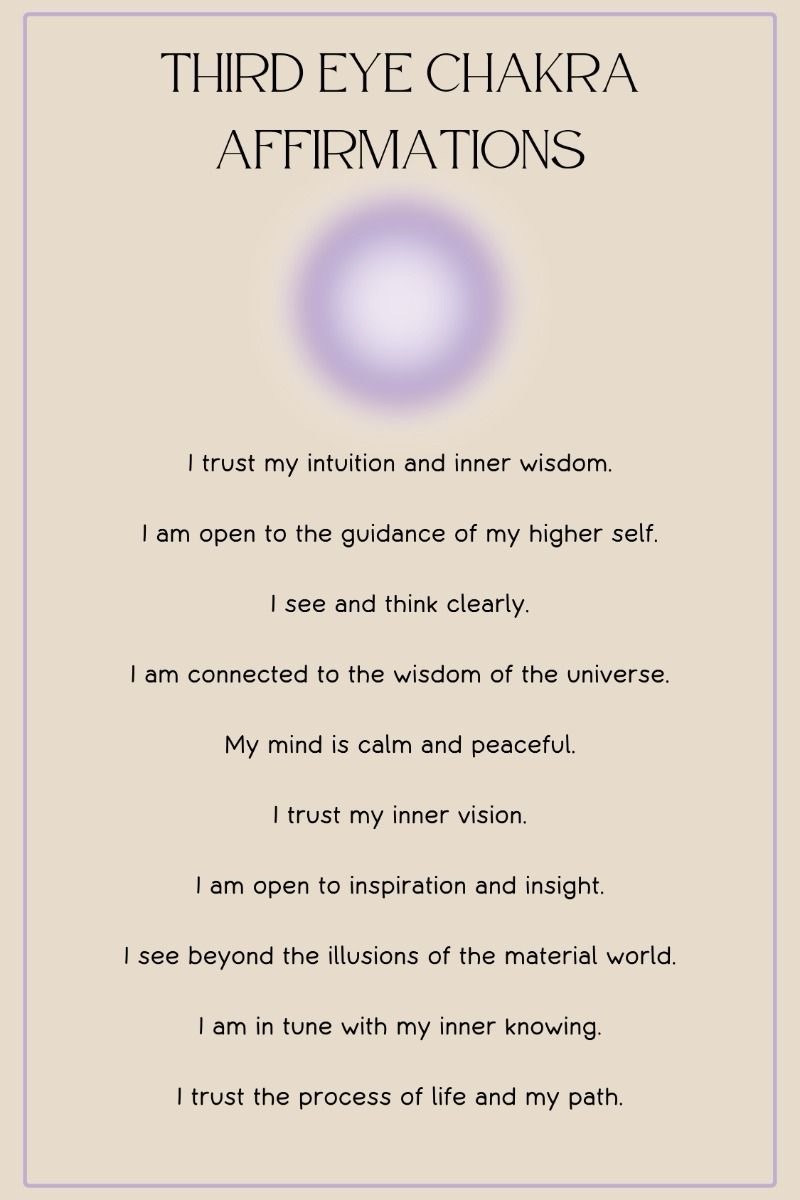
7. Affirmations: Use statements like “I trust my intuition” and “I see clearly beyond illusion.”

8. Explore Dream Work: Pay attention to your dreams—they are often messages from your subconscious.


Final Thought

Your Third Eye Chakra is the key to inner wisdom—it helps you see beyond fear, doubt, and illusion to uncover the truth within.

When balanced, you trust yourself, make decisions with clarity, and feel connected to a deeper understanding of life. The answers you seek are already within you—you just have to learn to listen.

You were meant to see with clarity—I trust in your vision, and let your intuition guide the way.

Throat Chakra: The Power of Truth, Expression, and Authenticity

Moving upward, we arrive at the Throat Chakra, known in Sanskrit as Vishuddha, meaning “pure” or “purification.” This chakra is located at the center of the throat and is the gateway between your heart and mind, governing communication, self-expression, and truth.

If the Heart Chakra is about feeling and receiving love, the Throat Chakra is about speaking that love into existence. It is the center of your voice—your ability to express your thoughts, emotions, and beliefs with clarity and confidence.


A Glimpse into the History

The Throat Chakra has long been recognized in ancient spiritual traditions as the seat of truth. Symbolized by a sixteen-petaled lotus, it is associated with the color blue, representing wisdom, clarity, and depth. Its element is ether (space), which signifies limitless expression and expansion.

In yogic philosophy, Vishuddha is considered the purification center—where we cleanse ourselves of dishonesty, repression, and fear, allowing only truth to remain. Many traditions believe that speaking one’s truth aligns the soul with its highest purpose.


Signs Your Throat Chakra May Be Blocked

When your Throat Chakra is blocked or imbalanced, you may struggle to communicate honestly, fear judgment, or feel unheard. Here are some signs:

Fear of Speaking Up: Holding back opinions, avoiding difficult conversations

Inability to Express Emotions: Struggling to say how you truly feel

Feeling Unheard or Misunderstood: Thinking no one listens to you or values your words

Lying or Hiding Truths: Saying what others want to hear rather than what you truly mean

Creativity Blocks: Feeling uninspired or unable to share your creative work

Physical Signs: Sore throat, thyroid issues, jaw tension, frequent coughing

On the other hand, an overactive Throat Chakra may result in talking excessively, interrupting, gossiping, or dominating conversations. Balance is key!


How to Unblock and Balance Your Throat Chakra

To restore harmony to your Throat Chakra, you must embrace your authentic voice and allow truth to flow freely. Here’s how:

1. Speak Your Truth: Practice honest, open communication—whether in conversations, journaling, or self-reflection.

2. Sing or Chant: Vibrations help clear energetic blockages—try humming, chanting “HAM” (the Throat Chakra mantra), or simply singing along to your favorite songs.

3. Throat-Opening Yoga Poses: Try Fish Pose (Matsyasana), Shoulder Stand (Sarvangasana), and Lion’s Breath (Simhasana) to release tension in the throat.

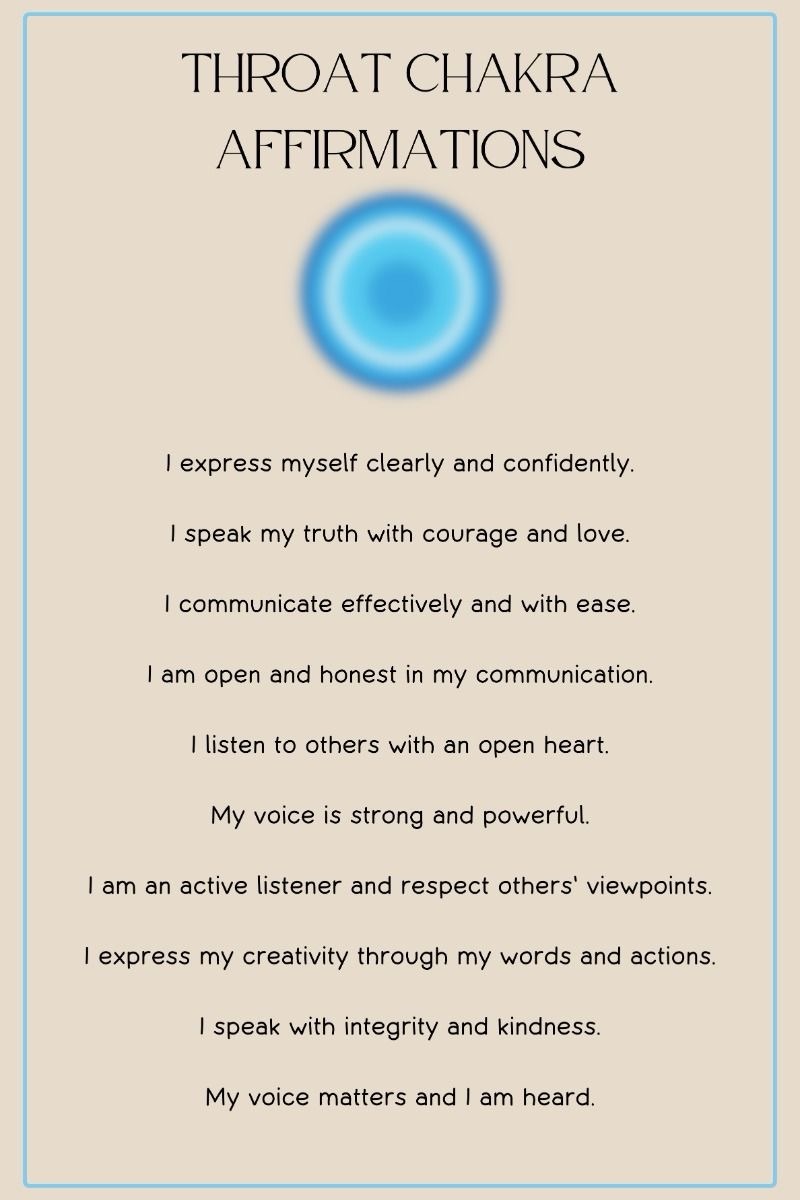
4. Affirmations: Use statements like “My voice is powerful,” or “I speak with confidence and clarity.”

5. Hydrate & Nourish: Drink plenty of water and consume soothing blue foods like blueberries, herbal teas, and raw honey.

6. Write or Create Freely: Express yourself through writing, poetry, painting, or music—let your truth take form.

7. Listen to Yourself & Others: Practice mindful speaking and active listening. A balanced Throat Chakra allows both self-expression and the ability to truly hear others.


The Gift of the Throat Chakra

Your Throat Chakra is more than just a center for speech—it is a bridge between your thoughts and the world, between your heart and your expression. When balanced, it allows you to speak with clarity, share your creativity, and stand confidently in your truth.

Too often, we silence ourselves—out of fear, doubt, or the belief that our voice doesn’t matter. But the gift of the Throat Chakra is the ability to express who you truly are, without apology.

When your Throat Chakra is open, you:

Speak with confidence and honesty—not just what others want to hear, but what you truly feel.

Express your creativity freely—through writing, singing, storytelling, or any form of self-expression.

Set boundaries with clarity—saying “no” when needed and standing up for yourself without guilt.

Listen deeply—not just hearing others, but understanding them with an open heart.

Align with your purpose—your words reflect your truth, guiding you toward what is meant for you.

The Throat Chakra reminds you that your voice holds power—it can heal, inspire, and shape the world around you.

So speak your truth. Sing your song. Write your story. Let your voice be heard.

Heart Chakra: The Power of Love, Connection, and Healing

As we move upward through the chakras, we arrive at the Heart Chakra, known in Sanskrit as Anahata, meaning “unstruck” or “unhurt.”

Located at the center of the chest, this chakra is the bridge between the lower (physical) and upper (spiritual) chakras. It governs love, compassion, forgiveness, and emotional balance—not just in relationships with others, but also in how you love and accept yourself.

If the Solar Plexus Chakra is your fire, the Heart Chakra is your breath—it expands and contracts, giving and receiving, connecting you to the world with warmth, empathy, and truth.


A Glimpse into the History

The Heart Chakra has been recognized in ancient yogic and spiritual traditions for centuries. It is symbolized by a twelve-petaled lotus and is associated with the color green, representing renewal, harmony, and growth. Its element is air, symbolizing openness, freedom, and movement.

Many traditions, from Buddhism to Sufism, emphasize the heart as the seat of the soul, the place where divine love flows.

In yogic philosophy, it is where duality dissolves into unity, allowing us to see ourselves and others through the eyes of compassion rather than fear.


Signs Your Heart Chakra May Be Blocked

A blocked Heart Chakra can manifest as difficulty in giving or receiving love, emotional detachment, or deep-seated resentment. Here are some signs of imbalance:

Difficulty Trusting Others: Fear of vulnerability, emotional walls, or pushing people away

Holding Onto Past Hurts: Struggling with forgiveness or carrying emotional wounds

Loneliness or Isolation: Feeling disconnected from loved ones or avoiding relationships

Self-Criticism: Being hard on yourself, struggling with self-love or self-worth

Physical Signs: Heart-related issues, lung problems, poor circulation, or tension in the chest

When this chakra is closed, it can make love feel like a risk rather than a gift. On the other hand, an overactive Heart Chakra may lead to overgiving, people-pleasing, or losing yourself in relationships.


How to Unblock and Balance Your Heart Chakra

To bring harmony to the Heart Chakra, you must release past pain, open yourself to love, and allow yourself to both give and receive without fear. Here’s how:

1. Practice Self-Love: Speak kindly to yourself, engage in self-care, and honor your needs.

2. Heart-Opening Yoga: Try poses like Camel Pose (Ustrasana), Cobra Pose (Bhujangasana), and Bridge Pose (Setu Bandhasana) to expand your chest.

3. Affirmations: Use statements like “I am open to love,” or “I give and receive love freely.”

4. Forgiveness Work: Release grudges, whether toward yourself or others, to lighten your heart.

5. Breathe Deeply: Practice pranayama (breathwork) like Anulom Vilom (Alternate Nostril Breathing) to bring balance to your emotions.

6. Connect with Nature: Spend time outside, especially in green spaces, to absorb the healing energy of the Heart Chakra.

7. Wear or Surround Yourself with Green: Green represents renewal and heart-centered energy—bring it into your life through clothing, decor, or even food like spinach, avocados, and green tea.


Final Thought

Your Heart Chakra is where true connection begins—with yourself, with others, and with the world. Love is not just an emotion; it is a force, a healer, and the very essence of life itself.

When you live with an open heart, you allow love to flow freely—without fear, without resistance. You learn that love is not something you must chase; it is something you are.

You were meant to love boldly—keep your heart open, and let love move through you.

The Sacral Chakra: Embracing Flow, Creativity, and Emotional Freedom

After grounding ourselves with the stability of the Root Chakra, we move upward to the Sacral Chakra, known in Sanskrit as Svadhisthana, which means “one’s own dwelling place.”

Located just below the navel, this chakra is the center of our creativity, emotions, sensuality, and pleasure. It’s where we begin to experience life beyond survival—where we tap into the flow of feelings, connections, and self-expression.

If the Root Chakra is the foundation, the Sacral Chakra is the river that flows from it, carrying the vibrant currents of our passions, desires, and emotional experiences.


A Glimpse into the History

The concept of the Sacral Chakra comes from ancient Indian spiritual traditions, first mentioned in the Vedas and later detailed in texts like the Upanishads. It’s symbolized by a six-petaled lotus flower and is associated with the color orange, representing warmth, vitality, and creativity. The element connected to this chakra is water, reflecting its qualities of flow, adaptability, and emotional depth.


Signs Your Sacral Chakra May Be Blocked

When the Sacral Chakra is out of balance, you might feel emotionally stuck or disconnected from your creativity and sense of joy. Here are some signs to look for:

Emotional Imbalance: Mood swings, feeling overwhelmed, or emotionally numb

Creative Blocks: Struggling to express yourself or feeling uninspired

Relationship Issues: Difficulty forming or maintaining healthy, intimate connections

Guilt and Shame: Holding onto past regrets or feeling unworthy of pleasure

Physical Symptoms: Lower back pain, hip issues, reproductive problems, or bladder issues

A blocked Sacral Chakra can make life feel rigid, as if the natural flow of emotions and creativity has been dammed up.


How to Unblock and Balance Your Sacral Chakra

Restoring balance to the Sacral Chakra is all about reconnecting with your emotions, creativity, and body. Here are some ways to nurture this energy center:

1. Embrace Creativity: Paint, write, dance, cook—anything that allows you to express yourself without judgment.

2. Move Your Body: Gentle hip-opening stretches, yoga poses like Goddess Pose (Utkata Konasana) or Pigeon Pose (Eka Pada Rajakapotasana) help release tension.

3. Connect with Water: Spend time near water, take relaxing baths, or even visualize a flowing river to help restore emotional flow.

4. Affirmations: Repeat affirmations like, “I allow myself to feel deeply,” or “I am creative, passionate, and full of joy.”

5. Honor Your Emotions: Give yourself permission to feel without labeling emotions as “good” or “bad.” They’re all part of the human experience.

6. Sensory Experiences: Engage your senses—light candles, listen to music, savor delicious food, and surround yourself with colors that inspire warmth and joy.


The Gift of the Sacral Chakra

When your Sacral Chakra is balanced, you feel alive, inspired, and emotionally connected—to yourself, to others, and to the world around you. You flow with life’s ups and downs, embracing both the joys and the lessons with openness.

Remember, your emotions and creativity are not something to suppress or fear—they’re the very essence of what makes you uniquely you. Let yourself feel, create, and flow.

Your spirit wasn’t meant to stay still; it was meant to flow with purpose.

Root Chakra: Finding Your Ground in a Shifting World

At the very base of your spine, there’s an invisible yet powerful energy center known as the Root Chakra—or in Sanskrit, Muladhara, which translates to “root support.” Just like the roots of a tree anchor it firmly into the earth, your Root Chakra is the foundation that keeps you feeling safe, stable, and grounded in the world.

Understanding the Root Chakra isn’t just about energy; it’s about connecting to the most basic parts of being human—our need for security, belonging, and survival.


A Glimpse Into Its History

The concept of chakras comes from ancient Indian traditions, first mentioned in the Vedas over 2,000 years ago. In these teachings, chakras are seen as spinning wheels of energy that influence our physical, emotional, and spiritual well-being.

The Root Chakra is considered the first chakra, located at the base of the spine near the tailbone. Its energy is associated with the earth element, symbolizing grounding and connection to the physical world. Its color is red, representing life force, strength, and vitality.


What Does the Root Chakra Influence?

When your Root Chakra is balanced, you feel:

Grounded: Like you have your feet firmly planted, even when life gets chaotic.

Secure: Emotionally and physically safe in your environment.

Confident: Trusting yourself to meet your basic needs and navigate challenges.

Present: Fully engaged in the moment without overwhelming fear or anxiety.


Signs Your Root Chakra Might Be Blocked

A blocked or imbalanced Root Chakra can manifest in both emotional and physical ways:

Emotional Signs:

Chronic anxiety or fear: Feeling like you’re always on edge or in survival mode.

Insecurity: Struggling with self-doubt or fear of failure.

Disconnection: Feeling “floaty,” restless, or like you don’t belong anywhere.

Obsessive need for control: Holding on tightly to routines or resisting change.

Physical Signs:

• Lower back pain

• Leg, foot, or hip issues

• Digestive problems

• Fatigue or feeling drained even after rest

Think of it like a house: if the foundation is cracked, the whole structure feels unstable. The Root Chakra is your energetic foundation.


What Causes a Blocked Root Chakra?

• Unstable environments growing up (financial struggles, family conflict)

• Major life changes (moving, job loss, relationship breakups)

• Trauma or fear-based experiences

• Neglecting basic self-care—like poor sleep, bad nutrition, or lack of routine


How to Unblock and Balance the Root Chakra

1. Ground Yourself in Nature

• Walk barefoot on grass, sand, or soil (“earthing” helps connect you to the earth’s energy).

• Spend time outside, even if it’s just sitting under a tree or feeling the sun on your skin.

2. Move Your Body Intentionally

• Yoga poses like Mountain Pose, Warrior I & II, and Tree Pose.

• Simple stretches focusing on the legs, hips, and lower back.

• Dancing, walking, or any movement that makes you feel present in your body.

3. Practice Mindful Breathing

• Root Chakra affirmation: As you breathe deeply, repeat silently or out loud:

“I am safe. I am grounded. I belong here.”

• Imagine a warm, red light glowing at the base of your spine, growing stronger with each breath.

4. Create a Sense of Stability

• Establish daily routines, even simple ones like morning stretches or evening tea.

• Declutter your living space to create an environment that feels safe and organized.

5. Nourish Your Body with “Earthy” Foods

• Root vegetables (carrots, beets, potatoes)

• Protein-rich foods (lentils, beans, nuts)

• Red-colored fruits (strawberries, apples, pomegranates)

6. Journaling Prompts for Reflection:

When do I feel the most secure and grounded?

What areas of my life feel unstable, and how can I create more balance?

What does “home” feel like to me?


A Final Thought:

Balancing your Root Chakra isn’t about achieving perfection—it’s about creating a strong foundation so you can weather life’s ups and downs without losing your sense of self.

When you nurture this energy, you’ll find that you feel more present, more connected, and more at peace, even when the world around you shifts.

Introduction to the Chakras: *The Energy Within*

Have you ever felt out of balance without knowing exactly why?

Maybe you’ve experienced emotional blocks, physical tension, or a sense of disconnection from yourself.

This is where the concept of chakras comes in—a powerful framework for understanding the flow of energy within us.

The word chakra comes from Sanskrit, meaning “wheel” or “disk,” symbolizing spinning centers of energy in the body.

These energy centers are not just abstract concepts; they’re deeply connected to our physical health, emotional well-being, and spiritual growth.

When our chakras are balanced, we feel vibrant, grounded, and aligned. When they’re blocked or overactive, we may experience emotional struggles, physical discomfort, or a sense of being “stuck.”

There are seven main chakras, each associated with specific areas of the body and aspects of our lives:


1. Root Chakra (Muladhara) – “I Am”

Location: Base of the spine

Color: Red

Element: Earth

Significance: Grounding, stability, security, and survival needs

Balanced: You feel secure, safe, and connected to the present moment.

Blocked/-Imbalanced: Fear, insecurity, or feeling ungrounded.


2. Sacral Chakra (Svadhisthana) – “I Feel”

• Location: Lower abdomen, just below the navel

Color: Orange

Element: Water

Significance: Creativity, emotions, pleasure, and relationships

Balanced: You feel creative, emotionally balanced, and open to joy.

Blocked/Imbalanced: Emotional instability, guilt, or difficulty expressing desires.


3. Solar Plexus Chakra (Manipura) – “I Do”

Location: Upper abdomen, near the diaphragm

Color: Yellow

Element: Fire

Significance: Confidence, personal power, motivation, and self-discipline

Balanced: You feel confident, strong, and in control of your life.

Blocked/Imbalanced: Low self-esteem, lack of direction, or anger issues.


4. Heart Chakra (Anahata) – “I Love”

Location: Center of the chest

Color: Green (sometimes pink)

Element: Air

Significance: Love, compassion, relationships, and emotional healing

Balanced: You feel open, loving, and connected to others.

Blocked/Imbalanced: Jealousy, fear of intimacy, or emotional detachment.


5. Throat Chakra (Vishuddha) – “I Speak”

Location: Throat

Color: Blue

Element: Ether (Space)

Significance: Communication, self-expression, and truth

Balanced: You express yourself clearly and authentically.

Blocked/Imbalanced: Fear of speaking up, dishonesty, or throat-related health issues.


6. Third Eye Chakra (Ajna) – “I See”

Location: Between the eyebrows (forehead)

Color: Indigo

Element: Light

Significance: Intuition, perception, wisdom, and inner vision

Balanced: You trust your intuition and have a clear sense of purpose.

Blocked/Imbalanced: Confusion, lack of insight, or difficulty making decisions.


7. Crown Chakra (Sahasrara) – “I Understand”

Location: Top of the head

Color: Violet or White

Element: Cosmic Energy

Significance: Spiritual connection, enlightenment, and higher consciousness

Balanced: You feel deeply connected to the universe and your higher self.

Blocked/Imbalanced: Feeling disconnected, lack of purpose, or spiritual doubt.


Understanding the chakras isn’t about perfection—it’s about awareness. It’s about tuning in, noticing where your energy feels blocked or imbalanced, and gently bringing yourself back into alignment.

In the posts to follow, I’ll break down each chakra, exploring its significance, signs of imbalance, and simple practices to help you feel more connected, both within yourself and with the world around you.

Your energy tells a story. Let’s start listening.