I was listening to a podcast recently, and the host shared an interesting perspective: he believed that life often makes us repeat certain patterns or lessons until we finally “get it.” It was a humbling realization for him, but his guest gently challenged him, saying, “That might be true for you, but it doesn’t mean it’s the truth for everyone.”
This idea really struck me. How often do we assume that what feels true for us must automatically apply to everyone else?
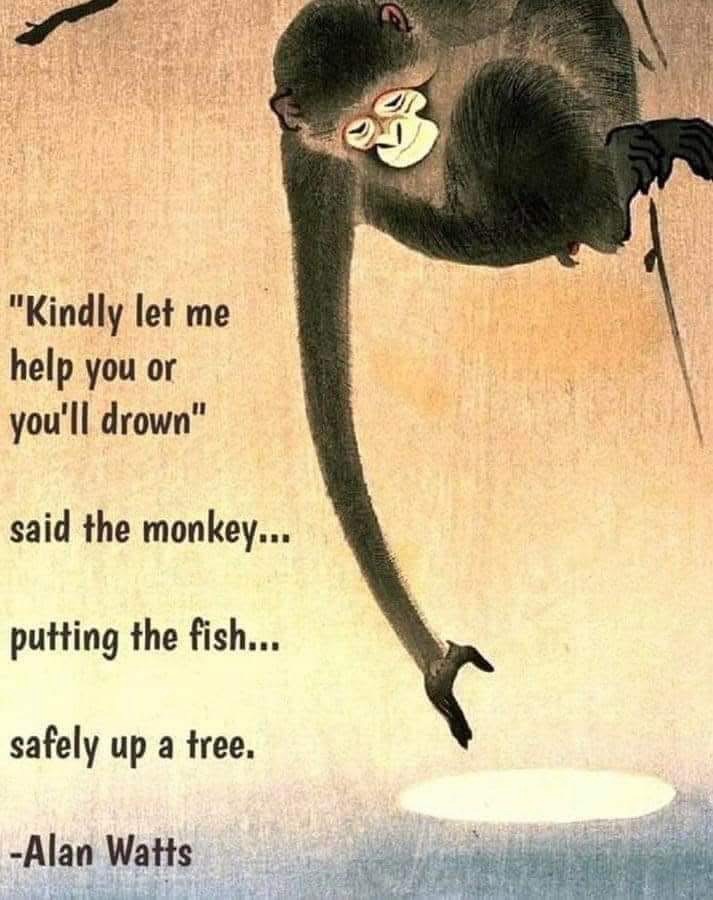
It reminded me of a story I came across that perfectly illustrates this idea:
There was a monkey who lived in a forest tree by a river. One day, the monkey saw a fish swimming in the river and thought the fish was struggling. Feeling compassionate, the monkey resolved to save it. It climbed down the tree, scooped the fish out of the water, and placed it gently on a branch. The fish flapped violently and soon died. The monkey was heartbroken and confused—it had only wanted to help.
This story offers such a powerful lesson. The monkey, out of good intentions, misjudged the situation because it viewed the fish’s needs through its own perspective. It assumed that what was natural and necessary for itself—living on land and breathing air—must also apply to the fish. In trying to help, the monkey unknowingly caused harm, simply because it didn’t take the time to truly understand the fish’s environment and needs.
How often do we, with the best intentions, do the same? We may impose our beliefs, values, or ways of living onto others, assuming they must see the world as we do. But the truth is, each of us is shaped by our unique environment, experiences, and perspective. What feels like “truth” for one person may not resonate at all for another.
This story invites us to step back and ask: Am I truly understanding someone else’s experience, or am I projecting my own onto them? Am I listening, or am I assuming?
The beauty of the world lies in its diversity—not just in nature but in thought, belief, and experience. By cultivating empathy and recognizing that we all have our own “water” or “land” to thrive in, we can approach others with a deeper sense of understanding and respect.
Next time you’re tempted to “help” someone or share what you think they need to hear, pause. Consider whether you’re seeing their life through their eyes—or through your own.
Because the truth is, your truth may not be the same truth for another.

 The Wild Gems