Throat Chakra: The Power of Truth, Expression, and Authenticity

Moving upward, we arrive at the Throat Chakra, known in Sanskrit as Vishuddha, meaning “pure” or “purification.” This chakra is located at the center of the throat and is the gateway between your heart and mind, governing communication, self-expression, and truth.

If the Heart Chakra is about feeling and receiving love, the Throat Chakra is about speaking that love into existence. It is the center of your voice—your ability to express your thoughts, emotions, and beliefs with clarity and confidence.


A Glimpse into the History

The Throat Chakra has long been recognized in ancient spiritual traditions as the seat of truth. Symbolized by a sixteen-petaled lotus, it is associated with the color blue, representing wisdom, clarity, and depth. Its element is ether (space), which signifies limitless expression and expansion.

In yogic philosophy, Vishuddha is considered the purification center—where we cleanse ourselves of dishonesty, repression, and fear, allowing only truth to remain. Many traditions believe that speaking one’s truth aligns the soul with its highest purpose.


Signs Your Throat Chakra May Be Blocked

When your Throat Chakra is blocked or imbalanced, you may struggle to communicate honestly, fear judgment, or feel unheard. Here are some signs:

Fear of Speaking Up: Holding back opinions, avoiding difficult conversations

Inability to Express Emotions: Struggling to say how you truly feel

Feeling Unheard or Misunderstood: Thinking no one listens to you or values your words

Lying or Hiding Truths: Saying what others want to hear rather than what you truly mean

Creativity Blocks: Feeling uninspired or unable to share your creative work

Physical Signs: Sore throat, thyroid issues, jaw tension, frequent coughing

On the other hand, an overactive Throat Chakra may result in talking excessively, interrupting, gossiping, or dominating conversations. Balance is key!


How to Unblock and Balance Your Throat Chakra

To restore harmony to your Throat Chakra, you must embrace your authentic voice and allow truth to flow freely. Here’s how:

1. Speak Your Truth: Practice honest, open communication—whether in conversations, journaling, or self-reflection.

2. Sing or Chant: Vibrations help clear energetic blockages—try humming, chanting “HAM” (the Throat Chakra mantra), or simply singing along to your favorite songs.

3. Throat-Opening Yoga Poses: Try Fish Pose (Matsyasana), Shoulder Stand (Sarvangasana), and Lion’s Breath (Simhasana) to release tension in the throat.

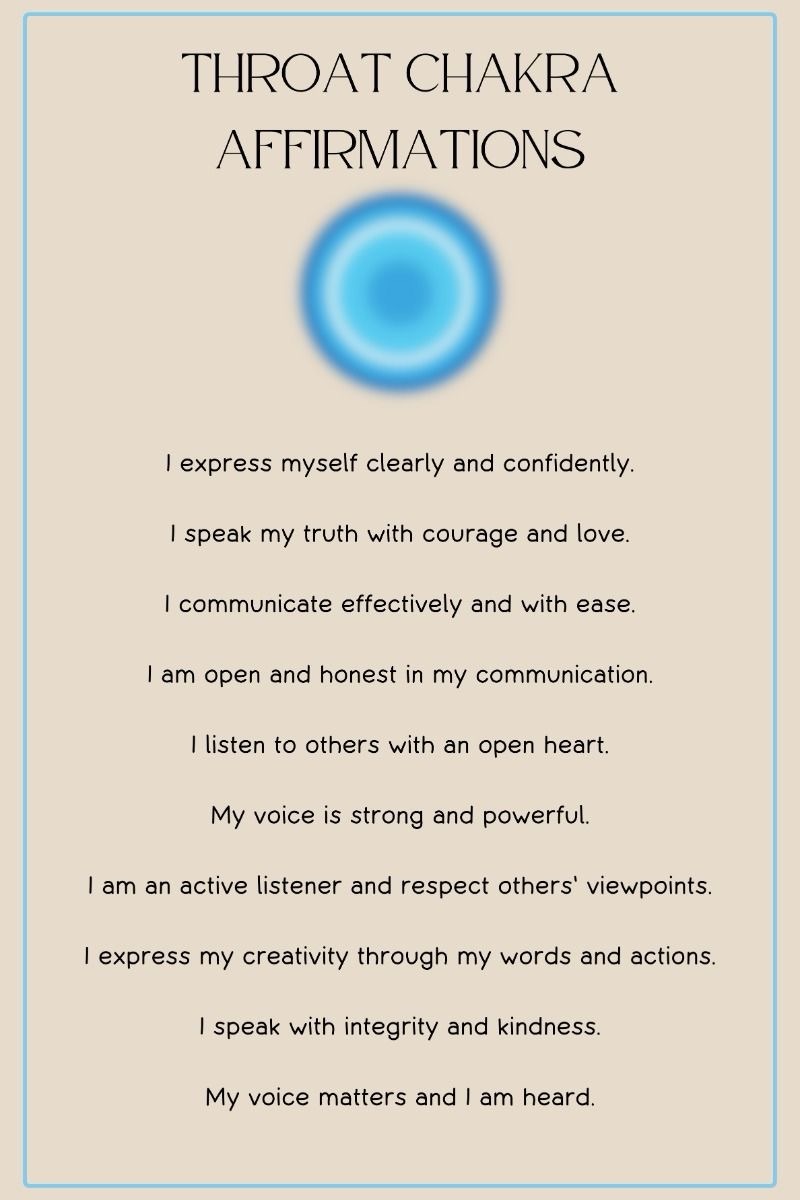
4. Affirmations: Use statements like “My voice is powerful,” or “I speak with confidence and clarity.”

5. Hydrate & Nourish: Drink plenty of water and consume soothing blue foods like blueberries, herbal teas, and raw honey.

6. Write or Create Freely: Express yourself through writing, poetry, painting, or music—let your truth take form.

7. Listen to Yourself & Others: Practice mindful speaking and active listening. A balanced Throat Chakra allows both self-expression and the ability to truly hear others.


The Gift of the Throat Chakra

Your Throat Chakra is more than just a center for speech—it is a bridge between your thoughts and the world, between your heart and your expression. When balanced, it allows you to speak with clarity, share your creativity, and stand confidently in your truth.

Too often, we silence ourselves—out of fear, doubt, or the belief that our voice doesn’t matter. But the gift of the Throat Chakra is the ability to express who you truly are, without apology.

When your Throat Chakra is open, you:

Speak with confidence and honesty—not just what others want to hear, but what you truly feel.

Express your creativity freely—through writing, singing, storytelling, or any form of self-expression.

Set boundaries with clarity—saying “no” when needed and standing up for yourself without guilt.

Listen deeply—not just hearing others, but understanding them with an open heart.

Align with your purpose—your words reflect your truth, guiding you toward what is meant for you.

The Throat Chakra reminds you that your voice holds power—it can heal, inspire, and shape the world around you.

So speak your truth. Sing your song. Write your story. Let your voice be heard.
Refresh Your Spirit: Simple Techniques to Cleanse and Rebalance Your Energy

Our energy is deeply connected to our physical, emotional, and spiritual well-being, and just like our spaces and bodies need regular cleaning, our energy does too.

Over time, stress, negative emotions, or even the fast pace of life can leave us feeling heavy, stagnant, or out of balance. Luckily, there are simple, intentional practices we can use to release this buildup and restore a sense of lightness and clarity.

From grounding rituals to water-based cleansing and sound-based techniques, these methods can refresh your energy, calm your mind, and help you feel reconnected to yourself and the world around you.

Whether you’re looking to reset after a challenging day or simply maintain a healthy flow of energy, these practices are easy to incorporate into your daily life.


Water-Based Cleansing

1. Taking a Shower or Bath

• Visualize the water washing away negativity, stress, or heavy emotions. Add Epsom salt, essential oils, or herbs like lavender for extra cleansing.

2. Swimming in Natural Water

• Swimming in the ocean, a lake, or a river is believed to have purifying effects due to the natural flow of water.

3. Splashing Your Face

• A quick way to refresh your energy, especially if you feel emotionally or mentally drained.


Earth-Based Cleansing

4. Walking Barefoot

• Also called “grounding,” walking barefoot on grass, sand, or soil connects you to the earth’s energy and releases stress.

5. Holding Crystals

• Crystals like black tourmaline, selenite, or amethyst can help absorb negativity and promote energetic balance.

6. Gardening

• Working with soil and plants is a grounding activity that can clear stagnant energy.


Fire-Based Cleansing

7. Candle Meditation

• Light a candle and focus on its flame. Imagine its light burning away any negativity.

8. Burning Sage or Palo Santo

• Smudging your space or yourself with smoke is a traditional practice for clearing stagnant or negative energy.


Air-Based Cleansing

9. Deep Breathing Exercises

• Inhale deeply and exhale slowly to release tension and create a sense of calm.

10. Opening Windows

• Letting fresh air flow through your space helps remove stagnant energy.


Energy and Movement Cleansing

11. Dance or Yoga

• Moving your body helps release trapped emotions and restores energetic flow.

12. Meditation

• Focus on letting go of negativity and reconnecting with your inner calm.

13. Clapping or Snapping

• Walk around a room clapping or snapping your fingers to break up heavy energy.


Intentional Practices

14. Journaling

• Write down your worries or frustrations, then rip or burn the paper as a way to let them go.

15. Visualization

• Imagine a bright light surrounding you, pushing out anything heavy or negative.

16. Sound Cleansing

• Use a singing bowl, chimes, or even uplifting music to clear and refresh your energy.


How Often Should You Cleanse Your Energy?

The frequency of energy cleansing depends on your lifestyle, emotional state, and personal needs, but here are some general guidelines:

Daily Cleansing

• If you’re highly sensitive, empathic, or easily affected by others’ emotions, daily cleansing can help you stay balanced and grounded.

• Quick practices like a mindful shower, deep breathing, or visualization are great for daily resets.

Weekly Cleansing

• A more intentional, deeper cleansing—like smudging, using crystals, or a sound bath—can be done once a week to clear accumulated energy.

After Intense Experiences

• Cleanse after high-stress situations, conflict, or being in crowded spaces where the energy feels overwhelming.

• Also, after emotionally heavy conversations or intense work environments, a cleansing ritual can help release residual tension.

Monthly or Seasonal Cleansing

• Do a big energetic reset at the start of a new month, season, or moon phase to realign yourself with fresh intentions and clear old patterns.

*******Ultimately, listen to your intuition—if you feel drained, off-balance, or like you’re “carrying” energy that isn’t yours, it’s a sign to cleanse. Everyone’s rhythm is unique, so trust what feels right for you!**********

8 Benefits to MINDFUL BREATHING

1. Reduces Stress and Anxiety: Mindful breathing activates the parasympathetic nervous system, calming the body and lowering stress hormones like cortisol.

2. Enhances Focus and Clarity: By focusing on your breath, you quiet the mind and improve concentration, making it easier to stay present and focused.

3. Improves Emotional Regulation: It helps you respond to emotions with awareness, giving you more control over your reactions instead of being overwhelmed.

4. Lowers Blood Pressure: Slow, deep breathing can help lower blood pressure by relaxing the blood vessels and improving circulation.

5. Boosts Self-Awareness: It increases awareness of your thoughts, emotions, and physical sensations, promoting a deeper connection with yourself.

6. Supports Better Sleep: Practicing mindful breathing before bed can calm the mind and body, making it easier to fall asleep and enjoy restful sleep.

7. Increases Energy Levels: Deep breathing improves oxygen intake, which helps energize the body and mind, leaving you feeling refreshed.

8. Promotes Mind-Body Connection: It fosters a stronger connection between your physical sensations and mental state, which can lead to greater overall well-being.

Mindful breathing is simple yet powerful—regular practice can bring profound benefits for both mental and physical health.

10 Questions About STRESS Answered – Gaining More PEACE In Your Life Gives More PEACE To Others

First of all I want to acknowledge this awesome photo who I wish I knew who to give the credit to. I love how it depicts stress. We can appear calm but be fuming on the inside where it feels like our heads are actually on fire and we are covered in dark, heavy smoke.

We may be so use to the smoke that it’s just become apart of our day to day life. With this blog I want to extinguish some of that fire and help you to see through the smoke.

Your heads still going to catch on fire from time to time let’s be honest but maybe we can make a fire extinguisher more accessible for you and for others.

10 Questions About STRESS Answered – Gaining More PEACE In Your Life Gives More PEACE To Others

1. First of all what is stress? How is it defined?

Stress is a feeling of emotional strain and pressure. Stress is feeling out of control. Stress is a state of mental or emotional strain or tension resulting from adverse or very demanding circumstances. It’s feelings of tension.

Stress is your body’s reaction to a change or challenge. Stressors can be positive and negative.

2. How do we react when we are stressed?

There are mental, physical, and behavioral ways of reacting to stress.

Examples of mental could include feeling overwhelmed, loosing your temper, feelings of irritability, thoughts of self harm, racing thoughts, etc.

Examples of physical could include headaches, digestive problems, muscle tension, even your breathing can change.

Examples of behavioral could include jaw clenching, biting your nails, even becoming verbally or physically aggressive.

3. Who gets stressed?

EVERYONE experiences stress. Even babies and children.

4. What are things that cause stress?

An overall answer to which causes stress could be lack of control over a situation.

Common examples could include; life changes, work, family, financial problems, health.

Not so common examples could include; unrealistic expectations and even procrastination.

Most things that cause stress fall under one of those categories above.

5. When do you feel stressed?

  • When you are under lots of pressure.
  • When you face big changes in your life.
  • When you are worried about something.
  • When you don’t have much or any control over the outcome of a situation.
  • When you have responsibilities that you find overwhelming.
  • When you don’t have enough work, activities or change in your life.

6. Does our stress affect the people around you?

The short answer is ABSOLUTELY. There is such a thing called ‘secondhand stress or stress contagion’ if you can believe it!

Stress from others can affect your own stress levels even if there is no direct interaction.

Stress contagion can happen through social and biological mechanisms, such as pheromones, social cues, and emotional expression. For example, people are four times more likely to catch stress from someone they know, such as family, friends, or coworkers.

People that are stressed release a chemical that can be inhaled by those around them, causing these people to become more anxious, as well.

Read more about it here.

7. Can you be stressed and not even know it?

Yes. Feeling unwell or becoming sick could actually be caused by stress.

Many of us are so used to feeling stressed that we may not even know it until we get sick. 

Often times we also mistake anxiety for stress.

8. What happens if we ignore stress?

Ignoring our stress can lead to poor mental health and physical health over time which can take a toll on your body and open all sorts of un-fun doors. Obesity, diabetes, heart problems, and that’s just to name a few.

9. Why does stress happen?

It happens to help us, ultimately. Stress is the bodies response to pressure.

When we are stressed our body releases adrenaline and the hormone cortisol. Cortisol is “natures built in alarm system.” It’s a steroid hormone that our body releases in response to stress to reduce inflammation.

10. How can we reduce the stress in our lives?

There are many ways that we can reduce stress in our lives.

Examples include:

  • Good sleeping/eating habits
  • Yoga
  • Meditation
  • Exercising
  • Asking for help
  • Decluttering
  • Going for walks
  • Saying NO
  • Mindful breathing
  • Making time for hobbies
  • Acknowledgement of our stress
  • Connecting with others

And that’s just a few!

Overall stress isn’t going ANYWHERE but understanding it and acknowledging it is one way we can learn to better flow with it.

And when we can better flow with it we will develop more peace in our lives and give back more peace to those we love around us.

Lots of love always,

Marie