A Hidden World: What Uncontacted Tribes Teach Us About Ourselves

Every once in a while, something crosses your path that stops you in your tracks — something that makes you question everything you thought you knew about the world.

That was me the other day, reading an article about a drone capturing footage of a group of people living deep in a remote region… completely cut off from modern society.

Not unaware.

Not forgotten.

Just choosing to live outside of our world.

There are still entire villages — real people, real families, real lives — who have never stepped foot into our “modern” world. They have no electricity, no phones, no clocks, no social media, no government systems, no advertisements telling them what they need, no pressure to become anything other than who they already are.

They live in a world that feels like a parallel reality.

And it fascinates me.

But more than that… it teaches us something.

1. A Full Life Doesn’t Require Our Definition of “Full”

We’re conditioned to believe that fulfillment comes from:

achievements productivity growth comfort convenience

Yet these tribes live full, meaningful, deep lives without any of the things we chase every day.

No noise.

No chaos.

No comparison.

Just existence — pure, present, human.

It makes you pause and wonder:

Are we actually thriving… or are we just endlessly busy?

2. “Progress” Isn’t Universal

From the outside, we might assume they’re “behind” — that our world is somehow superior or more advanced.

But the truth is striking:

They do not want our world.

They choose theirs, proudly and intentionally.

To them, our world isn’t an upgrade — it’s a disruption.

Their world is home, identity, freedom, rhythm.

And they guard it fiercely.

It makes you rethink what “better” even means.

3. They Are Living Echoes of Human Origins

Watching footage of them feels like looking through a window into how humanity once lived:

connected to the land bonded through community surviving through wisdom passed down for generations living according to the earth’s rhythms, not man-made ones

They are a reminder of who we used to be before modern life overstimulated our minds and fragmented our attention.

4. There Are Still Mysteries in the World

We love to think we’ve discovered everything.

Mapped every corner.

Documented every culture.

But then—

a drone flies overhead and reveals an entire village hidden beneath the trees.

It’s humbling.

It reminds us that Earth is still wild, sacred, and full of secrets.

The world is bigger and more mysterious than our little bubbles allow us to imagine.

5. They Teach Us Holy Boundaries

These villages avoid contact not out of fear, but out of wisdom:

outsiders bring disease outsiders bring exploitation outsiders bring change that erases culture

They protect their world the way we should protect our inner peace — fiercely, intentionally, unapologetically.

Not everything is meant to be shared.

Not everything is meant to be exposed.

Some things are sacred, and sacred things require boundaries.

6. They Make Us Rethink “Civilization”

We assume we’re more civilized because we have technology and systems.

But what if civilization is also:

emotional closeness communal purpose spiritual grounding simplicity harmony with the land

Who’s actually more aligned with life —

them, or us?

7. They Wake Us Up Spiritually

Seeing people who live untouched by noise or comparison shakes something loose in your soul.

It makes you ask:

What would my life look like without distraction?

Without pressure?

Without the constant hum of stress and expectation?

It makes you wonder who you would be if you never had to perform for the world.

Sometimes I think:

Maybe they aren’t the ones missing out.

Maybe we are.

A Final Thought

These tribes remind us that there is no single way to be human.

No universal path.

No timeline we must follow.

They are living proof that a meaningful life can look wildly different from what we’re taught to chase.

And maybe —

just maybe —

they’re here to remind us to slow down, reconnect, simplify, and remember that the world, at its core, is still full of wonder.
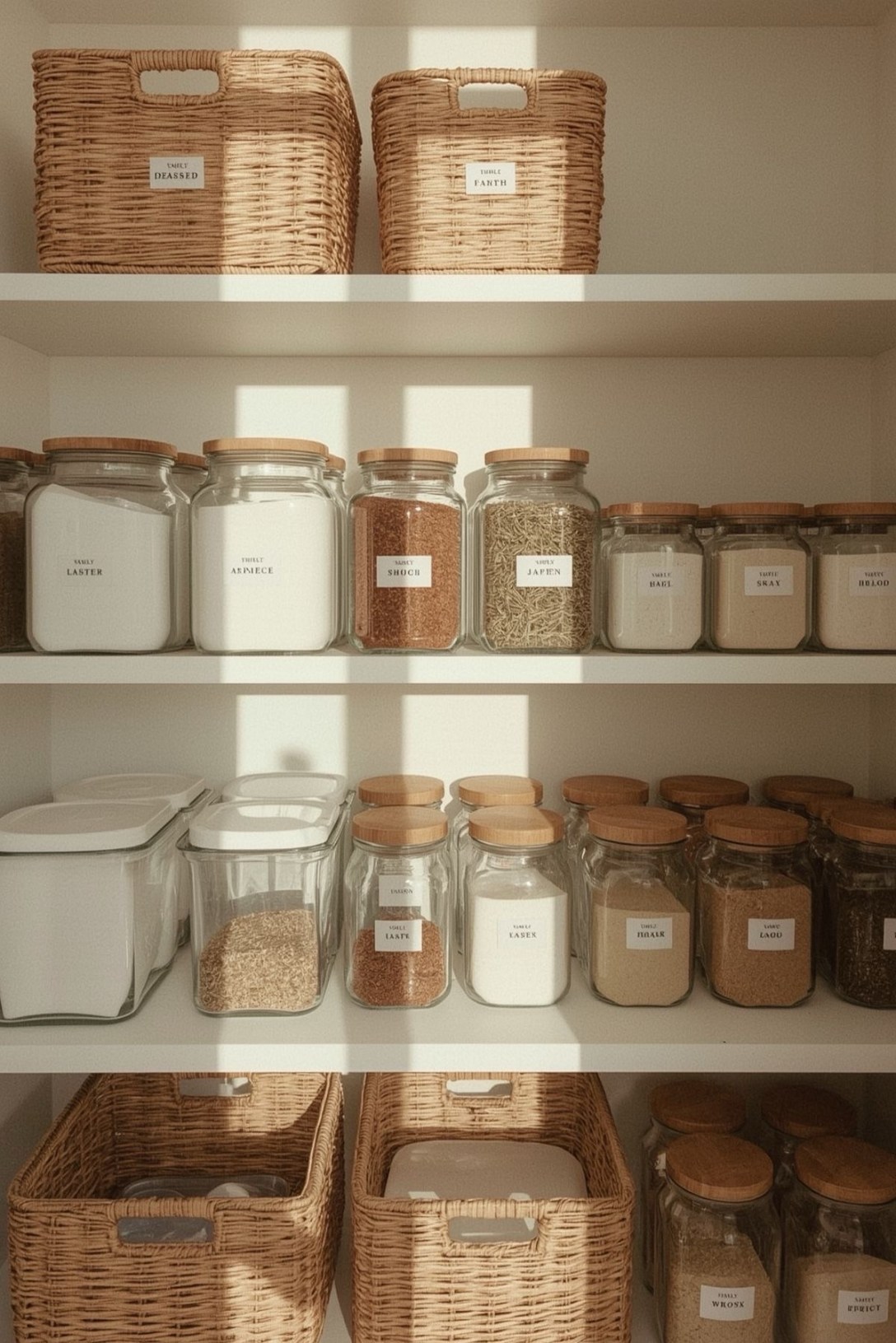
Little Habits for a Cleaner, More Organized Home

Keeping a house clean doesn’t always mean sticking to a strict schedule. Sometimes it’s the little daily choices that make the biggest difference.

When we turn those small actions into habits, the home begins to take care of itself.

Here are some simple things you can do every day that make a huge impact:


The 2-Minute Rule – If it takes less than 2 minutes, do it right away. Wipe the counter, rinse the dish, fold the blanket.

Reset Before You Leave a Room – Before you walk out, take one thing with you that doesn’t belong there.

One In, One Out – Every time something new comes into the house, let one thing go.

Clear Surfaces at Night – Tidy the living room and wipe down counters before bed. A fresh start in the morning changes everything.

The 10-Item Pick Up – Choose any room, pick up 10 out-of-place items, and put them back. Quick, simple, effective.

Basket Trick – Keep a catch-all basket in the main living space. Toss random things in, then empty it at the end of the day.

Laundry Reset – Fold or hang clothes right when they come out of the dryer. (A small habit that prevents a big pile.)

Never Go Empty-Handed – Going upstairs? Grab what belongs there. Heading to the kitchen? Take a dish with you.

End-of-Day 5 Minutes – Spend just 5 minutes putting things back in place before bed.

Entryway Rule – Shoes, bags, coats go away the moment you walk through the door.

These little things may not seem like much on their own, but together they create a rhythm of order and peace. When the home feels lighter, so do we.

Maybe the secret isn’t in doing more, but in doing the small things consistently.

Open Your Windows More

There’s something sacred about opening a window.

It’s such a simple act, but it carries so much symbolism. It’s not just about letting in the breeze — it’s about letting something go. A releasing. A welcoming. A shift.

The act of opening windows has deep roots across many cultures and traditions, both symbolic and practical. Here are a few notable ones:

1. Letting in New Energy (Spiritual/Cultural)

In many cultures, opening windows is a way to:

Clear out stagnant or negative energy Welcome in fresh energy, light, and air — often associated with new beginnings or clarity Allow spirit or soul to leave after a death (common in Irish, Jewish, and some Asian traditions)

2. Spring Cleaning Traditions

In places like Europe and North America, opening the windows during spring cleaning symbolizes:

Rebirth, renewal, and cleansing after winter Letting nature back in — fresh air, sunshine, and warmth

3. Feng Shui

In Chinese feng shui, opening windows regularly:

Helps chi (life energy) circulate Prevents energy from becoming stagnant Connects the home with nature, harmony, and flow

4. Christian & Biblical Symbolism

Some interpret open windows as symbolic of:

Receiving blessings (Malachi 3:10 speaks of God opening the windows of heaven) Openness to God’s presence, guidance, or Spirit

5. Superstitions & Folklore

In some old traditions, leaving a window open during childbirth or death was thought to help the soul enter or exit. Some say you should open all the windows on New Year’s Day to let out the old year and bring in the new.

Common Thread:

No matter the culture, opening your windows usually symbolizes release, renewal, and receptivity — physically and spiritually.

Now go open a window! 🙂

The Soul’s Mirrors: Twin Flames, Karmic Partners, and Deep Spiritual Teachers

Have you ever met someone who felt strangely familiar, even if you had just met?

Or someone who completely shook your world — whether through love, conflict, or deep lessons?

There’s a reason so many ancient traditions and modern philosophies speak about soul connections.

They are part of something much bigger than coincidence. They are part of how our souls grow.

Let’s step into this mysterious world together.


Where Do These Ideas Come From?

The concepts of twin flames, karmic partners, and spiritual teachers aren’t new.

Versions of them have existed for thousands of years — from the Hindu ideas of karma, to Plato’s philosophy about the soul being split into two, to Eastern teachings about souls traveling together across lifetimes.

In more recent times, these ancient ideas have woven themselves into what many now call New Age spirituality — but their roots are timeless.

At the heart of them all is one truth:

Relationships are how souls evolve.


Twin Flames: Two Halves of One Flame

The idea of a twin flame is that two souls were once one, and they split into two bodies to experience life separately — only to eventually find each other again.

But reunion is not just about romance.

It’s about transformation.

Twin flames reflect back everything inside you: your wounds, your fears, your dreams, your divinity.

The connection is intense and often chaotic at first. Twin flames trigger healing by exposing everything that still needs light. The journey isn’t about “completing” each other — it’s about becoming whole within yourself.

In ancient Greece, Plato described this beautifully in his dialogue Symposium, where he wrote that humans were originally whole beings, split apart, and forever seeking their other half.


Karmic Partners: Lessons Written in the Stars

Karmic partners are different.

You are drawn to each other because of unfinished business — energetic debts, unresolved wounds, lessons that must be learned.

The connection is magnetic, passionate, but often heavy. These relationships usually teach through contrast: by showing you what you don’t want, what needs healing, or how strong you truly are. Once the karmic energy is balanced, the relationship often naturally fades.

The word “karma” comes from Sanskrit, meaning “action” — and with karmic partners, past actions ripple forward, offering a chance to heal and complete old cycles.


Deep Spiritual Teachers: Not Always What You Expect

Not every soul connection is about romance or pain.

Sometimes, a soul crosses your path simply to awaken something inside you.

A deep spiritual teacher could be:

A friend who helps you remember who you are. A mentor who inspires you to rise. Even someone who hurts you in a way that forces you to break free and rebuild.

These soul encounters can be short or lifelong.

Their purpose is transformation — to nudge, push, or pull you closer to your true self.

Ancient mystics believed that God, the Universe, the Divine — whatever name you use — speaks to us through people. Every powerful connection is a whisper:

“Wake up. Grow. Remember who you are.”


At the Root of It All

At the deepest level, all of these connections — twin flames, karmic partners, spiritual teachers — are mirrors.

Each one shows us something we could not see alone.

Each one invites us to love more deeply: ourselves, others, and the divine heartbeat running through everything.

We do not meet anyone by accident.

Every soul who touches ours leaves an imprint — shaping who we become.


Closing Thought

If you’ve ever wondered why certain people enter your life with such force —

why some feel like home, why others feel like a wildfire —

know this:

You are not lost. You are being shaped.

You are not being punished;

you are being awakened.

Every soul encounter is a part of your journey back to the wholeness you already carry inside.

Full Structured Weekly Beauty Schedule

when you look good, you feel good”

Daily (every day)

Morning:

• Cleanse face

• Moisturize + SPF

• Quick lymphatic drainage (even 1–2 mins) with hands or tool

Night:

• Cleanse face

• Moisturize + treatment if needed (serum, retinol, etc.)

• Lip balm

• Body lotion (quick)


Monday – Hair, Sculpt, and Hydrate Day

Morning:

• Face sculpting (full 5-10 min session with tool)

Evening:

• Hair mask (apply on damp hair, leave for 30+ minutes)

• Light dry brushing before shower

• Extra deep conditioning shower (wash out hair mask)

• Exfoliate body (sugar scrub or gentle exfoliator)

Tuesday – Skin Glow + Brows Day

Morning:

• Face sculpting (quick version, 2-3 mins)

Evening:

• Tweeze eyebrows (maintenance)

• Tweeze lip area if needed

• Hydrating sheet mask or soothing face mask after tweezing (keep skin calm)

Wednesday – Hands and Feet Mini Day

Morning:

• Quick hand and foot massage with oil or lotion

Evening:

• At-home mini manicure & pedicure maintenance:

– File nails

– Push back cuticles

– Moisturize deeply (overnight gloves/socks if possible)

Thursday – Detox and Clarify Day

Morning:

• Face sculpting (full 5-10 min session)

Evening:

• Clarifying face mask (like clay for deep cleaning)

• Dry brushing before shower

• Light self-tan if desired

Friday – Glow Up Day

Morning:

• Brightening serum or Vitamin C

Evening:

• Self-care bath if possible

• Deep moisturize body

• face Gua Sha or facial massage

Saturday – Full Beauty Reset Day

Morning:

• Face sculpting (quick 3-min session)

Daytime:

– Fresh coat of nail polish on hands and toes (if chipped)

Evening:

– Hair oiling (massage scalp with nourishing oil)

– Light dry brushing

Sunday – Rest and Reset Day

Morning:

• No heavy beauty chores, just skincare

Evening:

• Hydrating overnight mask or heavy moisturizer for face

• Plan next week’s beauty needs (ex: if brows need more work, schedule for Tues)


Extra notes:

Dry Brushing:

2–3 times a week before showering (Monday, Thursday, Saturday)

Tweezing:

Once weekly (Tuesday), more if necessary (just a few strays if needed)

Face Sculpting:

Ideally 5x a week, but short sessions are fine on busy days

Hair Mask:

Once weekly (Monday)

Face Mask:

Hydrating (Tuesday), Clarifying (Thursday)

Nails:

Deep care Wednesday, polish refresh Saturday if needed

Discover Your Life Path Number: A Number-Based Map to Your Soul

There’s a hidden rhythm inside your birthdate—one that reveals part of the journey your soul came here to take. Whether you’re curious, skeptical, or somewhere in between, learning your Life Path Number can be like holding up a mirror to your truest self. Let’s explore…


“Everything in the universe has a rhythm, everything dances.” – Maya Angelou

Have you ever felt like there’s a deeper meaning tucked inside your birth date? Something guiding you quietly beneath the surface? In numerology, that “something” is called your Life Path Number—and it’s said to hold clues about your soul’s purpose, personality, and the lessons you’re here to learn.

Let’s take a closer look at how to find yours—and what it might be whispering to you.

How to Find Your Life Path Number

There are two main ways to calculate your Life Path Number, and while the digit-by-digit method is the most widely used, both approaches are revealing. Some people even resonate with both results.

Method 1: Digit-by-Digit (Most Popular)

This method is simple and considers the full energy of your birthdate by adding each digit together individually.

Example:

Birthday: August 25, 1987

8 + 2 + 5 + 1 + 9 + 8 + 7 = 40

Then reduce: 4 + 0 = 4

Life Path Number = 4

The only exception? If your total adds up to 11, 22, or 33, these are called Master Numbers, and they are not reduced further.

Method 2: By Date Segments (Month + Day + Year)

Some numerologists break down the birthdate into sections first, then reduce each part.

Example:

Birthday: August 25, 1987

Month: 8 Day: 2 + 5 = 7 Year: 1 + 9 + 8 + 7 = 25 → 2 + 5 = 7 Then: 8 + 7 + 7 = 22 → Master Number 22

So in this case, one method gives 4, and the other gives 22.

If this happens to you, notice which description resonates more. You may find that both paths reflect different parts of you—one representing your earthly approach, the other your soul-level calling.

What Does Your Life Path Number Mean?

Here’s a breakdown of the meanings behind Life Path Numbers 1–9, plus the Master Numbers 11, 22, and 33:


Life Path 1 – The Leader

Bold, original, and fiercely independent. You’re here to forge your own path, stand tall in your truth, and inspire others by leading with courage.

Lesson: Learn to balance independence with humility. It’s okay to ask for help.

Life Path 2 – The Peacemaker

Sensitive, intuitive, and compassionate. You’re here to build bridges, hold space, and remind the world that kindness is strength.

Lesson: Don’t lose yourself while trying to please others. Your voice matters too.

Life Path 3 – The Creative

Expressive, joyful, and full of light. You’re here to use your words, art, or presence to lift others up and celebrate life.

Lesson: Stay grounded. Not every storm can be danced away—some need to be felt.

Life Path 4 – The Builder

Stable, reliable, and practical. You’re here to create strong foundations—whether in work, home, or relationships—and show that slow and steady truly does win the race.

Lesson: Be open to change. Not everything can (or should) be planned.

Life Path 5 – The Adventurer

Curious, adaptable, and full of wanderlust. You’re here to experience freedom, embrace change, and live life out loud.

Lesson: Freedom without direction can become chaos. Find your center.

Life Path 6 – The Nurturer

Caring, responsible, and full of heart. You’re here to love, support, and serve—often through family, healing, or creative acts of care.

Lesson: Don’t pour from an empty cup. Your needs matter too.

Life Path 7 – The Seeker

Deep, thoughtful, and spiritually inclined. You’re here to explore truth, dive into life’s mysteries, and connect with the unseen.

Lesson: Trust the unknown. Not everything has to make logical sense.

Life Path 8 – The Powerhouse

Driven, resourceful, and ambitious. You’re here to learn about power—how to use it, build with it, and share it with integrity.

Lesson: Don’t measure your worth by what you achieve. You are already enough.

Life Path 9 – The Humanitarian

Compassionate, wise, and soulful. You’re here to help others, release the past, and bring beauty and healing to the world.

Lesson: Let go with love. Not everyone is meant to stay in your orbit.

Master Numbers: The Higher Frequencies

Life Path 11 – The Intuitive Messenger

A natural spiritual teacher. You’re here to shine a light on deeper truths and uplift others through insight, creativity, and soul-led leadership.

Lesson: Your sensitivity is a gift—but it needs grounding to become a strength.

Life Path 22 – The Master Builder

Part dreamer, part doer. You’re here to turn vision into reality, to build something that lasts, and to leave the world better than you found it.

Lesson: Don’t shrink from your potential. Big dreams were made for you.

Life Path 33 – The Master Teacher

The path of unconditional love. You’re here to heal, teach, and guide others with your wisdom and compassion. Your presence alone can be medicine.

Lesson: You are not here to fix everyone. Just being you is enough.


Let It Be a Mirror, Not a Mold

Your Life Path Number isn’t meant to limit you—it’s meant to illuminate you. It’s a mirror reflecting your soul’s natural rhythm and gifts. Let it guide you gently, not define you strictly. You are more than any one number… but this number might just help you understand a little more of the magic within.

So—what’s your Life Path Number?

I’d love to know. Drop it in the comments or message me if something resonated. And remember: you’re not here by accident.

You are here on purpose.

Waste Less, Save More: 15 Smart Food Hacks for a Happier Kitchen

Feeding a family or cooking for one, food waste is like tossing money in the trash. Here are my favorite tried-and-true food-saving hacks to make your groceries last longer, save money, and simplify mealtime.

1. Store Cut Onions Right

Once you slice an onion, store the rest in an airtight container or Ziploc bag in the fridge, cut-side down. It’ll stay fresh for up to a week—and your fridge won’t smell like a salad bar.

2. Revive Wilted Greens

Soak limp lettuce or herbs in a bowl of cold water with a few ice cubes for 15–20 minutes. They’ll perk right up! Bonus: dry them well in a salad spinner and store with a paper towel to keep the crisp going.

3. Freeze Overripe Bananas

Peel and freeze overripe bananas for smoothies, banana bread, or pancakes. Freeze whole or in slices—whatever fits your blender best.

4. Don’t Toss the Stems

Broccoli stalks, kale stems, and even herb stems are edible and flavorful. Use them in stir-fries, soups, or chop and blend them into pesto or smoothies.

5. Make a Freezer Scrap Bag

Keep a big Ziploc bag in the freezer for veggie scraps like onion peels, carrot tops, and garlic skins. Once full, use it to make homemade veggie broth—cheap, delicious, and waste-free.

6. Label and Date Everything

Use masking tape and a Sharpie to label leftovers and freezer items. You’ll always know what’s what and when it’s time to use it.

7. Freeze in Portions

Freeze sauces, soups, or leftover rice in muffin tins or ice cube trays. Once frozen, pop them out into a bag for perfect, quick portions.

8. Save Fresh Herbs

Chop herbs and freeze them in olive oil in an ice cube tray. Drop into hot pans for instant flavor when cooking.

9. Bread Going Stale? Don’t Toss It!

Turn stale bread into croutons, breadcrumbs, or French toast. You can also freeze sliced bread and toast it straight from the freezer.

10. Use the Freezer Like a Pantry

Got too many berries? Extra tomato paste? An open pack of tortillas? Freeze it. Most things freeze well—even shredded cheese, milk, or cooked pasta.

11. Keep Berries Fresh Longer

Wash berries in a solution of 1 part vinegar to 3 parts water, rinse, and dry thoroughly before refrigerating. It kills mold spores and keeps them fresh longer.

12. Store Apples Away from Other Produce

Apples release ethylene gas, which speeds up ripening. Keep them separate unless you want things to ripen fast (like avocados!).

13. Organize Your Fridge for Visibility

Keep older food in front so it gets used first. Label a bin “Eat First” to prevent stuff from hiding and going bad.

14. Make Leftovers New Again

Transform leftovers into new meals: roasted veggies into omelets, chicken into soup, rice into fried rice. A little creativity goes a long way!

15. Don’t Fear the “Ugly” Produce

Bruised apples and soft tomatoes still make great sauces, soups, or smoothies. When in doubt—blend it out!

Final Thought:

Being resourceful in the kitchen isn’t just about saving money—it’s about honoring the food we’re blessed with. A little intention can turn everyday scraps into something nourishing and meaningful.

Small Acts of Self-Love: 30 Ways to Be Kind to Yourself

1. Treat yourself to your favorite coffee or snack—just because.

2. Say no to plans if you don’t really want to go—without guilt.

3. Let yourself be lazy for a day (or an afternoon) without feeling like you need to “earn” it.

4. Indulge in a guilty pleasure—watch trashy TV, eat the chocolate, read the romance novel.

5. Ignore calls and texts if you don’t feel like talking—protect your peace.

6. Buy yourself flowers just because they make you happy.

7. Take a ridiculously long, hot shower or bath with no rush to get out.

8. Wear the cozy outfit instead of the “put-together” one.

9. Rewatch your comfort movie or TV show for the 100th time.

10. Order takeout instead of cooking—sometimes convenience is self-care.

11. Sit in your car a little longer before going inside—enjoy the quiet.

12. Put your phone on ‘Do Not Disturb’ and enjoy uninterrupted time.

13. Buy yourself the little thing you keep talking yourself out of.

14. Listen to music from your teenage years and sing along loudly.

15. Go to bed ridiculously early or sleep in late just because you can.

16. Light your favorite candle for no reason at all.

17. Read in bed with no pressure to be “productive.”

18. Make yourself an over-the-top, fancy drink—whether it’s a cocktail or a hot chocolate.

19. Take yourself on a solo date—to a bookstore, coffee shop, or anywhere you love.

20. Let go of something that’s been weighing on you—mentally or physically.

21. Take a midday nap with no shame.

22. Turn off your alarm for the weekend and wake up naturally.

23. Write down three things you love about yourself.

24. Dance around your house like nobody’s watching.

25. Eat your meal in complete silence, enjoying every bite.

26. Spend an entire day in pajamas if that’s what you feel like doing.

27. Watch the sunrise or sunset just for the beauty of it.

28. Unfollow accounts on social media that make you feel bad about yourself.

29. Let yourself cry if you need to—sometimes release is the best self-care.

30. Take deep breaths and remind yourself that you are enough, just as you are.

Which one do you feel like doing today?

Crying Is a Beautiful Thing—Here’s Why

Tears often get a bad reputation. Many people see crying as a sign of weakness, something to be hidden or suppressed. But the truth is, crying is one of the most natural, healing, and even necessary things we can do. It’s not just an emotional release—it’s a biological function with real benefits for our mind and body.

So the next time you feel tears welling up, don’t fight them. Let them flow. Here’s why crying is actually a beautiful thing.


The Science Behind Tears

Did you know that not all tears are the same? There are three types of tears, each with its own unique purpose:

1. Basal Tears: These keep your eyes lubricated and protect them from drying out.

2. Reflex Tears: These clear out irritants like dust, smoke, or onion fumes.

3. Emotional Tears: These are triggered by strong feelings like sadness, joy, frustration, or relief.

What’s fascinating is that emotional tears contain stress hormones and toxins, meaning that crying actually helps your body release built-up tension and cleanse itself.


The Benefits of Letting Your Tears Flow

If you’ve ever had a good cry and felt lighter afterward, there’s a reason for that. Here’s how crying can benefit your well-being:

It Reduces Stress – Crying lowers cortisol levels, helping to ease tension and bring your body back to balance.

It Releases Endorphins – Tears can trigger the release of oxytocin and endorphins, the body’s natural feel-good chemicals. This is why crying can actually leave you feeling calmer and more relaxed.

It Strengthens Emotional Resilience – Allowing yourself to feel and process emotions instead of suppressing them helps you move through challenges with greater self-awareness and emotional intelligence.

It Connects You to Others – Tears can be a bridge, helping us express vulnerability and deepen relationships. People who cry in front of others often experience stronger emotional bonds.

It Improves Sleep – Studies have shown that crying, especially before bed, can help regulate emotions and lead to better sleep quality.

It Helps You Heal – Whether you’re grieving a loss, feeling overwhelmed, or simply processing life’s ups and downs, crying is a healthy way to release and heal.


A Different Perspective on Tears

Many cultures and societies teach us to hold back our tears, especially in public. But what if we saw crying for what it truly is—a natural expression of being human?

Babies cry to communicate. Athletes cry when they win or lose. Loved ones cry at reunions and goodbyes. We cry out of love, joy, sorrow, and relief.

Tears are a language that words can’t always express.


Final Thought

Crying isn’t something to be ashamed of—it’s something to honor. It’s a reminder that you feel deeply, that you care, and that you are alive.

So if you need to cry, let yourself. It’s not a breakdown—it’s a release. And sometimes, that’s the most beautiful thing of all.

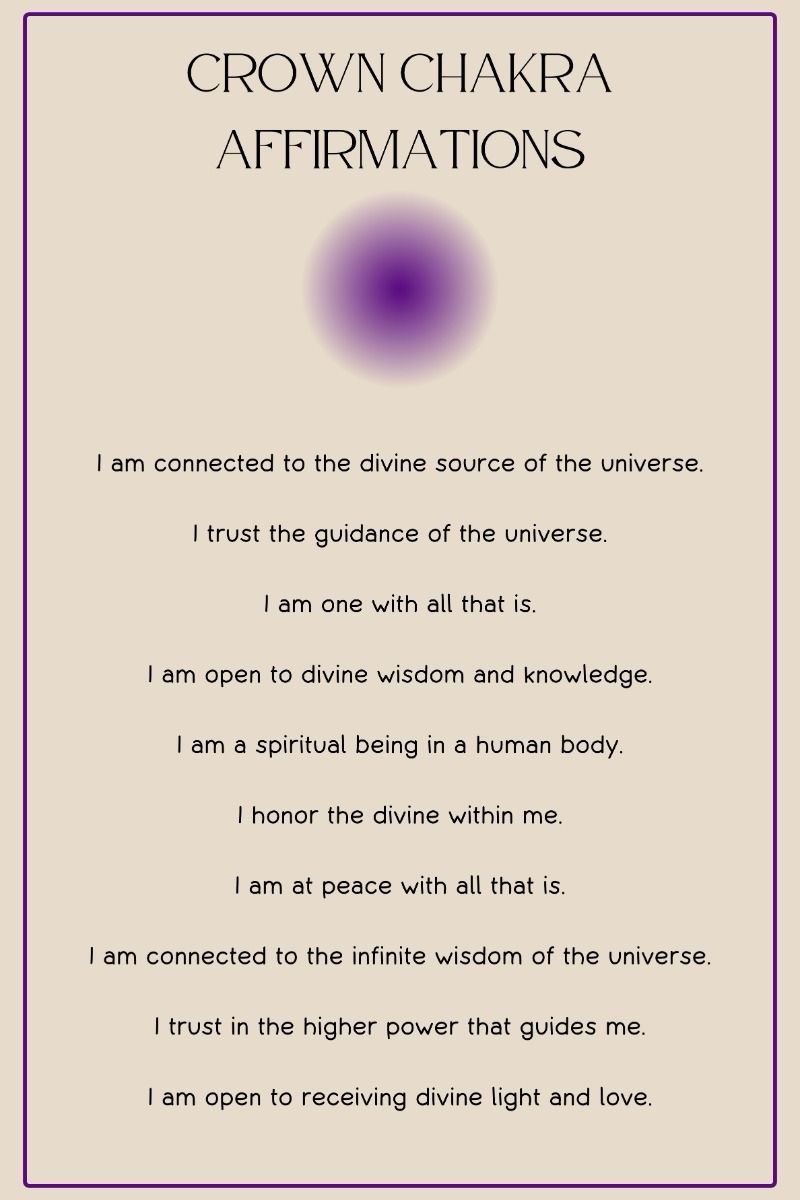
Crown Chakra: Your Connection to the Divine

At the top of the chakra system lies the Crown Chakra, known in Sanskrit as Sahasrara, meaning “thousand-petaled lotus.” Located at the crown of the head, this chakra represents spiritual connection, enlightenment, and the vastness of the universe. It is the bridge between your individual self and something greater—whether you see it as divine energy, the universe, or pure consciousness.

If the Third Eye Chakra is about seeing truth, the Crown Chakra is about becoming one with it. It is where wisdom, peace, and transcendence reside.


A Glimpse into the History

The Crown Chakra has long been associated with higher states of consciousness. In Hindu and Buddhist traditions, it is linked to spiritual awakening and enlightenment, symbolizing the dissolution of ego and the merging with universal energy. In many depictions, saints, sages, and deities are shown with halos—representing an open and radiant Crown Chakra.

The color violet or white is associated with this chakra, signifying purity, clarity, and divine wisdom. Its element is pure consciousness, beyond the physical and material world.


Signs Your Crown Chakra May Be Blocked

When your Crown Chakra is blocked or imbalanced, you may feel disconnected—from yourself, others, or a sense of purpose. Here are some signs:

Feeling Disconnected from Life’s Meaning: Struggling with a sense of purpose or questioning existence

Lack of Inspiration: Feeling uninspired, unmotivated, or stuck in daily routines without deeper fulfillment

Closed-Mindedness: Rejecting new ideas, feeling spiritually disconnected, or resisting growth

Chronic Stress or Overwhelm: An overactive mind with constant anxiety about the unknown

Physical Symptoms: Headaches, dizziness, trouble sleeping, or feeling mentally drained

An overactive Crown Chakra may lead to feeling detached from reality, overly focused on spirituality while neglecting the physical world, or experiencing an inflated sense of superiority. Balance is key!


How to Unblock and Balance Your Crown Chakra

Unlike other chakras, which are balanced through action, the Crown Chakra requires stillness, surrender, and trust. Here’s how to align with it:

1. Meditate Daily: The best way to connect with the Crown Chakra is through meditation—sitting in stillness and allowing yourself to be present.

2. Spend Time in Silence: Disconnect from distractions and allow space for inner wisdom to emerge.

3. Connect with Nature: Watch the sunrise, stargaze, or simply sit in nature to feel connected to something greater.

4. Practice Gratitude: Appreciate the beauty of life, both big and small. Gratitude raises your energy and deepens your connection.

5. Seek Spiritual Knowledge: Read spiritual texts, listen to wisdom teachings, or explore different perspectives on life’s mysteries.

6. Use Essential Oils: Frankincense, lavender, and sandalwood can help promote relaxation and higher awareness.

7. Affirmations: Use statements like “I am connected to divine wisdom” and “I trust the universe’s plan for me.”

8. Let Go of Control: The Crown Chakra reminds us that not everything is meant to be understood—sometimes, we must surrender and trust in the unknown.


Final Thought

The Crown Chakra is your gateway to peace, wisdom, and divine connection. When balanced, you feel a deep sense of purpose, inner peace, and trust in the flow of life.

You are not just a drop in the ocean—you are the ocean in a drop.

You were meant to lead with faith—trust in the journey, and allow yourself to expand beyond limits.