Solar Plexus Chakra: Igniting Your Inner Power and Confidence

After flowing through the creative and emotional energy of the Sacral Chakra, we rise to the Solar Plexus Chakra, known in Sanskrit as Manipura, meaning “lustrous gem.” Located in the upper abdomen, just above the navel, this chakra is the center of personal power, confidence, and self-discipline.

If the Root Chakra is your foundation and the Sacral Chakra is your flow, the Solar Plexus Chakra is your fire—the source of your motivation, willpower, and sense of self.

It’s where you develop the strength to take action, set boundaries, and move toward your goals with conviction.


A Glimpse into the History

The Solar Plexus Chakra has its roots in ancient Indian traditions, mentioned in early yogic and tantric texts. It is symbolized by a ten-petaled lotus and associated with the color yellow, representing warmth, energy, and enlightenment. Its element is fire, symbolizing transformation, strength, and the power to create change.

In many spiritual traditions, fire is seen as a purifier—burning away doubt and fear to reveal true strength.

This is the essence of the Solar Plexus Chakra: stepping into your personal power with clarity and purpose.


Signs Your Solar Plexus Chakra May Be Blocked

When this chakra is out of balance, you might struggle with self-doubt, lack of motivation, or difficulty asserting yourself. Some common signs include:

Low Self-Esteem: Feeling insecure, unworthy, or overly self-critical

Lack of Motivation: Procrastination, indecisiveness, or feeling stuck

Fear of Judgment: Worrying too much about what others think

Control Issues: Either feeling powerless or trying to control everything

Digestive Problems: Stomach aches, bloating, ulcers, or issues related to the gut

A blocked Solar Plexus Chakra can make you feel powerless, lost, or unsure of yourself, while an overactive one can lead to arrogance, stubbornness, or the need to dominate situations.


How to Unblock and Balance Your Solar Plexus Chakra

Restoring balance to the Solar Plexus Chakra is about reigniting your inner fire and reclaiming your confidence. Here’s how:

1. Power Poses & Movement: Engage in physical activity like yoga (especially core-strengthening poses like Boat Pose (Navasana) or Warrior Poses) to activate this energy center.

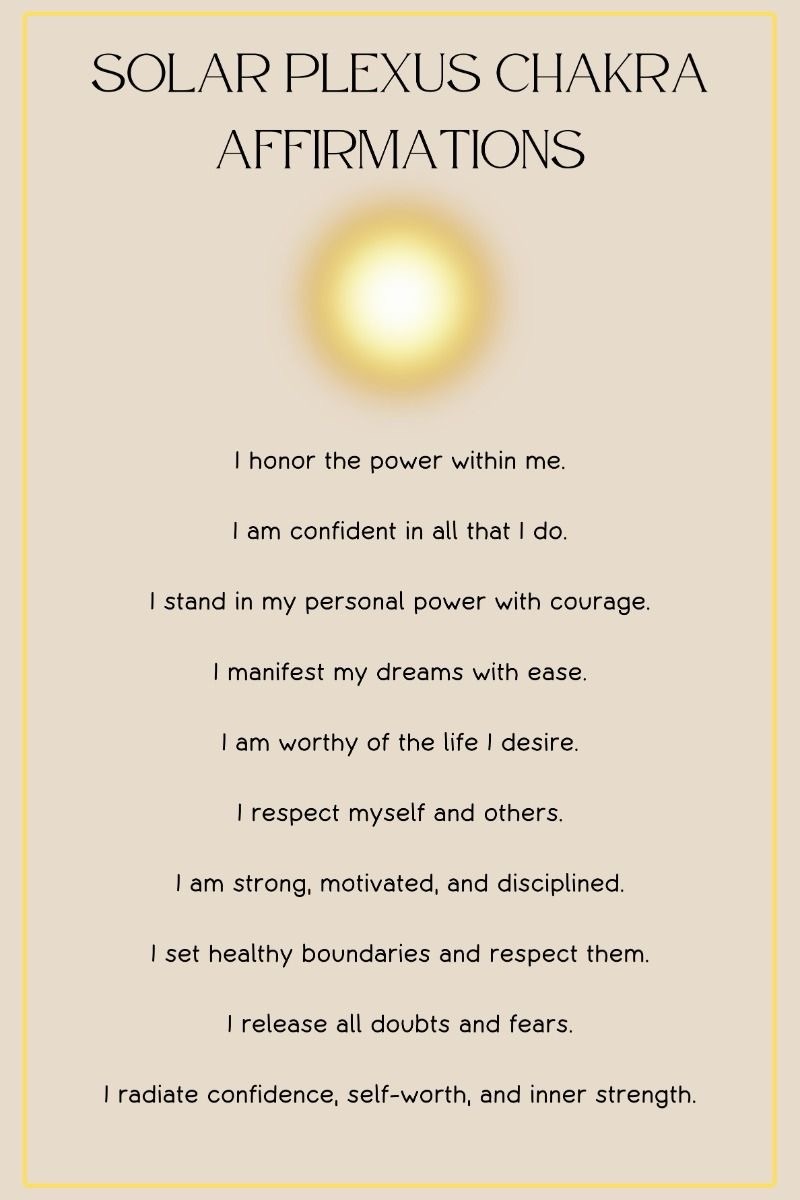
2. Affirmations: Use statements like “I am strong and capable,” or “I trust myself and my decisions.”

3. Connect with Fire: Spend time in sunlight, light candles, or visualize a bright, golden flame in your core growing stronger with each breath.

4. Set Small Goals: Accomplishing even small tasks builds confidence and strengthens this chakra.

5. Eat Yellow Foods: Bananas, lemons, corn, and turmeric can support Solar Plexus energy.

6. Breathwork: Practice deep breathing exercises, especially Kapalabhati (Breath of Fire) to stimulate energy and focus.


The Gift of the Solar Plexus Chakra

When your Solar Plexus Chakra is balanced, you feel confident, driven, and aligned with your purpose. You trust yourself and make decisions from a place of strength rather than fear.

This chakra reminds you that you are capable, you are powerful, and you are in control of your own story.

You weren’t meant to shrink yourself to fit the world—You were meant to lead with courage. Keep your faith strong, even when the path is uncertain.

Be True To Your *ESSENCE*

There is something within you that is completely unique, something that cannot be replicated, replaced, or erased. It’s not just your personality, your talents, or the roles you play in life—it’s something deeper. It’s your essence.

Your essence is the energy you bring into the world, the way you see things, the quiet knowing in your soul that whispers who you truly are. It’s not something you have to create—it’s something you already are. But in a world that constantly tells us who we should be, it’s easy to drift away from it.

The Layers That Cover You

From the moment we’re born, we absorb expectations. We learn to behave in ways that make others comfortable. We mold ourselves to fit in, to be accepted, to avoid rejection. Over time, layers build up—layers of what we think we should be.

• The layer of people-pleasing, where we silence our own needs to keep the peace.

• The layer of comparison, where we measure ourselves against others and feel like we come up short.

• The layer of self-doubt, where we hesitate to step into who we truly are.

But your essence is still there, waiting beneath it all. The real question is—are you listening to it?

Recognizing Your Essence

Being true to your essence doesn’t mean you have to be the loudest voice in the room. It doesn’t mean you have to change who you are—it means returning to who you’ve always been.

Ask yourself:

When do I feel most alive?

What makes me lose track of time?

When do I feel like myself, without trying?

Your essence shines when you are in flow—whether that’s through creativity, deep conversations, being in nature, teaching, writing, moving your body, or simply being present.

Letting Go of What Isn’t Yours

To be true to your essence, you have to let go of the things that aren’t truly you. Not the parts of you that change and evolve, but the ones that were never yours to carry.

Let go of the need to be understood by everyone—your essence is not for approval, it’s for expression.

Let go of who you thought you had to be—growth is natural, but forcing yourself into a mold is not.

Let go of the fear of shining—playing small doesn’t serve your soul.

Living in Alignment

Once you start honoring your essence, things begin to feel lighter. You no longer exhaust yourself trying to fit into a version of yourself that wasn’t meant for you. Instead, you:

Speak with authenticity instead of saying what’s expected.

Make choices that resonate instead of following a script.

Surround yourself with people who see the real you instead of who they want you to be.

And the beautiful thing? The more you embrace your true essence, the more you inspire others to do the same.

You Are Here for a Reason

The world doesn’t need another copy. It doesn’t need you to shrink, shift, or shape yourself to fit someone else’s version of you. It needs you as you are.

So today, take a deep breath. Feel the weight of expectations fall away. And remember—being true to your essence is not something you have to earn. It’s something you simply have to allow.

Be you. Unapologetically. Completely. Fully. The world is better for it.


The Benefits Of Talking To Yourself In *Third Person*

Talking to yourself in the third person, also known as distanced self-talk, can offer several psychological and emotional benefits. This technique involves referring to yourself by your name or as “you” rather than “I” when thinking or speaking about your emotions, decisions, or challenges. Here’s how it helps:

1. Emotional Regulation

• Talking to yourself in the third person can create psychological distance between you and your emotions, which helps you better manage intense feelings like anger, anxiety, or sadness.

• Example: Saying, “Why is [your name] feeling so stressed right now?” instead of “Why am I so stressed?” can help you analyze the situation more calmly.

2. Improved Decision-Making

• Referring to yourself in the third person promotes objectivity and clearer thinking because it encourages you to view your situation as if you were giving advice to a friend.

• This can reduce impulsive reactions and help you make more rational choices.

3. Enhanced Self-Compassion

• It can make it easier to speak kindly to yourself. For example, saying, “You’re doing your best, [your name],” feels more supportive and less self-critical than “I’m doing my best.”

4. Better Problem-Solving

• Viewing your problems from an outsider’s perspective allows you to see the bigger picture, which can make solutions more apparent.

• Example: “What does [your name] need to do to move forward?”

5. Reduced Stress and Anxiety

• Studies suggest that this type of self-talk can calm your mind during stressful situations by shifting your focus from feeling overwhelmed to thinking constructively.

• Example: Before a big presentation, saying, “You’ve prepared for this, [your name], and you’ll do great,” can ease nerves.

6. Boosted Confidence

• Encouraging yourself in the third person can feel like receiving support from someone you trust, which can be particularly helpful before tackling challenges or when self-doubt creeps in.

7. Strengthened Resilience

• By separating yourself from negative self-talk patterns, you can reframe setbacks and focus on growth and learning rather than dwelling on failures.

Practical Tips to Try It:

• Use third-person self-talk during moments of stress, decision-making, or self-reflection.

• Try writing journal entries in the third person for deeper insights.

• Speak to yourself as if you were a compassionate coach or friend.

This simple shift in language can have a profound impact on your emotional well-being and mental clarity. It’s a powerful tool for building self-awareness and inner strength!

Where Do We Draw The Line?

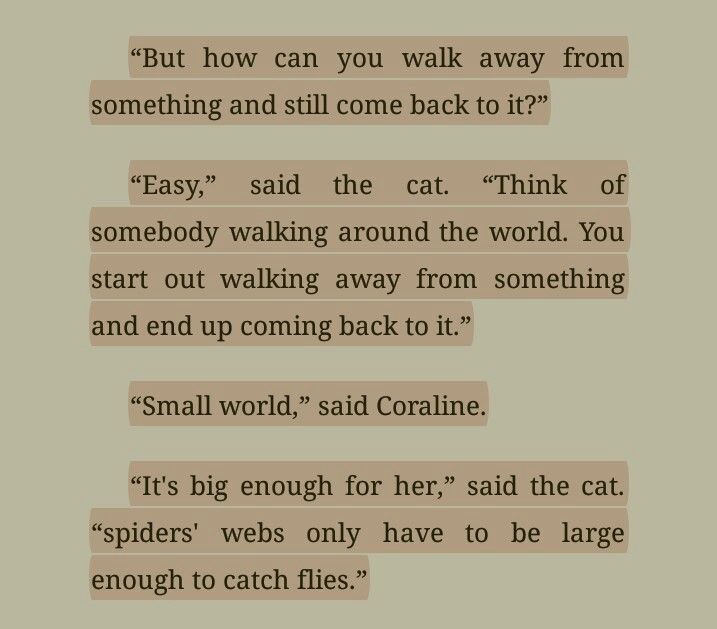
Recently, I watched the movie Coraline and a YouTube video on Taoist philosophy, and both left me reflecting deeply on human nature and our constant craving for more.

In Coraline, the children lost their souls, not because they didn’t have enough, but because even when they were given everything they desired, it still wasn’t enough. A chilling thought, isn’t it? This dark and haunting animation earned an Oscar for a reason—it shines a light on something real and unsettling within us. (I throughly enjoyed this thought provoking movie.)

Similarly, the Taoist philosophy video explored how this endless quest for “more” leads to stress, burnout, and withdrawal from peace. Or, like in Coraline, it can even cost us our souls—though perhaps not in a literal sense, but in how we lose touch with ourselves, our purpose, and what really matters.

Do you see the connection?

So, where do we draw the line? When do we step back and say, “I’m good. I have enough.”

I believe awareness is the first step. Developing an awareness of these traps—this cycle of more, more, more—can help us catch ourselves before we fall deeper into it. But awareness isn’t always enough. We need something more substantial: an armor to protect us from the constant pull of these traps.

How do we build that armor? Honestly, I wish I had a straight answer. But what I do know is this: it starts with doing the inner work. Looking at yourself—really seeing yourself. Asking the hard questions about what you truly need versus what you’re chasing out of habit, pressure, or comparison.

It’s not easy. It’s uncomfortable, messy, and often takes time. But I believe learning to “draw the line” isn’t just something we need—it’s something we all deserve. A chance to reclaim our peace, to step off the hamster wheel, and to say, “This is enough.”

(YouTube video in case you’re interestedclick here )

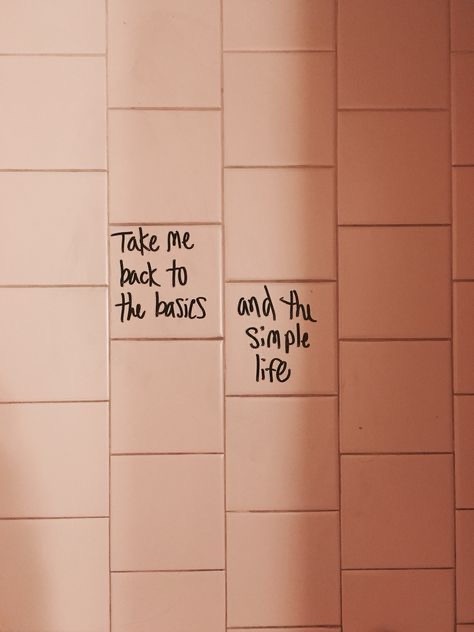
Back To Basics

Give a child a cup of plain vanilla ice cream, and they’re going to light up with delight. “Yummy! This is so good!”

Now, the next time, you offer them ice cream—but this time, you’ve added sprinkles. They love it even more.

Then you take it a step further: a scoop of ice cream with sprinkles, whipped cream, and a cherry on top. Of course, it’s the ultimate treat!

But what happens when you go back to offering just plain vanilla ice cream? They refuse. “Where are the sprinkles? The whipped cream? The cherry?”

What once felt like the best thing ever—just vanilla ice cream—has now become “boring.”

This scenario isn’t just about ice cream. It’s playing out all around us, with everything.

In a world constantly trying to one-up itself, we’ve forgotten how to appreciate the simple things. We keep piling on sprinkles, whipped cream, and cherries in every area of our lives—whether it’s material possessions, experiences, or even the way we seek validation from others.

The problem is, when we get caught up in all the add-ons, we lose sight of the essence. We stop noticing the “ice cream” itself. Its flavor and joy are drowned out by all the extras.

This is why “going back to basics” is so important. At first, it may feel dull or underwhelming. But over time, you start to notice the richness in simplicity—the way life was meant to be enjoyed.

Not everything needs sprinkles, whipped cream, or cherries to be special. Sometimes, the simplest things, enjoyed as they are, hold the most joy. Save the extras for rare, special moments—and watch how the beauty of the basics begins to shine again.

Order Is The Antidote To Chaos

I was listening to a podcast the other day with Andrew Huberman and Dr. Jordan Peterson. At one point, Dr. Peterson said, “Order is the antidote to chaos.”

I just loved that.

Synonyms for order include words like sequence, organization, and arrangement. Synonyms for antidote are remedy or cure.

Ponder that for a moment: Order is the antidote to chaos. Organization is medicine for disorder, disarray, and confusion.

In other words, take a look around—what does your home look like? Your car? Your desk? Your bedroom? Even more importantly, what’s going on in your mind?

The cure is decluttering. The cure is setting a routine. The cure is giving everything a home. The cure is embracing the philosophy of less is more. The cure is, quite simply, to “get your life in order.”

As a mother of four, I’ve learned just how necessary order is in our household—not only for myself but for my children and their well-being. They may not fully understand the impact of their surroundings, but I do. When there’s order, there’s peace, and that peace benefits everyone in the home.

By establishing order, it’s possible to alleviate, or even eliminate, things like anxiety and depression—or at the very least, to minimize them. A great reward awaits when you take the responsibility to bring order into your life. It isn’t always easy, but it’s absolutely worth it.

Take the time to find order, and you’ll discover more clarity, focus, and peace.

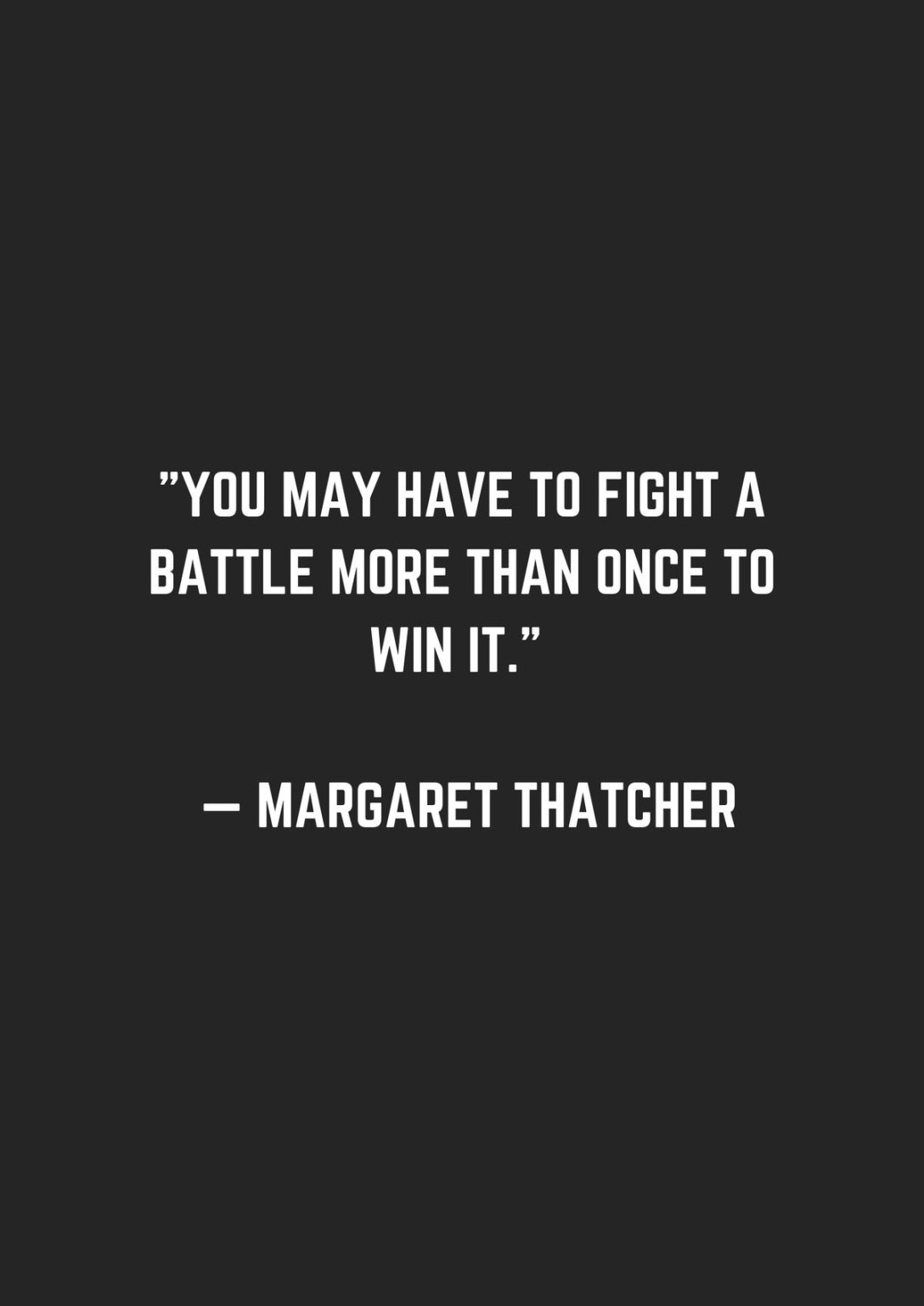
If You Never Fail, You Never Grow

I recently started reading Different Kinds of Minds by Temple Grandin. It’s incredibly insightful and thought-provoking. In one part of the book, she shared a fascinating rat study. Researchers found that rats who had to dig up their treats became far more resilient when faced with challenges compared to rats who were simply handed their treats.

The rats who didn’t have to work for their reward gave up more easily when obstacles appeared.

What an eye-opening observation!

This speaks to a universal truth: challenges and failures aren’t bad things—they’re vital. They build strength, resilience, and perseverance. Struggle teaches us to appreciate the rewards of our effort.

The hard work, the setbacks, and even the failures are what shape us. They’re the chisels that carve out our character and growth.

So remember, with growth comes failure—and that’s how it’s meant to be. Failure isn’t the end. It’s a stepping stone to something greater.

Finding Wholeness In YOUR Story – Your Trauma

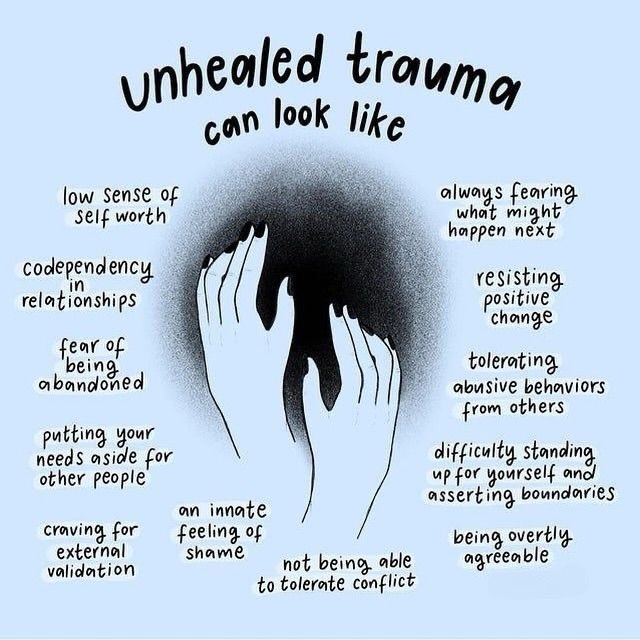
Traumas in your life are the very difficult emotions that you processed alone.

Reread that, and think about that for a moment.

.

.

.

A trauma that I have been healing from for the past couple of years now has been my adoption story.

I was adopted into a family with no connection to any of my biological relatives. I felt incredibly alone for many, many years. Discussing my adoption was taboo; it was as if I were an apple tree trying to grow in an orange grove, and nobody ever acknowledged that I was, indeed, different.

It wasn’t until 29 years later that I met any of my biological family. That’s 29 years of trying to process everything by myself. It’s been a journey—a lifelong one—and it still is.

When I had my own child, I truly believed I could finally put my adoption story behind me. I thought I wouldn’t feel so alone anymore. And, in a way, having my daughter did bring healing, but only temporarily.

Then, when my daughter was 10 months old, we fostered and later adopted my sister-in-law’s daughter, who was just one year old at the time. While fostering her, so many repressed emotions resurfaced—emotions I had buried deep within myself for decades. They came flooding back, sending me into a depression. I couldn’t escape my story. I couldn’t escape myself. I couldn’t escape “adoption/adoptee/adopted” And I hated it.

I didn’t want to feel this pain anymore, but I had no idea what to do. I just knew I could no longer ignore this. Now having a new type of adoption story with actually adopting I knew this had to be dealt with. And I knew if I wanted to be the mother that I wanted to be to my children then I had work to do.

Eventually, I surrendered and accepted that this really was a part of my identity—not my whole self, but a huge part of me. And that’s when the healing journey began.

The traumas we experience cannot be erased, but we can learn how to identify and understand them. Only then can we begin to heal from them.

One way to begin healing is by acknowledging what you went through, validating your experience, and sharing it with others. It’s not enough to think about it in silence. You need to talk about it. Take what’s swirling in your mind and articulate it into words.

For years, I thought I was alone, but I’ve learned through my own journey that I never really was. I’ve also learned how many people out there suffer in silence, just as I did.

I want you to know: You are not alone. There’s so much strength in sharing your truth, in finding connection through the pain. Healing doesn’t mean erasing your story; it means finally allowing yourself to be seen, to be heard, and to be whole.

Becoming Mindful Of Your Emotions

Emotions are a natural part of us, but they don’t define our entire being.

I once heard an analogy that made me chuckle: Emotions are like children. You don’t want them driving the car, but you also don’t want to stuff them in the trunk. This humorous but insightful metaphor reminds us of the delicate balance between acknowledging our emotions and letting them take over.

It’s crucial, maybe even vital, to validate our emotions. A simple but powerful step is naming what you’re feeling out loud: “I am angry because I feel like nobody is listening to me in this house.” Saying it out loud gives the emotion space to exist without consuming you. It’s like holding it up to the light and saying, “I see you, and I understand why you’re here.”

Too often, we seek validation for our emotions from others because we haven’t been taught how to validate ourselves. But here’s the truth: no one else can fully understand your inner world the way you do. Learning to recognize and name your emotions helps you build a bridge between feeling and understanding.

When we fail to acknowledge our emotions, they can turn inward, manifesting as self-blame, self-doubt, or even shame. Unchecked, they can become a storm that clouds how we see ourselves and the world. But when we practice self-compassion and emotional mindfulness, we create space for healing and growth.

This practice is also deeply tied to valuing and loving ourselves. When we learn to be gentle with our feelings instead of silencing or avoiding them, we show ourselves the same compassion we would offer to a friend. It becomes easier to navigate life with emotions as our passengers—present and acknowledged but no longer in control.

Emotions, however, can be powerful guides. Each one has something to teach us—if we’re willing to listen. Sadness might remind us of what we cherish or have lost. Anger can show us where our boundaries feel crossed. Joy reveals what brings meaning to our lives. They’re not the enemy—they’re messengers.

By taking this approach, we can steer through life with greater clarity and peace, no matter how strong the waves of emotion may be.

If we do not work on repairing and understanding ourselves, we cannot help repair or understand others.

All behavior makes sense with enough information.”

Reminder: YOU MAKE SENSE.

Your Truth May Not Be The Same For Another

I was listening to a podcast recently, and the host shared an interesting perspective: he believed that life often makes us repeat certain patterns or lessons until we finally “get it.” It was a humbling realization for him, but his guest gently challenged him, saying, “That might be true for you, but it doesn’t mean it’s the truth for everyone.”

This idea really struck me. How often do we assume that what feels true for us must automatically apply to everyone else?

It reminded me of a story I came across that perfectly illustrates this idea:

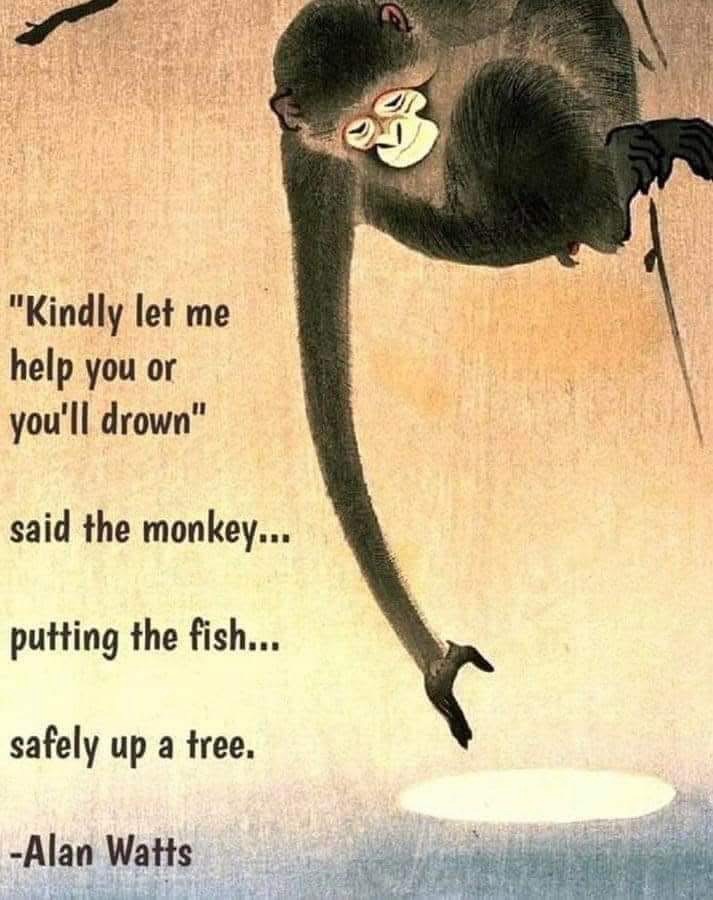
There was a monkey who lived in a forest tree by a river. One day, the monkey saw a fish swimming in the river and thought the fish was struggling. Feeling compassionate, the monkey resolved to save it. It climbed down the tree, scooped the fish out of the water, and placed it gently on a branch. The fish flapped violently and soon died. The monkey was heartbroken and confused—it had only wanted to help.

This story offers such a powerful lesson. The monkey, out of good intentions, misjudged the situation because it viewed the fish’s needs through its own perspective. It assumed that what was natural and necessary for itself—living on land and breathing air—must also apply to the fish. In trying to help, the monkey unknowingly caused harm, simply because it didn’t take the time to truly understand the fish’s environment and needs.

How often do we, with the best intentions, do the same? We may impose our beliefs, values, or ways of living onto others, assuming they must see the world as we do. But the truth is, each of us is shaped by our unique environment, experiences, and perspective. What feels like “truth” for one person may not resonate at all for another.

This story invites us to step back and ask: Am I truly understanding someone else’s experience, or am I projecting my own onto them? Am I listening, or am I assuming?

The beauty of the world lies in its diversity—not just in nature but in thought, belief, and experience. By cultivating empathy and recognizing that we all have our own “water” or “land” to thrive in, we can approach others with a deeper sense of understanding and respect.

Next time you’re tempted to “help” someone or share what you think they need to hear, pause. Consider whether you’re seeing their life through their eyes—or through your own.

Because the truth is, your truth may not be the same truth for another.