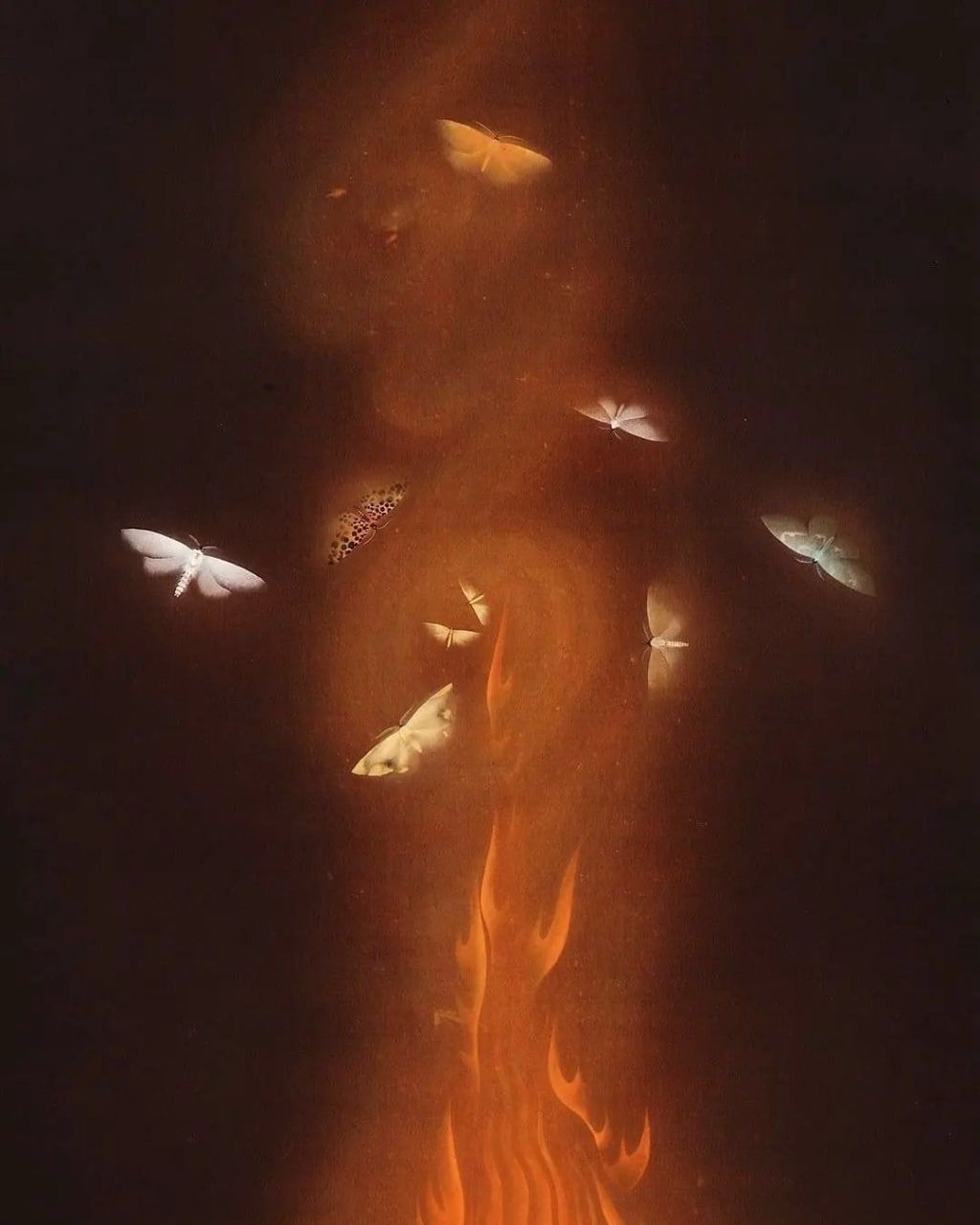
Soften The Heart: Devotional #31

“And without faith it is impossible to please God, because anyone who comes to him must believe that he exists and that he rewards those who earnestly seek him.”

Hebrews 11:6 

My poor Bible has been pretty lonely. I haven’t been actively reading it. I’ve been spending time with God in nature and in meditation but I haven’t been studying his word. Which I think it’s just as important.

So today I was flipping the pages of my Bible looking for inspiration today…

and I came across this verse I had highlighted. Hebrews 11:16.

And there’s a word in that verse that stands out, believe.

It’s a reminder that trust is crucial.

Faith is kind of like the wind. We can’t always see it but we feel it. It moves through the trees, brushes our skin, and reminds us:

“I’m here.”

I do believe God is like that. All around us. Reminding us and encouraging us of His presence.

Something greater. Something powerful. Something all-knowing. Something here.

And though I don’t fully understand all of it…I do believe this greater power truly loves us.

But like any relationship, it takes two. We want God to constantly reach out and prove Himself…

Yet we don’t always seek.

Seek God.

Let the veil be lifted.

Open your heart.

Open your eyes.

And maybe you’ll start to feel Him like the wind. Maybe this “foreign language” will begin to make sense.

Faith is not about having it all figured out. It’s about having hope.

Keep seeking.

God sees you and is with you.

He rewards those who do.

Why Is It So Uncomfortable to Actually Feel?

Letting yourself feel sounds simple. But it’s not.

It’s one of the bravest and most uncomfortable things we can do.

Because feeling means facing. And most of us have spent years—maybe even decades—trying to avoid the very things our hearts most need to acknowledge.

So much of life teaches us to stay busy, stay numb, stay “fine.” We learn early on that some feelings are too big, too messy, too inconvenient. We tuck them away. We get good at holding ourselves together. We smile when we’re sad. We shrug off pain. We keep moving.

But at some point, the ache catches up to us.

And we realize that what we’ve been avoiding isn’t going away—it’s waiting to be felt.

That’s when the discomfort sets in. Not because we’re doing something wrong… but because we’re doing something deeply right. We’re unlearning a lifetime of emotional suppression. We’re learning to be honest again—with ourselves.

And that honesty? It cracks us open.

It’s scary because real feeling is raw. It makes us vulnerable. It can make us feel out of control. But the truth is, we’re never more in tune with ourselves than when we allow the feeling to move through us—fully and freely.

Even joy can feel uncomfortable if we’re used to waiting for it to vanish. Even peace can feel strange if chaos has been our baseline.

But you were made to feel.

You were not made to carry it all in silence.

You were not made to keep bracing for impact.

You were made to breathe through it. To soften. To release.

Feelings are not enemies. They are messages.

They are waves—not tsunamis.

They come to move, not to drown you.

Letting yourself feel is not weakness—it’s courage.

It’s coming home to your heart.

Interpretation Of The Song ‘Army Dreamers’ — Kate Bush

“Army Dreamers” by Kate Bush is a haunting and emotional song about the tragic loss of young lives to war. The lyrics explore the sorrow of a mother who has lost her son in military service, and the deep grief and questioning that follows. Here’s a breakdown of the key themes and meanings behind the song:

1. A Mother’s Grief and Regret

The central voice in the song is that of a mother, mourning her son who died in military service. She reflects on the small, everyday things she did for him—feeding him, raising him—and now she’s left with an unfillable absence.

“What could he do? Should have been a rock star…”

She wonders what else he could have become if he hadn’t joined the army. There’s deep sadness in the idea that he had potential for so many other paths—but now they’re all gone.

2. The Futility of War

The song doesn’t glorify heroism. Instead, it questions the cost of war, especially for the young and vulnerable who may have joined for lack of better options.

“Tears o’er a tin box / Oh, Jesus Christ, he wasn’t to know…”

The image of a tin box (possibly containing his medals or ashes) emphasizes how little is left after a life is lost. The line “he wasn’t to know” suggests innocence—he didn’t know what he was really getting into.

3. Societal Expectations and Pressure

The title “Army Dreamers” itself is a bit ironic. It refers to young men who dream of purpose, escape, or pride by joining the military—but also points to how society may nudge them in that direction, especially when other dreams feel out of reach.

Bush is gently critiquing a world where young people are sometimes given no better choice—and where their dreams are swallowed by systems they don’t fully understand.

4. The Lingering Question: Why?

Throughout the song, there’s a persistent sense of what if—what if he’d chosen a different path? What if the world had offered him more? The mother’s grief is tangled with helplessness and guilt, even though she did everything she could.

The Tone: Lullaby Meets Lament

Musically, the song sounds gentle, almost like a lullaby—which makes the lyrics all the more haunting. It reflects how war quietly takes from us—not always with dramatic noise, but sometimes with soft, quiet, irreversible loss.

Soften The Heart: Devotional #30

“As you do not know the path of the wind, or how the body is formed in a mother’s womb, so you cannot understand the work of God, the Maker of all things.”

Ecclesiastes 11:5

Sometimes you hear of things that just make you freeze.

Unbelievable news. Tragedies that feel too big to hold. The sudden, silent crash of reality when life does something you never saw coming.

Sometimes it shakes you to your core that such things happen at all, that this world, the same one where we sing lullabies and light birthday candles, is also a place where deep sorrow and confusion live.

My thoughts scream, “I don’t get it.”

I know I’m not suppose to get it either. We are but children on this earth but the frustration is ever present at times.

I find myself sitting still, eyes locked on nothing, just staring off—wondering. Wondering why. Wondering what the truth is. Wondering how to keep walking forward with the storm of the questions that I possess.

But this verse brings awareness and comfort.

“As you do not know the path of the wind…”

The wind is real, even when I can’t see it. It moves through trees, across oceans, through my hair. I don’t know where it begins or where it ends. I just know it’s there.

And “you do not know how the body is formed in a mother’s womb…”

Another miracle wrapped in mystery. Life forming in secret, one invisible cell at a time, shaped by something far beyond my comprehension.

That’s the point. Faith isn’t about answers—it’s about surrender. About breathing in mystery and still choosing to believe in something good.

There’s a sacredness in not knowing.

There’s room for trust in the questions.

The mystery must remain.

God—the Maker of all things—moves in ways I can’t always trace or explain. And sometimes the most honest prayer I can offer is simply:

“I don’t get it. But I trust You anyway.”

Amen.

When Our Child’s Tears Mirror Our Own: Breaking the Cycle of Emotional Projection

“Until you make the unconscious conscious, it will direct your life and you will call it fate.”

Carl Jung

Why do we sometimes get triggered by our children’s emotions?

One word: Projection.

It sounds simple, but it’s layered and deeply human. Projection means we unconsciously place our own unresolved feelings onto others—often without realizing it. And with parenting, this tends to show up when our kids express emotions we weren’t allowed to feel growing up.


When Their Emotions Stir Something In Us

Let’s say your child starts crying over something that seems small—maybe they can’t get their shoes on. You feel irritation rise. You say, “You’re fine. Stop crying. It’s not a big deal.”

But under that reaction might be this:

You weren’t allowed to cry when you were small. You were told to toughen up. Crying meant weakness. And now, when your child does what you weren’t permitted to do, it brings up old pain you never had space to process.

What you’re feeling isn’t just about their emotion—it’s about your history with that emotion.

How Do We Break the Cycle?

1. Pause Before Reacting

Even a brief pause creates space. In that moment, silently ask yourself:

“What am I feeling right now?” “Is this about them… or something unresolved in me?”

This small habit can change everything.

2. Get Curious Instead of Controlling

Shift from, “This needs to stop,” to, “What are they trying to express?”

Emotions are messages. Our children are not giving us a hard time—they’re having a hard time.

3. Reflect on Your Own Story

Later, when things are quiet, explore:

“Was I allowed to feel this as a child?” “What did I learn about emotions like anger or sadness?”

Self-awareness is the first door to healing.

4. Reparent Yourself as You Parent Your Child

When your child is upset, respond with:

To them: “It’s okay to feel that way. I’m here.” To yourself: “I wasn’t taught this, but I’m learning now. We’re both safe.”

You’re not just raising a child—you’re healing generations.

5. Offer Yourself Compassion

Getting triggered doesn’t mean you’re failing. It means there’s something inside you that’s asking to be felt, seen, and gently loved. The more grace you give yourself, the more you’ll have to give.

This work isn’t easy. But every time you choose to pause, to stay present, and to feel instead of react, you are breaking a cycle—and building a new legacy.

One where emotion is not feared, but welcomed.

One where your child feels safe to be fully themselves.

And one where you get to heal in the process.

“If The World Was Blind……”

Do you have a quote you live your life by or think of often?

A quote I think of often goes something like,

“If the whole world was blind, except you, you would live your life a whole lot differently.”

I don’t remember where or when I heard this, although I know it’s been awhile.

And so when I’m experiencing something I do think of this quote often and I think how could I explain or describe this to a blind person.

Because let’s say I did live in that world, where the whole world was blind except me…..it most definitely would be different.

I wouldn’t be like, “oh the sunset is so pretty today, it’s pink, orange, and shades of purple.” The people wouldn’t know what I was talking about it.

So everything would be more poetic and feeling. I may say, “tonight’s sunset is so beautiful. Looking at this sunset is like,

….that one kiss. That one kiss when you were 15 and didn’t really know what you were doing but it was amazing. You walked into your house with a huge grin on your face and magic in your young heart. The sunset looks like that; youthful, bright, warm, present.”

We don’t realize how much we do for status, or perception. Or how much deeper we can get with things that we can experience and looking at things beyond the physical.

That quote really made me realize that and I love it for that.

I would most definitely still be blogging one hundred percent because blind people can read.

But I probably wouldn’t wear make up anymore lol.

First Thing That Comes To MIND – HA

Jot down the first thing that comes to your mind.

There was a recent writing prompt that encouraged others to share when they are most productive….

AND truth be told I am so incredibly productive when I’m really pissed off. Like, I am going to paint the bathroom today.

If my house is super clean, there may have been anger behind it lol!

Anyways, you all have the most beautiful day and thank for you for being here!

gem

The Soul’s Mirrors: Twin Flames, Karmic Partners, and Deep Spiritual Teachers

Have you ever met someone who felt strangely familiar, even if you had just met?

Or someone who completely shook your world — whether through love, conflict, or deep lessons?

There’s a reason so many ancient traditions and modern philosophies speak about soul connections.

They are part of something much bigger than coincidence. They are part of how our souls grow.

Let’s step into this mysterious world together.


Where Do These Ideas Come From?

The concepts of twin flames, karmic partners, and spiritual teachers aren’t new.

Versions of them have existed for thousands of years — from the Hindu ideas of karma, to Plato’s philosophy about the soul being split into two, to Eastern teachings about souls traveling together across lifetimes.

In more recent times, these ancient ideas have woven themselves into what many now call New Age spirituality — but their roots are timeless.

At the heart of them all is one truth:

Relationships are how souls evolve.


Twin Flames: Two Halves of One Flame

The idea of a twin flame is that two souls were once one, and they split into two bodies to experience life separately — only to eventually find each other again.

But reunion is not just about romance.

It’s about transformation.

Twin flames reflect back everything inside you: your wounds, your fears, your dreams, your divinity.

The connection is intense and often chaotic at first. Twin flames trigger healing by exposing everything that still needs light. The journey isn’t about “completing” each other — it’s about becoming whole within yourself.

In ancient Greece, Plato described this beautifully in his dialogue Symposium, where he wrote that humans were originally whole beings, split apart, and forever seeking their other half.


Karmic Partners: Lessons Written in the Stars

Karmic partners are different.

You are drawn to each other because of unfinished business — energetic debts, unresolved wounds, lessons that must be learned.

The connection is magnetic, passionate, but often heavy. These relationships usually teach through contrast: by showing you what you don’t want, what needs healing, or how strong you truly are. Once the karmic energy is balanced, the relationship often naturally fades.

The word “karma” comes from Sanskrit, meaning “action” — and with karmic partners, past actions ripple forward, offering a chance to heal and complete old cycles.


Deep Spiritual Teachers: Not Always What You Expect

Not every soul connection is about romance or pain.

Sometimes, a soul crosses your path simply to awaken something inside you.

A deep spiritual teacher could be:

A friend who helps you remember who you are. A mentor who inspires you to rise. Even someone who hurts you in a way that forces you to break free and rebuild.

These soul encounters can be short or lifelong.

Their purpose is transformation — to nudge, push, or pull you closer to your true self.

Ancient mystics believed that God, the Universe, the Divine — whatever name you use — speaks to us through people. Every powerful connection is a whisper:

“Wake up. Grow. Remember who you are.”


At the Root of It All

At the deepest level, all of these connections — twin flames, karmic partners, spiritual teachers — are mirrors.

Each one shows us something we could not see alone.

Each one invites us to love more deeply: ourselves, others, and the divine heartbeat running through everything.

We do not meet anyone by accident.

Every soul who touches ours leaves an imprint — shaping who we become.


Closing Thought

If you’ve ever wondered why certain people enter your life with such force —

why some feel like home, why others feel like a wildfire —

know this:

You are not lost. You are being shaped.

You are not being punished;

you are being awakened.

Every soul encounter is a part of your journey back to the wholeness you already carry inside.

Full Structured Weekly Beauty Schedule

when you look good, you feel good”

Daily (every day)

Morning:

• Cleanse face

• Moisturize + SPF

• Quick lymphatic drainage (even 1–2 mins) with hands or tool

Night:

• Cleanse face

• Moisturize + treatment if needed (serum, retinol, etc.)

• Lip balm

• Body lotion (quick)


Monday – Hair, Sculpt, and Hydrate Day

Morning:

• Face sculpting (full 5-10 min session with tool)

Evening:

• Hair mask (apply on damp hair, leave for 30+ minutes)

• Light dry brushing before shower

• Extra deep conditioning shower (wash out hair mask)

• Exfoliate body (sugar scrub or gentle exfoliator)

Tuesday – Skin Glow + Brows Day

Morning:

• Face sculpting (quick version, 2-3 mins)

Evening:

• Tweeze eyebrows (maintenance)

• Tweeze lip area if needed

• Hydrating sheet mask or soothing face mask after tweezing (keep skin calm)

Wednesday – Hands and Feet Mini Day

Morning:

• Quick hand and foot massage with oil or lotion

Evening:

• At-home mini manicure & pedicure maintenance:

– File nails

– Push back cuticles

– Moisturize deeply (overnight gloves/socks if possible)

Thursday – Detox and Clarify Day

Morning:

• Face sculpting (full 5-10 min session)

Evening:

• Clarifying face mask (like clay for deep cleaning)

• Dry brushing before shower

• Light self-tan if desired

Friday – Glow Up Day

Morning:

• Brightening serum or Vitamin C

Evening:

• Self-care bath if possible

• Deep moisturize body

• face Gua Sha or facial massage

Saturday – Full Beauty Reset Day

Morning:

• Face sculpting (quick 3-min session)

Daytime:

– Fresh coat of nail polish on hands and toes (if chipped)

Evening:

– Hair oiling (massage scalp with nourishing oil)

– Light dry brushing

Sunday – Rest and Reset Day

Morning:

• No heavy beauty chores, just skincare

Evening:

• Hydrating overnight mask or heavy moisturizer for face

• Plan next week’s beauty needs (ex: if brows need more work, schedule for Tues)


Extra notes:

Dry Brushing:

2–3 times a week before showering (Monday, Thursday, Saturday)

Tweezing:

Once weekly (Tuesday), more if necessary (just a few strays if needed)

Face Sculpting:

Ideally 5x a week, but short sessions are fine on busy days

Hair Mask:

Once weekly (Monday)

Face Mask:

Hydrating (Tuesday), Clarifying (Thursday)

Nails:

Deep care Wednesday, polish refresh Saturday if needed