Crown Chakra: Your Connection to the Divine

At the top of the chakra system lies the Crown Chakra, known in Sanskrit as Sahasrara, meaning “thousand-petaled lotus.” Located at the crown of the head, this chakra represents spiritual connection, enlightenment, and the vastness of the universe. It is the bridge between your individual self and something greater—whether you see it as divine energy, the universe, or pure consciousness.

If the Third Eye Chakra is about seeing truth, the Crown Chakra is about becoming one with it. It is where wisdom, peace, and transcendence reside.


A Glimpse into the History

The Crown Chakra has long been associated with higher states of consciousness. In Hindu and Buddhist traditions, it is linked to spiritual awakening and enlightenment, symbolizing the dissolution of ego and the merging with universal energy. In many depictions, saints, sages, and deities are shown with halos—representing an open and radiant Crown Chakra.

The color violet or white is associated with this chakra, signifying purity, clarity, and divine wisdom. Its element is pure consciousness, beyond the physical and material world.


Signs Your Crown Chakra May Be Blocked

When your Crown Chakra is blocked or imbalanced, you may feel disconnected—from yourself, others, or a sense of purpose. Here are some signs:

Feeling Disconnected from Life’s Meaning: Struggling with a sense of purpose or questioning existence

Lack of Inspiration: Feeling uninspired, unmotivated, or stuck in daily routines without deeper fulfillment

Closed-Mindedness: Rejecting new ideas, feeling spiritually disconnected, or resisting growth

Chronic Stress or Overwhelm: An overactive mind with constant anxiety about the unknown

Physical Symptoms: Headaches, dizziness, trouble sleeping, or feeling mentally drained

An overactive Crown Chakra may lead to feeling detached from reality, overly focused on spirituality while neglecting the physical world, or experiencing an inflated sense of superiority. Balance is key!


How to Unblock and Balance Your Crown Chakra

Unlike other chakras, which are balanced through action, the Crown Chakra requires stillness, surrender, and trust. Here’s how to align with it:

1. Meditate Daily: The best way to connect with the Crown Chakra is through meditation—sitting in stillness and allowing yourself to be present.

2. Spend Time in Silence: Disconnect from distractions and allow space for inner wisdom to emerge.

3. Connect with Nature: Watch the sunrise, stargaze, or simply sit in nature to feel connected to something greater.

4. Practice Gratitude: Appreciate the beauty of life, both big and small. Gratitude raises your energy and deepens your connection.

5. Seek Spiritual Knowledge: Read spiritual texts, listen to wisdom teachings, or explore different perspectives on life’s mysteries.

6. Use Essential Oils: Frankincense, lavender, and sandalwood can help promote relaxation and higher awareness.

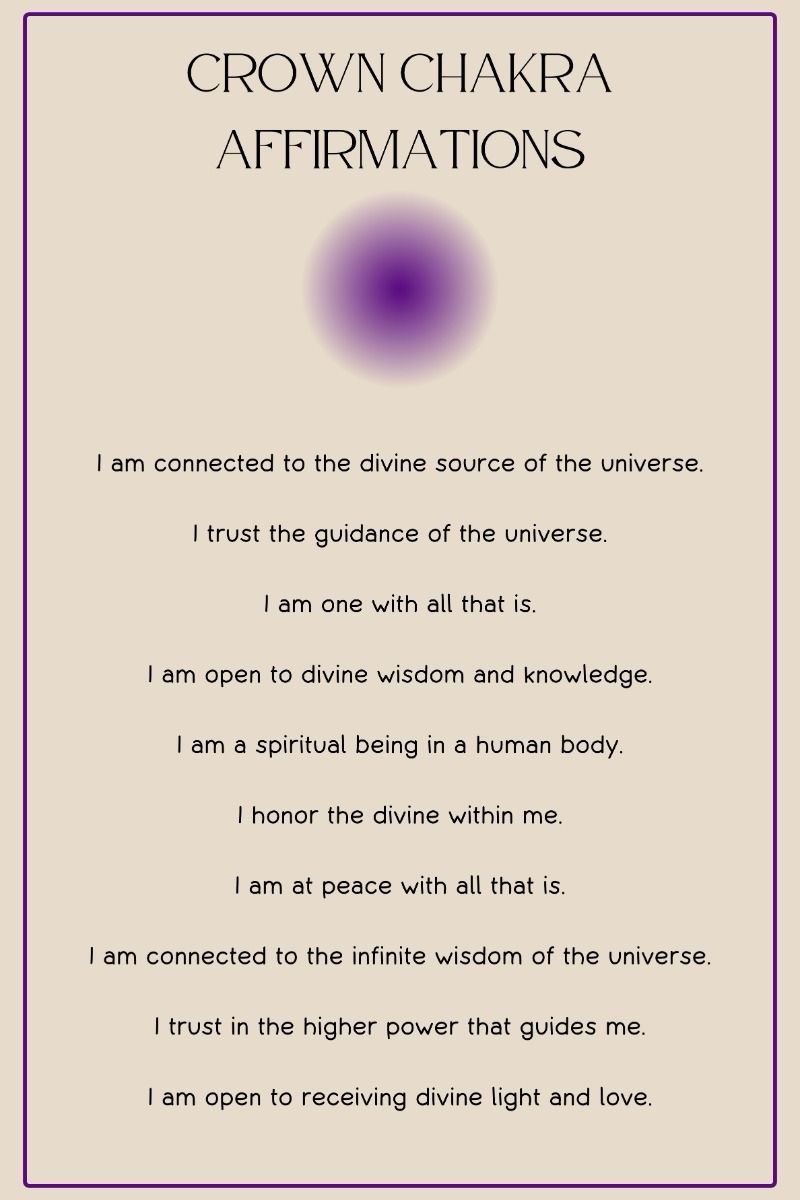
7. Affirmations: Use statements like “I am connected to divine wisdom” and “I trust the universe’s plan for me.”

8. Let Go of Control: The Crown Chakra reminds us that not everything is meant to be understood—sometimes, we must surrender and trust in the unknown.


Final Thought

The Crown Chakra is your gateway to peace, wisdom, and divine connection. When balanced, you feel a deep sense of purpose, inner peace, and trust in the flow of life.

You are not just a drop in the ocean—you are the ocean in a drop.

You were meant to lead with faith—trust in the journey, and allow yourself to expand beyond limits.

Money Isn’t Lost; It’s Transferred Into *Abundance*

We often look at money through the lens of subtraction. You swipe your card, hand over cash, and—poof—it’s gone.

There’s an almost automatic reaction of stress or scarcity, especially when the numbers in your bank account shrink.

But what if we shifted that mindset? What if, instead of seeing money as something that’s lost, we saw it as something that’s transferred into abundance?

When you spend $200 on groceries, it’s easy to focus on the dent it made in your budget. But pause for a moment. What did you receive in return? You didn’t just “lose” $200—you exchanged it for shelves stocked with food to nourish your family. You gained the convenience of not having to hunt, gather, or grow that food yourself. You have fresh produce, snacks for your kids, meals that will bring your family together around the table. That’s not a loss. That’s abundance.

Think about your morning coffee. Maybe you spend $5 at your favorite café. It’s not just coffee—it’s a warm ritual that starts your day, crafted by someone else so you didn’t have to grind the beans, boil the water, and perfect the brew. That small purchase buys comfort, convenience, and a little moment of joy.

Money is always an exchange. It’s never just disappearing into the void. It’s flowing—transforming into goods, services, experiences, and opportunities. The key is to recognize what it’s transforming into.

When we approach spending with gratitude for what we receive, the stress tied to money begins to loosen. Instead of thinking, “I had $200, and now I don’t,” we can think, “I’ve exchanged $200 for nourishment, convenience, and the ability to provide for my family.”

This mindset shift doesn’t ignore the importance of budgeting or financial responsibility. It simply reframes how we view the natural flow of money in and out of our lives.

By seeing spending as an investment in abundance—whether it’s food, shelter, education, or small joys—we soften the grip of scarcity thinking.

Now, just to be clear—I’m not saying,

“Okay, go wild and buy everything your heart desires!” — (“Put the online shopping cart down…don’t say YES to everything in your amazon “save for later” list.)

I’m simply offering a new way to look at your money—a way to encourage a healthier, more abundant relationship with it. One where spending isn’t just a loss, but a conscious exchange that brings value into your life.

So the next time you feel that sting of spending, ask yourself:

What abundance did I just receive in return?

This shift of mindset will also allow you to see how many blessings truly surround you.

Where Do We Draw The Line?

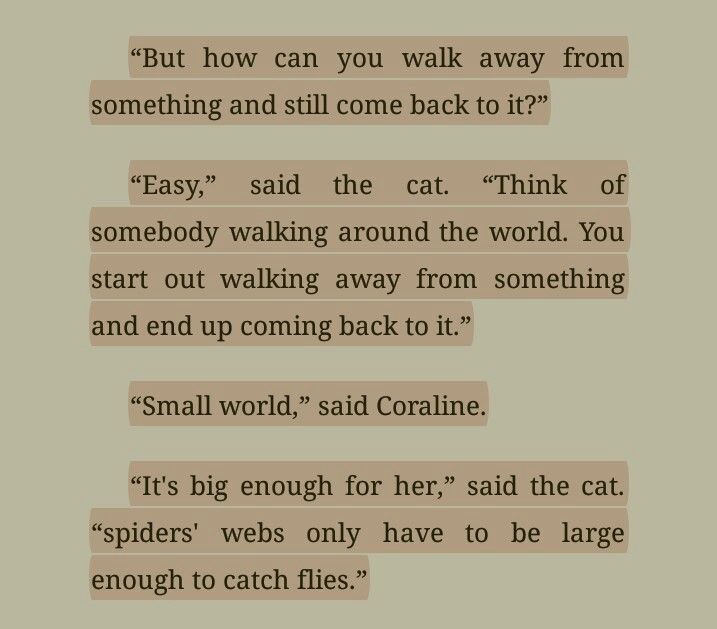
Recently, I watched the movie Coraline and a YouTube video on Taoist philosophy, and both left me reflecting deeply on human nature and our constant craving for more.

In Coraline, the children lost their souls, not because they didn’t have enough, but because even when they were given everything they desired, it still wasn’t enough. A chilling thought, isn’t it? This dark and haunting animation earned an Oscar for a reason—it shines a light on something real and unsettling within us. (I throughly enjoyed this thought provoking movie.)

Similarly, the Taoist philosophy video explored how this endless quest for “more” leads to stress, burnout, and withdrawal from peace. Or, like in Coraline, it can even cost us our souls—though perhaps not in a literal sense, but in how we lose touch with ourselves, our purpose, and what really matters.

Do you see the connection?

So, where do we draw the line? When do we step back and say, “I’m good. I have enough.”

I believe awareness is the first step. Developing an awareness of these traps—this cycle of more, more, more—can help us catch ourselves before we fall deeper into it. But awareness isn’t always enough. We need something more substantial: an armor to protect us from the constant pull of these traps.

How do we build that armor? Honestly, I wish I had a straight answer. But what I do know is this: it starts with doing the inner work. Looking at yourself—really seeing yourself. Asking the hard questions about what you truly need versus what you’re chasing out of habit, pressure, or comparison.

It’s not easy. It’s uncomfortable, messy, and often takes time. But I believe learning to “draw the line” isn’t just something we need—it’s something we all deserve. A chance to reclaim our peace, to step off the hamster wheel, and to say, “This is enough.”

(YouTube video in case you’re interestedclick here )

Cheating Is Not The Way

Have you ever cheated on a test before? I have—more times than I’d care to admit. There’s one particular instance in high school I’ll never forget. I was copying a friend’s answer to a question about food safety, and her response was, “When in doubt, throw it out.” Makes sense, right?

Well, I mindlessly wrote, “When in doubt, pull it out.” Facepalm. I wasn’t even paying attention to what I was writing—I just copied without thought.

The teacher called me up to the desk and had me read my answer aloud. I was mortified. Thankfully, I had a sense of humor, even back then, so I was able to laugh at myself. But that moment stayed with me because it taught me something deeper about the value of truly learning.

When you cheat, you’re not really learning or engaging. You’re just skating by, collecting answers without understanding the questions. Sure, you might pass the test and move on to the next level, but sooner or later, you’ll find yourself lost and wishing you had put in the effort to learn the material.

Life, in many ways, is a test. Every challenge, every struggle, every moment of uncertainty is part of the curriculum. And God, as our ultimate teacher, doesn’t just hand us the answers. Instead, we’re equipped with an inner compass—a moral guide—to navigate this test of life. That inner guidance helps us grow, reflect, and savor the victories when we earn them.

If we were simply handed all the answers, we wouldn’t understand their significance. The struggle to figure things out, to fail, and to try again is what shapes us. It’s what gives life its richness and depth.

So don’t cheat your way through life. Don’t be afraid of the “bad grades,” the setbacks, or the moments when you feel utterly clueless. These moments aren’t failures—they’re lessons. They’re the building blocks of wisdom and resilience.

Take the test of life with open eyes, an open heart, and a willingness to learn. Because the journey is the real reward. At least that’s what they say.

Back To Basics

Give a child a cup of plain vanilla ice cream, and they’re going to light up with delight. “Yummy! This is so good!”

Now, the next time, you offer them ice cream—but this time, you’ve added sprinkles. They love it even more.

Then you take it a step further: a scoop of ice cream with sprinkles, whipped cream, and a cherry on top. Of course, it’s the ultimate treat!

But what happens when you go back to offering just plain vanilla ice cream? They refuse. “Where are the sprinkles? The whipped cream? The cherry?”

What once felt like the best thing ever—just vanilla ice cream—has now become “boring.”

This scenario isn’t just about ice cream. It’s playing out all around us, with everything.

In a world constantly trying to one-up itself, we’ve forgotten how to appreciate the simple things. We keep piling on sprinkles, whipped cream, and cherries in every area of our lives—whether it’s material possessions, experiences, or even the way we seek validation from others.

The problem is, when we get caught up in all the add-ons, we lose sight of the essence. We stop noticing the “ice cream” itself. Its flavor and joy are drowned out by all the extras.

This is why “going back to basics” is so important. At first, it may feel dull or underwhelming. But over time, you start to notice the richness in simplicity—the way life was meant to be enjoyed.

Not everything needs sprinkles, whipped cream, or cherries to be special. Sometimes, the simplest things, enjoyed as they are, hold the most joy. Save the extras for rare, special moments—and watch how the beauty of the basics begins to shine again.

Order Is The Antidote To Chaos

I was listening to a podcast the other day with Andrew Huberman and Dr. Jordan Peterson. At one point, Dr. Peterson said, “Order is the antidote to chaos.”

I just loved that.

Synonyms for order include words like sequence, organization, and arrangement. Synonyms for antidote are remedy or cure.

Ponder that for a moment: Order is the antidote to chaos. Organization is medicine for disorder, disarray, and confusion.

In other words, take a look around—what does your home look like? Your car? Your desk? Your bedroom? Even more importantly, what’s going on in your mind?

The cure is decluttering. The cure is setting a routine. The cure is giving everything a home. The cure is embracing the philosophy of less is more. The cure is, quite simply, to “get your life in order.”

As a mother of four, I’ve learned just how necessary order is in our household—not only for myself but for my children and their well-being. They may not fully understand the impact of their surroundings, but I do. When there’s order, there’s peace, and that peace benefits everyone in the home.

By establishing order, it’s possible to alleviate, or even eliminate, things like anxiety and depression—or at the very least, to minimize them. A great reward awaits when you take the responsibility to bring order into your life. It isn’t always easy, but it’s absolutely worth it.

Take the time to find order, and you’ll discover more clarity, focus, and peace.

If You Never Fail, You Never Grow

I recently started reading Different Kinds of Minds by Temple Grandin. It’s incredibly insightful and thought-provoking. In one part of the book, she shared a fascinating rat study. Researchers found that rats who had to dig up their treats became far more resilient when faced with challenges compared to rats who were simply handed their treats.

The rats who didn’t have to work for their reward gave up more easily when obstacles appeared.

What an eye-opening observation!

This speaks to a universal truth: challenges and failures aren’t bad things—they’re vital. They build strength, resilience, and perseverance. Struggle teaches us to appreciate the rewards of our effort.

The hard work, the setbacks, and even the failures are what shape us. They’re the chisels that carve out our character and growth.

So remember, with growth comes failure—and that’s how it’s meant to be. Failure isn’t the end. It’s a stepping stone to something greater.

Your Truth May Not Be The Same For Another

I was listening to a podcast recently, and the host shared an interesting perspective: he believed that life often makes us repeat certain patterns or lessons until we finally “get it.” It was a humbling realization for him, but his guest gently challenged him, saying, “That might be true for you, but it doesn’t mean it’s the truth for everyone.”

This idea really struck me. How often do we assume that what feels true for us must automatically apply to everyone else?

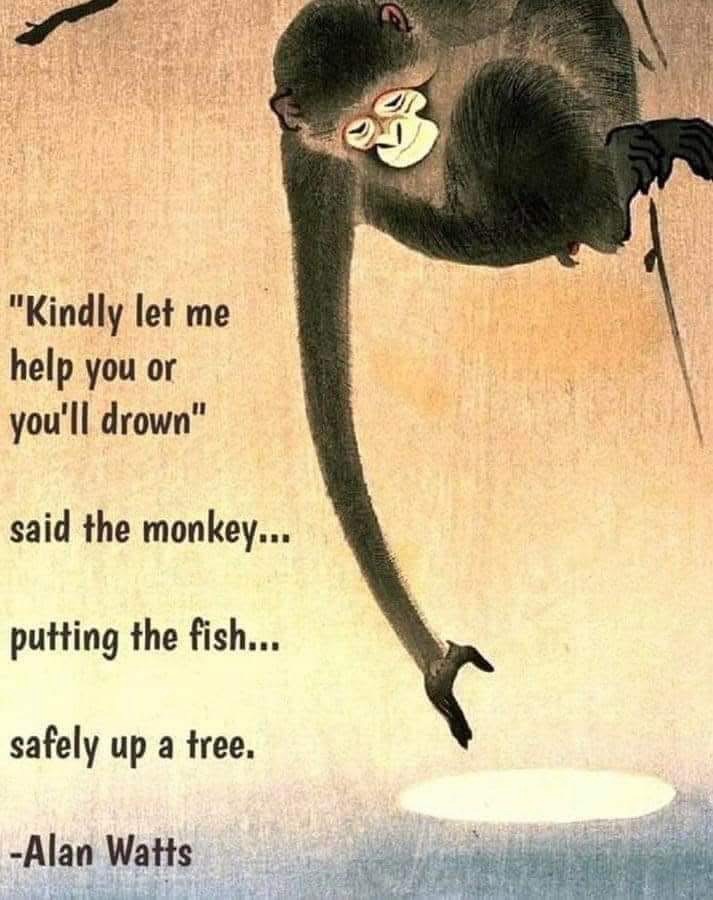
It reminded me of a story I came across that perfectly illustrates this idea:

There was a monkey who lived in a forest tree by a river. One day, the monkey saw a fish swimming in the river and thought the fish was struggling. Feeling compassionate, the monkey resolved to save it. It climbed down the tree, scooped the fish out of the water, and placed it gently on a branch. The fish flapped violently and soon died. The monkey was heartbroken and confused—it had only wanted to help.

This story offers such a powerful lesson. The monkey, out of good intentions, misjudged the situation because it viewed the fish’s needs through its own perspective. It assumed that what was natural and necessary for itself—living on land and breathing air—must also apply to the fish. In trying to help, the monkey unknowingly caused harm, simply because it didn’t take the time to truly understand the fish’s environment and needs.

How often do we, with the best intentions, do the same? We may impose our beliefs, values, or ways of living onto others, assuming they must see the world as we do. But the truth is, each of us is shaped by our unique environment, experiences, and perspective. What feels like “truth” for one person may not resonate at all for another.

This story invites us to step back and ask: Am I truly understanding someone else’s experience, or am I projecting my own onto them? Am I listening, or am I assuming?

The beauty of the world lies in its diversity—not just in nature but in thought, belief, and experience. By cultivating empathy and recognizing that we all have our own “water” or “land” to thrive in, we can approach others with a deeper sense of understanding and respect.

Next time you’re tempted to “help” someone or share what you think they need to hear, pause. Consider whether you’re seeing their life through their eyes—or through your own.

Because the truth is, your truth may not be the same truth for another.

Invisible Hands Everywhere

Everything has roots—everything.

Think about a tree for a moment. You see its sturdy trunk, sprawling branches, and vibrant leaves. But the roots? Hidden beneath the surface, they work tirelessly, anchoring and feeding the tree. The meals we eat every day are no different—each one has roots, invisible yet essential.

Take your next meal, for example—perhaps eggs and toast. At first glance, it’s just breakfast. But look closer. Behind that plate lies a network of effort and care. The farmers who gathered the eggs, the workers who milled the grains, the drivers who transported the ingredients, the cashiers who stocked the shelves—all of them played a role in bringing it to your table.

We often think of eating as a solitary act, but it’s anything but. Every bite connects us to countless others.

One morning, as I sat down to eat, this thought hit me. My meal, as simple as it was, had been touched by so many hands. People I’d never met had spent their time and energy to make it possible. I couldn’t help but feel grateful. The awareness of those invisible hands changed my perspective.

We live in a world where convenience often overshadows connection. Food appears so effortlessly that it’s easy to forget the work behind it. But when you take the time to see the roots—the people, the processes, the labor—it deepens your appreciation.

Every hand belongs to someone with their own struggles, joys, and dreams. Thinking about this transforms an ordinary act into a moment of connection and gratitude.

The next time you eat, pause for a moment. Consider the roots of your meal. Think about the farmers, the drivers, the stockers, and everyone in between. When you acknowledge these invisible hands, even a simple meal becomes extraordinary.

This mindfulness reminds us that we’re never truly alone. Behind every bite is a story of shared humanity, and with it, a reason to be thankful.

Be The Person You Want To Have In Your Life

“Would you like you, if you met you?”

Well, would you?

It’s important to pause and reflect on this from time to time. Self-evaluation is necessary, and it’s not just about the big things, it’s about everything. Your interactions, your responses, your reactions, your actions, and your words.

What kind of person do you want in your life? The good news is that you can be that person. You can choose to embody the traits you admire, the support you need, and the love you want to receive.

You can even become the person you wished you’d had in your life but didn’t.

When there’s no sunshine, you can choose to be the sunshine.

Of course, you’re still going to fall. You’re going to make mistakes. But the key is to own those mistakes, admit them, and learn from them. Nobody expects perfection because perfection isn’t human. What matters is that you’re trying your best.

Strive to be that amazing version of yourself, not just for you but for the people around you. Whether you realize it or not, there are people watching you, looking to you, and depending on you.

Be the best example you can be. And when you stumble, admit it. Swallow your pride and push forward. Accepting yourself, is accepting others.

This life isn’t meant to be navigated alone. We’re in it together. There will always be challenges and hardships, but don’t let the weight of the world harden you. Choose joy. Be the hope. And most of all, be the kind of person you’d want to meet.