Still Waiting for a Sign

Sometimes I wish she’d visit me in a dream.

Just once.

Just to say, “Hey, I know we didn’t get to be together in the earthly realm, but it was all for a reason. Just know I’m with you, and it’s all okay.”

I’ve heard stories from others about feathers on their doorstep, songs on the radio at just the right time, vivid dreams where their loved ones speak clearly. I try to hold space for those stories, to feel joy for them…

but I can’t help wondering—why not me?

I lost my birth mother, and along with her, a lifetime of moments we never got to share. There’s a quiet ache that comes from not getting to know someone who shaped your very beginning. Now that she’s in the spirit world, part of me longs for just one sign. One dream. One whisper.

But there’s only silence.

And yet… maybe that silence doesn’t mean absence.

Maybe the connection is still there, just not in the way I expected.

Maybe she’s been with me all along when I’ve felt courage I didn’t know I had, or grace that came out of nowhere. I’m apart of her, I know that, and getting to know me is getting to know her too.

Still, I hope.

I hope that one night, maybe in a dream, she’ll say what my heart has longed to hear:

I see you. I’ve always loved you. And even though we couldn’t be together in this life…..your path, it’s unfolding exactly as it should.”

Until then, I’ll keep listening.

And I’ll keep trusting that love finds a way,

even in the quiet.

Interpretation Of The Song ‘Army Dreamers’ — Kate Bush

“Army Dreamers” by Kate Bush is a haunting and emotional song about the tragic loss of young lives to war. The lyrics explore the sorrow of a mother who has lost her son in military service, and the deep grief and questioning that follows. Here’s a breakdown of the key themes and meanings behind the song:

1. A Mother’s Grief and Regret

The central voice in the song is that of a mother, mourning her son who died in military service. She reflects on the small, everyday things she did for him—feeding him, raising him—and now she’s left with an unfillable absence.

“What could he do? Should have been a rock star…”

She wonders what else he could have become if he hadn’t joined the army. There’s deep sadness in the idea that he had potential for so many other paths—but now they’re all gone.

2. The Futility of War

The song doesn’t glorify heroism. Instead, it questions the cost of war, especially for the young and vulnerable who may have joined for lack of better options.

“Tears o’er a tin box / Oh, Jesus Christ, he wasn’t to know…”

The image of a tin box (possibly containing his medals or ashes) emphasizes how little is left after a life is lost. The line “he wasn’t to know” suggests innocence—he didn’t know what he was really getting into.

3. Societal Expectations and Pressure

The title “Army Dreamers” itself is a bit ironic. It refers to young men who dream of purpose, escape, or pride by joining the military—but also points to how society may nudge them in that direction, especially when other dreams feel out of reach.

Bush is gently critiquing a world where young people are sometimes given no better choice—and where their dreams are swallowed by systems they don’t fully understand.

4. The Lingering Question: Why?

Throughout the song, there’s a persistent sense of what if—what if he’d chosen a different path? What if the world had offered him more? The mother’s grief is tangled with helplessness and guilt, even though she did everything she could.

The Tone: Lullaby Meets Lament

Musically, the song sounds gentle, almost like a lullaby—which makes the lyrics all the more haunting. It reflects how war quietly takes from us—not always with dramatic noise, but sometimes with soft, quiet, irreversible loss.

Soften The Heart: Devotional #29 — A Message of Hope for the Grieving

This Is Not the End: A Message of Hope for the Grieving

My Father’s house has many rooms; if that were not so, would I have told you that I am going there to prepare a place for you? And if I go and prepare a place for you, I will come back and take you to be with me that you also may be where I am.”

John 14:2-3

Loss has a way of stopping time. One moment, life is moving forward, full of plans, routines, and expectations. The next, everything changes. A phone call, an accident, a last breath you didn’t realize was the last—and suddenly, the world feels different. Emptier.

When we lose someone unexpectedly, the pain is sharp and disorienting. There’s no time to prepare, no gradual goodbye. Just a void. And in that void, we wrestle with the question that lingers in every grieving heart: Where are they now?

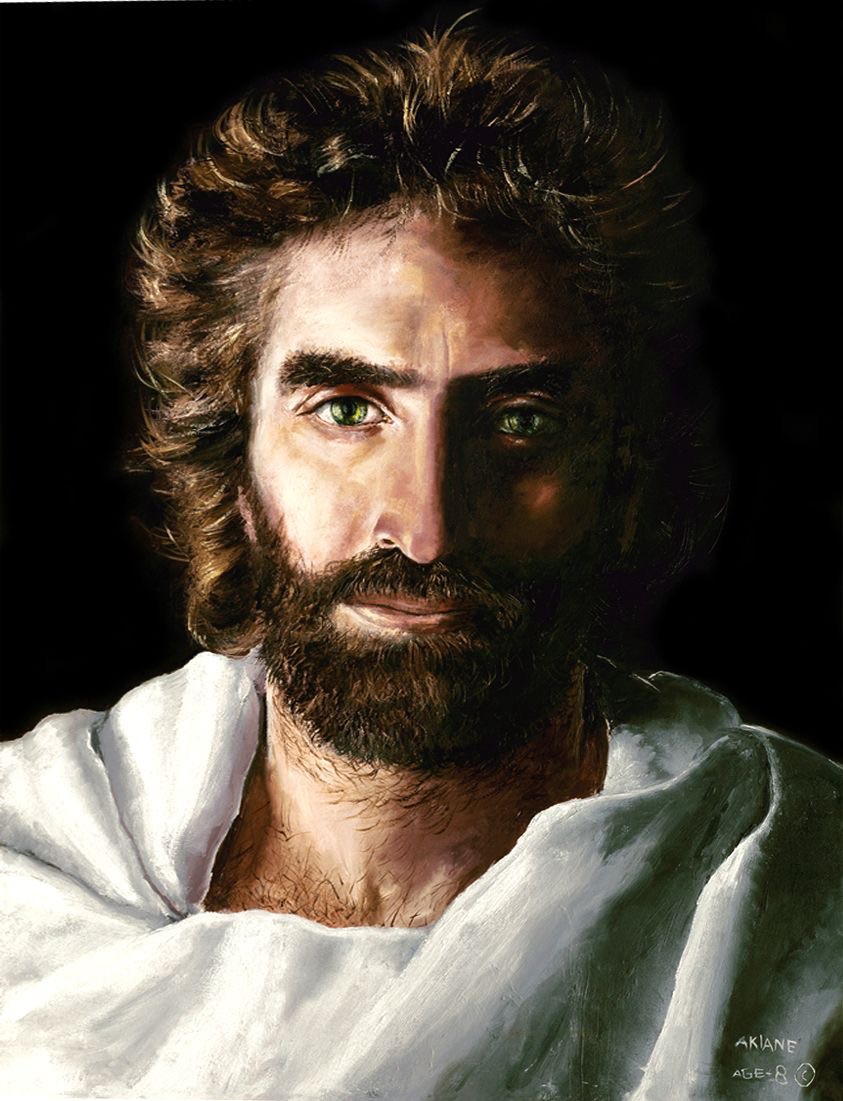
Jesus knew we would ask this. He knew our hearts would ache with longing for those who are no longer with us. And so, He left us with this promise.

This world is not the final destination. Death is not the end of the story.

Jesus is preparing a place. A place where brokenness does not exist, where suffering has no power, where love never fades. A place where those we have lost—those who seemed to slip away too soon—are not truly gone but waiting in a home far greater than this one.

That doesn’t take away the pain of missing them now. It doesn’t erase the ache of their absence. But it does mean that separation is temporary. Love is not lost.

Imagine, just for a moment, that there is more beyond what we can see. That the ones we grieve are not lost in darkness but alive in a way we cannot yet comprehend. That God’s love is big enough to hold them and us, to weave our stories together again in a way more beautiful than we can imagine.

We may not have all the answers. We may not understand why loss comes the way it does. But we can hold onto this:

This is not the end.

There is a place beyond this world, a home beyond this life, and a love that is strong enough to bring us back together again. And one day, when the time is right, we will see them again.

Until then, we carry them in our hearts, and we hold onto hope.

If You’re Grieving, You Are Not Alone

If you’ve experienced a sudden loss, I want you to know that your pain is seen. Your grief is real. But so is hope. Even in the darkness, you are not alone. God is near to the brokenhearted (Psalm 34:18), and He promises that one day, all things will be made new (Revelation 21:4).

If this message speaks to you, I pray it brings even a small measure of peace. And if you know someone who is struggling with loss, please feel free to share it. You never know whose heart might need this reminder today.

When You Grieve

We don’t just grieve when a loved one dies. Though many feel that’s the only time we are “allowed” to grieve, the truth is that grief appears in so many forms. Grief is, at its heart, a deep sadness; one we feel in countless ways throughout our lives.

We grieve over friendships that were once intertwined so tightly but have now lost their elasticity.

We grieve over romantic relationships, mourning what they once were and what they will never be again. It’s like a glass of water being spilled; once it’s spilled, it can never be a glass of water again.

We grieve over growing up, over life’s truths being revealed. We mourn our ignorance and innocence in ways we don’t often speak about.

We grieve over our children—their independence, their struggles, the way we cannot protect them from everything, no matter how much we wish we could.

We grieve over past versions of ourselves, searching for the joy or energy we once had and feeling unsure if we’ll ever get it back, no matter how many books we read or podcasts we listen to.

We grieve over our bodies that have changed, over the capabilities we once had but can no longer reach.

We grieve over change itself, in all its forms whether we asked for it or not.

It’s okay to grieve. I want to remind you that you are never alone in this. Walking through the woods of grief is often a silent journey, one we take while the outside world continues on, oblivious. You may feel like you have to navigate it by yourself, but I promise, others have walked this path, too.

I wish I had a universal answer for how to get through grief. I really do.

What I can tell you is that it isn’t a straight line. Some days, you’ll feel fine, even hopeful. And then, out of nowhere, grief will show up like an unexpected visitor—one who arrives uninvited and unannounced, leaving you unprepared.

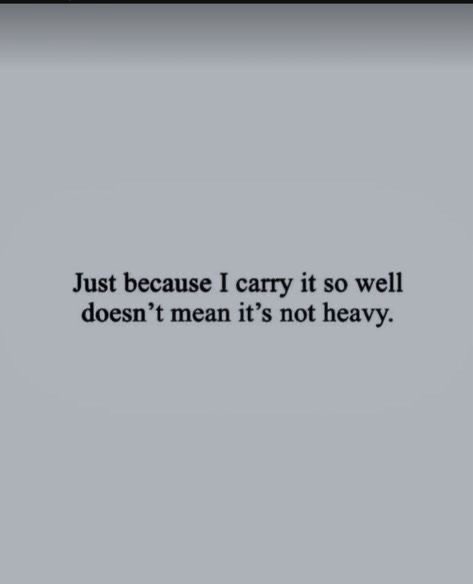
In those moments, be gentle with yourself. Grief isn’t something to “fix” or “finish.” It’s something to feel and carry until it lessens its weight. Grief may never truly leave, but over time, you may find it settling into the corners of your heart, leaving space for other things; hope, love, and even joy.

Grief is the echo of something meaningful, a reminder of how deeply we’ve loved, how deeply we’ve lived. And while it’s heavy, it’s also proof that you’re human, that you’ve cared, that you’re still here; growing and walking forward, one step at a time.

Give yourself permission to grieve. Give yourselves permission to cry. Give yourself permission to close off the world for a bit. Give yourself permission to not have to explain. Give yourself permission to heal. Give yourself permission to not be okay.

Be Vulnerable And Let Love In

There is a lot less pain when we keep ourselves reserved. But when we close ourselves off, we also miss out on the immense beauty of love. Love is always a risk, and while it can bring heartache, I promise you—it’s worth it. Embracing love is not something you will ever regret.

Still, we cannot ignore the truth about love: when it’s lost, it lingers.

Losing love is like reaching the most gripping part of a story, only to turn the page and find it blank. The rest of the book is empty—full of unanswered questions, leaving you with a longing for what could have been.

“’Tis better to have loved and lost than never to have loved at all,” Alfred Lord Tennyson once said. And he was right. Love leaves its mark, even in its absence. It shapes us, teaching us to feel deeply, to grow, and to carry its lessons forward.

Love is universal—it binds us together. It’s something we all seek and something we all grieve when it’s gone. But the loss of love should never overshadow the joy of experiencing it.

Yes, love makes us vulnerable, but it also opens doors to the most profound parts of being human. To love deeply is to live fully. Even in its risks and heartaches, love teaches us who we are.

So let love in. Be vulnerable. It’s the bravest thing you can do—and the most rewarding.

“To make the journey and not fall deeply in love, well, you haven’t lived a life at all.”

A Lesson From A Tree

We have this tree in our front yard. Originally, it was full of branches, lush with leaves, and provided such beautiful shade. Like all trees, it has its seasons, but we especially loved it in full bloom. It attracted so many birds and added so much life to our yard.

One day, we noticed a crack forming down the middle of the tree. We knew that, in time, it would eventually split. And sure enough, after some time, it did. The tree split all the way through, and my husband carefully cleaned up the fallen half. When I went outside and looked at what was left, I felt a pang of sadness. The tree wasn’t the same—it had lost a big part of itself that day, leaving our yard a bit bare. And yet, the tree remained standing.

I mourned what the tree had lost, but I also took a moment to celebrate all the beauty and shade it had provided over the years.

As much as we’d like to prevent these “splits” from happening, we unfortunately can’t. This is life, and it comes with aches and pains. But if a tree can remain standing after a huge loss and still continue to grow, withstanding both sunshine and storms, then it’s possible that we can, too. Remember—the tree is still standing.

We are like this tree. When we lose a part of ourselves, it’s natural to mourn. But it’s also an opportunity to celebrate—to honor the strength it took to remain standing and to hold hope for new growth. The parts we’ve lost have served us well. They’ve contributed to our growth and shaped who we are, and that’s something to remember with gratitude.

Dear Readers, My Birth Mom Passed Away

My birth mom passed away. It’s been a week now. It’s lead to an indescribable type of grief that I feel very alone in if I’m honest. And I feel compelled to just release some of the things that I’m feeling at the moment.

My aunt (my birth mom’s sister) texted me last Wednesday telling me that she had passed. I had never met her. That wasn’t my choice. I’ve been wanting to meet her my whole life and I actually almost did last spring but it just didn’t happen because she had somewhere to be apparently. Who knows what the full truth is. I can feel I’m not being told everything. I know she was mentally unstable. Suffered from schizophrenia. But how she died seems to be unknown. She checked into the hospital for something, was there for a few weeks, and passed “with family by her side”.

I was really upset at first, clearly I still am. My birth mom was in the hospital for a few weeks and my aunt didn’t tell me? The opportunity to meet the woman who birthed me is gone and it breaks my heart.

All of this pain as being an adoptee has resurfaced I don’t even know how to handle it. I just keep crying. I never knew any biological family until I turned 29. I always felt so completely alone growing up.

I haven’t even told my adoptive parents that my birth mom has passed because it’s just going to make them uncomfortable and they’ll probably say I’m sorry and that’s about it.

When I told them I had found biological family on ancestry there was no happiness for me. There was fear. Never have they ever really talked to me about how I felt being adopted. But they didn’t know, I know that. I was just a grateful child who hid the wounds very very well.

Having adopted two children (my niece and nephew on my husband’s side) I will be a different parent. Their wounds will get the oxygen they need. And I will help them find answers.

I’m just sad right now. I’m just really really sad and another adoptee told that I’m experiencing disenfranchised grief. Basically it’s a grief that’s not understood or validated.

It’s lonely. It’s lonely to want to share this with more people in my life but they won’t get it but also I think…I don’t want to share because I’m not ready to fully reveal how much I’ve been holding in and for so long. Plus I can’t talk about this without crying.

I think that’s why I love this blog world so much. I can be so raw and just let it out. And no one close is going to read this because hardly anyone I know reads my stuff, and if they even do they never say anything.

And if you just read this, wow, thank you. Thank you for hearing me for a moment. Thank you for letting me cry and share.

To be a grown up and still this lost at times and here I am raising children…..

How do you guide children when you aren’t even sure of the way,

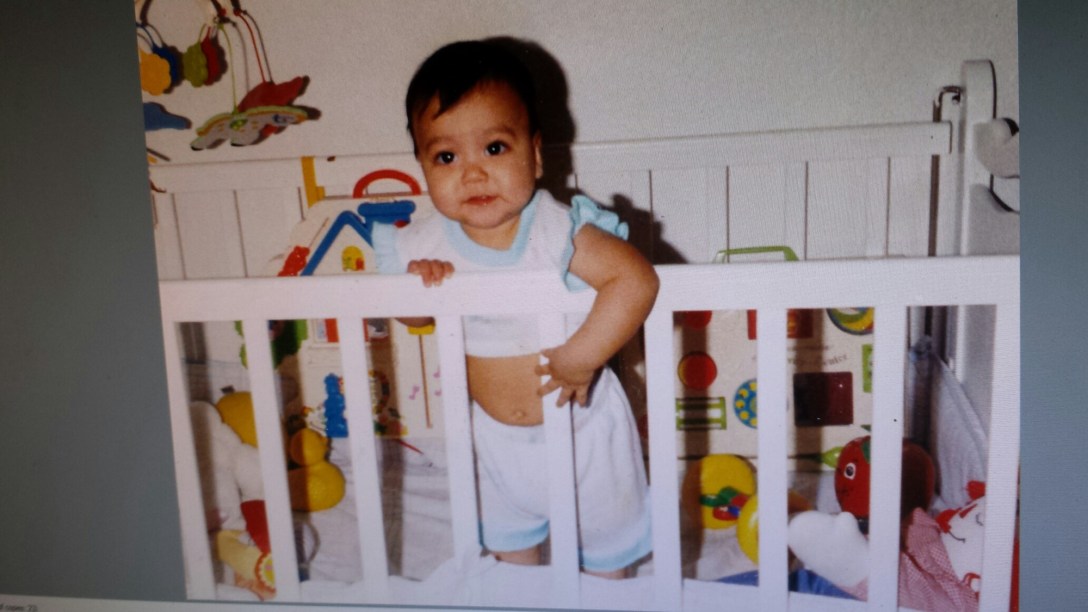
Ps – I do have a picture now of my birth mom when she was probably about 18. My youngest daughter has her eyes. They’re so beautiful.