A Hidden World: What Uncontacted Tribes Teach Us About Ourselves

Every once in a while, something crosses your path that stops you in your tracks — something that makes you question everything you thought you knew about the world.

That was me the other day, reading an article about a drone capturing footage of a group of people living deep in a remote region… completely cut off from modern society.

Not unaware.

Not forgotten.

Just choosing to live outside of our world.

There are still entire villages — real people, real families, real lives — who have never stepped foot into our “modern” world. They have no electricity, no phones, no clocks, no social media, no government systems, no advertisements telling them what they need, no pressure to become anything other than who they already are.

They live in a world that feels like a parallel reality.

And it fascinates me.

But more than that… it teaches us something.

1. A Full Life Doesn’t Require Our Definition of “Full”

We’re conditioned to believe that fulfillment comes from:

achievements productivity growth comfort convenience

Yet these tribes live full, meaningful, deep lives without any of the things we chase every day.

No noise.

No chaos.

No comparison.

Just existence — pure, present, human.

It makes you pause and wonder:

Are we actually thriving… or are we just endlessly busy?

2. “Progress” Isn’t Universal

From the outside, we might assume they’re “behind” — that our world is somehow superior or more advanced.

But the truth is striking:

They do not want our world.

They choose theirs, proudly and intentionally.

To them, our world isn’t an upgrade — it’s a disruption.

Their world is home, identity, freedom, rhythm.

And they guard it fiercely.

It makes you rethink what “better” even means.

3. They Are Living Echoes of Human Origins

Watching footage of them feels like looking through a window into how humanity once lived:

connected to the land bonded through community surviving through wisdom passed down for generations living according to the earth’s rhythms, not man-made ones

They are a reminder of who we used to be before modern life overstimulated our minds and fragmented our attention.

4. There Are Still Mysteries in the World

We love to think we’ve discovered everything.

Mapped every corner.

Documented every culture.

But then—

a drone flies overhead and reveals an entire village hidden beneath the trees.

It’s humbling.

It reminds us that Earth is still wild, sacred, and full of secrets.

The world is bigger and more mysterious than our little bubbles allow us to imagine.

5. They Teach Us Holy Boundaries

These villages avoid contact not out of fear, but out of wisdom:

outsiders bring disease outsiders bring exploitation outsiders bring change that erases culture

They protect their world the way we should protect our inner peace — fiercely, intentionally, unapologetically.

Not everything is meant to be shared.

Not everything is meant to be exposed.

Some things are sacred, and sacred things require boundaries.

6. They Make Us Rethink “Civilization”

We assume we’re more civilized because we have technology and systems.

But what if civilization is also:

emotional closeness communal purpose spiritual grounding simplicity harmony with the land

Who’s actually more aligned with life —

them, or us?

7. They Wake Us Up Spiritually

Seeing people who live untouched by noise or comparison shakes something loose in your soul.

It makes you ask:

What would my life look like without distraction?

Without pressure?

Without the constant hum of stress and expectation?

It makes you wonder who you would be if you never had to perform for the world.

Sometimes I think:

Maybe they aren’t the ones missing out.

Maybe we are.

A Final Thought

These tribes remind us that there is no single way to be human.

No universal path.

No timeline we must follow.

They are living proof that a meaningful life can look wildly different from what we’re taught to chase.

And maybe —

just maybe —

they’re here to remind us to slow down, reconnect, simplify, and remember that the world, at its core, is still full of wonder.


Unpeeling the Layers: Beginning Shadow Work

“Until you make the unconscious conscious, it will direct your life and you will call it fate.” — Carl Jung

We all have parts of ourselves that we hide — not because they’re bad, but because somewhere along the way, we were taught they shouldn’t exist, or we felt embarrassed or shame.

The truth is, your “shadow” isn’t evil. It’s simply the unseen — the pieces of you that crave your love and understanding.

A huge part of my very own shadow work has been working through the trauma of being adopted. Emotions and feelings that I battled internally by myself.

Healing takes time; remember that.

What Is Shadow Work?

Shadow work is the practice of bringing light to those unseen parts.

It’s about facing your fears, triggers, insecurities, and buried emotions with honesty and compassion.

When you do, something incredible happens:

what once controlled you from the dark begins to heal in the light.

Shadow work isn’t about fixing yourself — it’s about remembering yourself. It’s about making the connections.

How to Begin Shadow Work

1. Create a safe space

Find a quiet place where you can be fully honest. Light a candle, journal, or simply sit in reflection. Shadow work requires gentleness and patience — you’re opening emotional layers that have been closed for a reason.

2. Observe your triggers

Notice what upsets, annoys, or frustrates you in others.

These moments are mirrors — reflections of something within you asking to be seen. Instead of judging the feeling, get curious about it.

3. Meet your emotions without judgment

When anger, jealousy, or sadness arises, don’t push it away. Ask it what it’s trying to show you. Often, our strongest emotions lead directly to our deepest wounds.

4. Journal through the layers

Writing can help you uncover truths you didn’t know you were hiding. Be honest, messy, and real — no one ever has to read it.

Shadow Work Prompts to Begin

• What emotion do I avoid feeling the most, and why?

• What do I criticize most in others that might live within me too?

• What parts of myself do I struggle to accept or show to the world?

• When do I feel unworthy, and where did that belief begin?

• What am I still holding resentment about, and what lesson might be hidden inside it?

• What situations make me feel small, and who taught me that shrinking was safer?

• What am I afraid people would think if they truly knew me?

• What does my inner child need from me right now?

• In what ways do I self-sabotage when things start going well?

• If my pain could speak, what would it say?

Remember: You Are the Light and the Shadow

Shadow work isn’t about becoming “perfect.” It’s about wholeness — learning to hold both the light and the dark with love. Yin and yang.

Each layer you peel back reveals more truth, more compassion, more freedom.

Healing begins the moment you stop running from yourself and start listening.

The Real Reason We Don’t Have World Peace (And How We Can Find It Within)

“Peace cannot be kept by force; it can only be achieved by understanding.” – Albert Einstein

We talk about world peace as if it’s something out there — a dream we keep chasing but can’t quite reach. Yet maybe the reason we can’t find peace in the world is because we haven’t yet found it within ourselves.

Government shutdowns, wars, and constant divisions are only mirrors of a deeper human truth: we are disconnected. From each other. From nature. From the still voice inside us that remembers what really matters.

The Surface of Conflict

On the surface, countries fight over land, money, and power. Politicians argue over who’s right. But beneath it all lies the same root cause: fear.

Fear of losing control. Fear of not being enough. Fear of not being heard.

When fear leads, compassion fades. And when compassion fades, peace cannot survive.

The Inner War

The world is simply a reflection of the collective inner world of its people.

So many of us carry anger, guilt, resentment, or unhealed wounds — and those emotions ripple outward. We argue, we judge, we close our hearts. It’s no wonder nations do the same.

The truth is, world peace begins with inner peace.

When you choose to forgive someone instead of holding onto pain… when you pause before reacting in anger… when you take a breath instead of shouting back — you shift the frequency of the world around you.

That’s not just poetic. It’s energetic law.

The Forgotten Connection

We’ve been taught to see differences instead of similarities — race, religion, gender, politics. But beyond those layers, we are made of the same dust, the same breath, the same light.

When you look into someone’s eyes and see yourself reflected there, peace is already happening.

We forget that we are not separate waves crashing against each other — we are the same ocean, simply moving in different forms.

The Hope That Still Lives

World peace might never come from a treaty or a politician’s promise.

It might come from something much quieter — the mother teaching her children to be kind, the friend who listens without judgment, the stranger who offers a smile when you need it most.

Every small act of love is a piece of peace.

And when enough of us find peace inside ourselves, the world will no longer have a choice but to reflect it back.

The Importance of Releasing Built-Up Energy

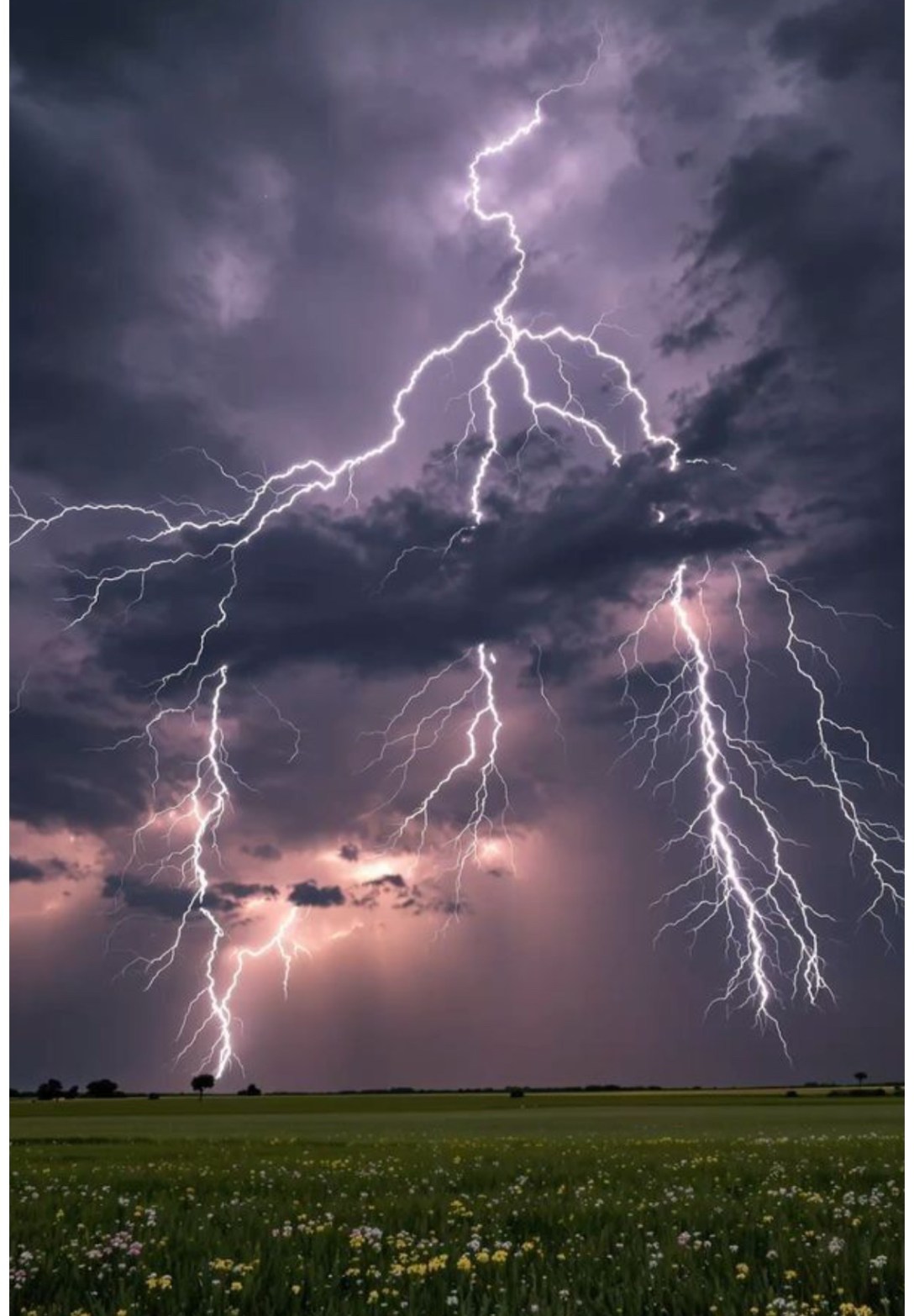
“Thunder is good, thunder is impressive; but it is lightning that does the work.” – Mark Twain

I was sitting outside this morning, sipping coffee as a gentle rain shower passed through. Lightning flickered across the sky, thunder rumbled in the distance, and I was struck by how beautiful it all was. That simple moment sent me down a little “Google trail” of facts about thunder, lightning, and their connection with the earth. The more I read, the more amazed I felt by how deeply nature is woven together and how much of that connection we often overlook.

It reminded me of something from many years ago, when I worked at the bank. One of the first lessons they taught us about working with customers was this: you must create a connection before offering advice. That connection built trust, and with trust came a relationship.

Without it, nothing meaningful could take root.

Isn’t the same true with our Mother Earth? How important it is to slow down, notice her rhythms, and take the time to build connection. With connection comes care, and with care comes relationship.

When thunder shakes the earth, we are reminded that even the sky must let go. Storms don’t appear out of nowhere, they build from heat, pressure, and imbalance. Eventually, the energy becomes too great to hold, and nature finds its release through lightning and thunder.

This release isn’t destructive by design. It’s restorative. The rain nourishes the soil. The air cools. The atmosphere resets. Without the storm, the earth would stay tense, suffocated by pressure that has nowhere to go.

We are no different.

Each of us carries storms inside; emotions we bottle up, words we don’t say, grief we don’t grieve. Like the sky, we can only hold so much. When we refuse to release what weighs on us, it doesn’t disappear; it hides in our bodies, our thoughts, our relationships. The pressure builds until it finds a way out; sometimes in anger, sometimes in tears, sometimes in illness.

But when we allow release — a cry, a deep conversation, a prayer, a long walk, a creative expression — we restore balance. We clear space for peace, for clarity, for renewal.

Just as thunder reminds us the earth is alive and in motion, our own release reminds us we are living, feeling beings. And letting go is not weakness. It’s wisdom.

Because in both nature and life, release is what makes room for growth.

Ways to Release Built-Up Energy

Journaling – Write freely, without judgment, letting your emotions pour onto the page.

Movement – Dance, stretch, walk, or shake your body to let energy flow out physically.

Crying or Laughing – Both are natural releases the body uses to reset and heal.

Breathwork – Deep, intentional breathing can calm the nervous system and move stuck energy.

Prayer or Meditation – Offer what you’re holding onto to God/the universe, releasing it into something greater than yourself.

Creative Expression – Paint, sing, garden, or create in any form that feels like release.

Speaking It Aloud – Share your feelings with a trusted friend, partner, or even speak them in solitude — the act of voicing brings relief.


Reflection Question:

What energy are you still holding onto that is ready to be released — and how might you allow yourself a healthy “thunderstorm” so that renewal can follow?

Back To Basics

Give a child a cup of plain vanilla ice cream, and they’re going to light up with delight. “Yummy! This is so good!”

Now, the next time, you offer them ice cream—but this time, you’ve added sprinkles. They love it even more.

Then you take it a step further: a scoop of ice cream with sprinkles, whipped cream, and a cherry on top. Of course, it’s the ultimate treat!

But what happens when you go back to offering just plain vanilla ice cream? They refuse. “Where are the sprinkles? The whipped cream? The cherry?”

What once felt like the best thing ever—just vanilla ice cream—has now become “boring.”

This scenario isn’t just about ice cream. It’s playing out all around us, with everything.

In a world constantly trying to one-up itself, we’ve forgotten how to appreciate the simple things. We keep piling on sprinkles, whipped cream, and cherries in every area of our lives—whether it’s material possessions, experiences, or even the way we seek validation from others.

The problem is, when we get caught up in all the add-ons, we lose sight of the essence. We stop noticing the “ice cream” itself. Its flavor and joy are drowned out by all the extras.

This is why “going back to basics” is so important. At first, it may feel dull or underwhelming. But over time, you start to notice the richness in simplicity—the way life was meant to be enjoyed.

Not everything needs sprinkles, whipped cream, or cherries to be special. Sometimes, the simplest things, enjoyed as they are, hold the most joy. Save the extras for rare, special moments—and watch how the beauty of the basics begins to shine again.

If You Never Fail, You Never Grow

I recently started reading Different Kinds of Minds by Temple Grandin. It’s incredibly insightful and thought-provoking. In one part of the book, she shared a fascinating rat study. Researchers found that rats who had to dig up their treats became far more resilient when faced with challenges compared to rats who were simply handed their treats.

The rats who didn’t have to work for their reward gave up more easily when obstacles appeared.

What an eye-opening observation!

This speaks to a universal truth: challenges and failures aren’t bad things—they’re vital. They build strength, resilience, and perseverance. Struggle teaches us to appreciate the rewards of our effort.

The hard work, the setbacks, and even the failures are what shape us. They’re the chisels that carve out our character and growth.

So remember, with growth comes failure—and that’s how it’s meant to be. Failure isn’t the end. It’s a stepping stone to something greater.

Invisible Hands Everywhere

Everything has roots—everything.

Think about a tree for a moment. You see its sturdy trunk, sprawling branches, and vibrant leaves. But the roots? Hidden beneath the surface, they work tirelessly, anchoring and feeding the tree. The meals we eat every day are no different—each one has roots, invisible yet essential.

Take your next meal, for example—perhaps eggs and toast. At first glance, it’s just breakfast. But look closer. Behind that plate lies a network of effort and care. The farmers who gathered the eggs, the workers who milled the grains, the drivers who transported the ingredients, the cashiers who stocked the shelves—all of them played a role in bringing it to your table.

We often think of eating as a solitary act, but it’s anything but. Every bite connects us to countless others.

One morning, as I sat down to eat, this thought hit me. My meal, as simple as it was, had been touched by so many hands. People I’d never met had spent their time and energy to make it possible. I couldn’t help but feel grateful. The awareness of those invisible hands changed my perspective.

We live in a world where convenience often overshadows connection. Food appears so effortlessly that it’s easy to forget the work behind it. But when you take the time to see the roots—the people, the processes, the labor—it deepens your appreciation.

Every hand belongs to someone with their own struggles, joys, and dreams. Thinking about this transforms an ordinary act into a moment of connection and gratitude.

The next time you eat, pause for a moment. Consider the roots of your meal. Think about the farmers, the drivers, the stockers, and everyone in between. When you acknowledge these invisible hands, even a simple meal becomes extraordinary.

This mindfulness reminds us that we’re never truly alone. Behind every bite is a story of shared humanity, and with it, a reason to be thankful.

Protect Their Light: A Call to Kindness for Children

Not even children get a free pass when it comes to “life.” There are so many children out there who have had to grow up far too soon, and it’s truly heartbreaking.

Too often, we overlook children and assume they don’t have life experience, but believe me when I tell you there are children who have been through more than many adults.

Life is not fair, this we know. But it’s especially unfair to children. They deserve so much more than what life often hands them.

Never look down on them. Be there for them. Help them navigate their pain. Not all children have the right words yet for what they feel. Sometimes they don’t need your advice, they just need you to listen. Offer your hand of guidance. Let them know they are not alone.

There is so much we can learn from children. They have a unique way of seeing the world, and their resilience is nothing short of remarkable. And though life is what it is, we have to try to protect them. We have to try to preserve their innocence as long as we can.

Children deserve the chance to stay children. They deserve to dream, to feel safe, and to be surrounded by love. When we protect their light, we allow them to shine in ways that make this world a better place.

When we show them love and understanding, we’re not only shaping their future but also shaping a kinder world for all of us.

Be The Person You Want To Have In Your Life

“Would you like you, if you met you?”

Well, would you?

It’s important to pause and reflect on this from time to time. Self-evaluation is necessary, and it’s not just about the big things, it’s about everything. Your interactions, your responses, your reactions, your actions, and your words.

What kind of person do you want in your life? The good news is that you can be that person. You can choose to embody the traits you admire, the support you need, and the love you want to receive.

You can even become the person you wished you’d had in your life but didn’t.

When there’s no sunshine, you can choose to be the sunshine.

Of course, you’re still going to fall. You’re going to make mistakes. But the key is to own those mistakes, admit them, and learn from them. Nobody expects perfection because perfection isn’t human. What matters is that you’re trying your best.

Strive to be that amazing version of yourself, not just for you but for the people around you. Whether you realize it or not, there are people watching you, looking to you, and depending on you.

Be the best example you can be. And when you stumble, admit it. Swallow your pride and push forward. Accepting yourself, is accepting others.

This life isn’t meant to be navigated alone. We’re in it together. There will always be challenges and hardships, but don’t let the weight of the world harden you. Choose joy. Be the hope. And most of all, be the kind of person you’d want to meet.

Less Stuff, More Meaning

Baby steps. One simple way to alleviate stress in your life while also increasing peace of mind is by letting go of stuff. We hold onto things for many reasons without realizing how heavy that “stuff” can be—not just in our homes, but in our hearts. Becoming more mindful of what you buy and why you keep what you already have is the first step to moving forward.

It’s not always easy. But if you work toward building the habit of asking, “Is this a need or a want?” every time you’re tempted to purchase something, you’ll become more conscious of your spending habits. Go a step further and ask, “What’s the meaning behind this purchase?” When you start connecting purchases to purpose, you shift from acquiring more to surrounding yourself with what matters most.

While decluttering, ask yourself a similar question: “Why is this so hard for me to let go of?” Often, it’s because the item holds sentimental value. I’ll admit—I had a baby walker that I had a very difficult time parting with. If I saw it at a thrift store, I wouldn’t think twice about leaving it behind. But this one taught all my girls how to walk. It’s not just an object—it’s a memory.

Take your time. If letting go of something feels like too much, move on to the next item. Decluttering doesn’t need to happen all at once, and you’ll find that the process becomes lighter and more natural as you go. When the time does come to release something, remember this: when you give it away, you’re sharing its meaning and purpose with someone new.

The magic of decluttering is that it gives more space for the things that truly matter to shine. When you remove the excess, what’s left stands out. Surround yourself with stories, not just “good deals.”

Imagine walking into a home where everything you see holds meaning, tells a story, or serves a purpose. How much lighter would your heart feel? How much freer would your mind be? Letting go isn’t just about what you remove—it’s about what you make room for.

and it just feels good when you get rid of things…….would you agree?