When Our Child’s Tears Mirror Our Own: Breaking the Cycle of Emotional Projection

“Until you make the unconscious conscious, it will direct your life and you will call it fate.”

Carl Jung

Why do we sometimes get triggered by our children’s emotions?

One word: Projection.

It sounds simple, but it’s layered and deeply human. Projection means we unconsciously place our own unresolved feelings onto others—often without realizing it. And with parenting, this tends to show up when our kids express emotions we weren’t allowed to feel growing up.


When Their Emotions Stir Something In Us

Let’s say your child starts crying over something that seems small—maybe they can’t get their shoes on. You feel irritation rise. You say, “You’re fine. Stop crying. It’s not a big deal.”

But under that reaction might be this:

You weren’t allowed to cry when you were small. You were told to toughen up. Crying meant weakness. And now, when your child does what you weren’t permitted to do, it brings up old pain you never had space to process.

What you’re feeling isn’t just about their emotion—it’s about your history with that emotion.

How Do We Break the Cycle?

1. Pause Before Reacting

Even a brief pause creates space. In that moment, silently ask yourself:

“What am I feeling right now?” “Is this about them… or something unresolved in me?”

This small habit can change everything.

2. Get Curious Instead of Controlling

Shift from, “This needs to stop,” to, “What are they trying to express?”

Emotions are messages. Our children are not giving us a hard time—they’re having a hard time.

3. Reflect on Your Own Story

Later, when things are quiet, explore:

“Was I allowed to feel this as a child?” “What did I learn about emotions like anger or sadness?”

Self-awareness is the first door to healing.

4. Reparent Yourself as You Parent Your Child

When your child is upset, respond with:

To them: “It’s okay to feel that way. I’m here.” To yourself: “I wasn’t taught this, but I’m learning now. We’re both safe.”

You’re not just raising a child—you’re healing generations.

5. Offer Yourself Compassion

Getting triggered doesn’t mean you’re failing. It means there’s something inside you that’s asking to be felt, seen, and gently loved. The more grace you give yourself, the more you’ll have to give.

This work isn’t easy. But every time you choose to pause, to stay present, and to feel instead of react, you are breaking a cycle—and building a new legacy.

One where emotion is not feared, but welcomed.

One where your child feels safe to be fully themselves.

And one where you get to heal in the process.

The Soul’s Mirrors: Twin Flames, Karmic Partners, and Deep Spiritual Teachers

Have you ever met someone who felt strangely familiar, even if you had just met?

Or someone who completely shook your world — whether through love, conflict, or deep lessons?

There’s a reason so many ancient traditions and modern philosophies speak about soul connections.

They are part of something much bigger than coincidence. They are part of how our souls grow.

Let’s step into this mysterious world together.


Where Do These Ideas Come From?

The concepts of twin flames, karmic partners, and spiritual teachers aren’t new.

Versions of them have existed for thousands of years — from the Hindu ideas of karma, to Plato’s philosophy about the soul being split into two, to Eastern teachings about souls traveling together across lifetimes.

In more recent times, these ancient ideas have woven themselves into what many now call New Age spirituality — but their roots are timeless.

At the heart of them all is one truth:

Relationships are how souls evolve.


Twin Flames: Two Halves of One Flame

The idea of a twin flame is that two souls were once one, and they split into two bodies to experience life separately — only to eventually find each other again.

But reunion is not just about romance.

It’s about transformation.

Twin flames reflect back everything inside you: your wounds, your fears, your dreams, your divinity.

The connection is intense and often chaotic at first. Twin flames trigger healing by exposing everything that still needs light. The journey isn’t about “completing” each other — it’s about becoming whole within yourself.

In ancient Greece, Plato described this beautifully in his dialogue Symposium, where he wrote that humans were originally whole beings, split apart, and forever seeking their other half.


Karmic Partners: Lessons Written in the Stars

Karmic partners are different.

You are drawn to each other because of unfinished business — energetic debts, unresolved wounds, lessons that must be learned.

The connection is magnetic, passionate, but often heavy. These relationships usually teach through contrast: by showing you what you don’t want, what needs healing, or how strong you truly are. Once the karmic energy is balanced, the relationship often naturally fades.

The word “karma” comes from Sanskrit, meaning “action” — and with karmic partners, past actions ripple forward, offering a chance to heal and complete old cycles.


Deep Spiritual Teachers: Not Always What You Expect

Not every soul connection is about romance or pain.

Sometimes, a soul crosses your path simply to awaken something inside you.

A deep spiritual teacher could be:

A friend who helps you remember who you are. A mentor who inspires you to rise. Even someone who hurts you in a way that forces you to break free and rebuild.

These soul encounters can be short or lifelong.

Their purpose is transformation — to nudge, push, or pull you closer to your true self.

Ancient mystics believed that God, the Universe, the Divine — whatever name you use — speaks to us through people. Every powerful connection is a whisper:

“Wake up. Grow. Remember who you are.”


At the Root of It All

At the deepest level, all of these connections — twin flames, karmic partners, spiritual teachers — are mirrors.

Each one shows us something we could not see alone.

Each one invites us to love more deeply: ourselves, others, and the divine heartbeat running through everything.

We do not meet anyone by accident.

Every soul who touches ours leaves an imprint — shaping who we become.


Closing Thought

If you’ve ever wondered why certain people enter your life with such force —

why some feel like home, why others feel like a wildfire —

know this:

You are not lost. You are being shaped.

You are not being punished;

you are being awakened.

Every soul encounter is a part of your journey back to the wholeness you already carry inside.

Don’t Underestimate the Power of a Well-Timed Break

In a world that glorifies hustle and productivity, taking a break can feel like a luxury—maybe even a weakness. But the truth is, rest is not just a pause from progress; it’s an essential part of it. Just like the seasons, we’re not meant to be in constant motion. Even nature understands the importance of stillness.

Take trees, for example. In the winter, they appear lifeless—bare branches standing still against the cold. But beneath the surface, something remarkable is happening. Their roots stretch deeper, gathering strength. Their energy is reserved, stored, and redirected for future growth. The dormancy of winter isn’t stagnation; it’s preparation. And when spring arrives, they bloom with renewed vitality.

We could learn a lot from the trees.

We push ourselves to keep going, believing that if we stop, we’ll fall behind. We ignore exhaustion, replace rest with caffeine, and convince ourselves that burnout is just part of the process. But when we refuse to pause, we rob ourselves of the restoration we need to thrive.

A well-timed break isn’t laziness—it’s strategy. It allows the mind to reset, the body to recover, and the soul to breathe. It’s in those moments of stillness that clarity emerges, creativity reignites, and energy returns.

So, don’t underestimate the power of stepping back. Take the nap. Close the laptop. Step outside. Embrace the quiet. You are not failing by resting—you are preparing. And just like the trees, when your next season of growth comes, you’ll be ready.

Small Acts of Self-Love: 30 Ways to Be Kind to Yourself

1. Treat yourself to your favorite coffee or snack—just because.

2. Say no to plans if you don’t really want to go—without guilt.

3. Let yourself be lazy for a day (or an afternoon) without feeling like you need to “earn” it.

4. Indulge in a guilty pleasure—watch trashy TV, eat the chocolate, read the romance novel.

5. Ignore calls and texts if you don’t feel like talking—protect your peace.

6. Buy yourself flowers just because they make you happy.

7. Take a ridiculously long, hot shower or bath with no rush to get out.

8. Wear the cozy outfit instead of the “put-together” one.

9. Rewatch your comfort movie or TV show for the 100th time.

10. Order takeout instead of cooking—sometimes convenience is self-care.

11. Sit in your car a little longer before going inside—enjoy the quiet.

12. Put your phone on ‘Do Not Disturb’ and enjoy uninterrupted time.

13. Buy yourself the little thing you keep talking yourself out of.

14. Listen to music from your teenage years and sing along loudly.

15. Go to bed ridiculously early or sleep in late just because you can.

16. Light your favorite candle for no reason at all.

17. Read in bed with no pressure to be “productive.”

18. Make yourself an over-the-top, fancy drink—whether it’s a cocktail or a hot chocolate.

19. Take yourself on a solo date—to a bookstore, coffee shop, or anywhere you love.

20. Let go of something that’s been weighing on you—mentally or physically.

21. Take a midday nap with no shame.

22. Turn off your alarm for the weekend and wake up naturally.

23. Write down three things you love about yourself.

24. Dance around your house like nobody’s watching.

25. Eat your meal in complete silence, enjoying every bite.

26. Spend an entire day in pajamas if that’s what you feel like doing.

27. Watch the sunrise or sunset just for the beauty of it.

28. Unfollow accounts on social media that make you feel bad about yourself.

29. Let yourself cry if you need to—sometimes release is the best self-care.

30. Take deep breaths and remind yourself that you are enough, just as you are.

Which one do you feel like doing today?

Crying Is a Beautiful Thing—Here’s Why

Tears often get a bad reputation. Many people see crying as a sign of weakness, something to be hidden or suppressed. But the truth is, crying is one of the most natural, healing, and even necessary things we can do. It’s not just an emotional release—it’s a biological function with real benefits for our mind and body.

So the next time you feel tears welling up, don’t fight them. Let them flow. Here’s why crying is actually a beautiful thing.


The Science Behind Tears

Did you know that not all tears are the same? There are three types of tears, each with its own unique purpose:

1. Basal Tears: These keep your eyes lubricated and protect them from drying out.

2. Reflex Tears: These clear out irritants like dust, smoke, or onion fumes.

3. Emotional Tears: These are triggered by strong feelings like sadness, joy, frustration, or relief.

What’s fascinating is that emotional tears contain stress hormones and toxins, meaning that crying actually helps your body release built-up tension and cleanse itself.


The Benefits of Letting Your Tears Flow

If you’ve ever had a good cry and felt lighter afterward, there’s a reason for that. Here’s how crying can benefit your well-being:

It Reduces Stress – Crying lowers cortisol levels, helping to ease tension and bring your body back to balance.

It Releases Endorphins – Tears can trigger the release of oxytocin and endorphins, the body’s natural feel-good chemicals. This is why crying can actually leave you feeling calmer and more relaxed.

It Strengthens Emotional Resilience – Allowing yourself to feel and process emotions instead of suppressing them helps you move through challenges with greater self-awareness and emotional intelligence.

It Connects You to Others – Tears can be a bridge, helping us express vulnerability and deepen relationships. People who cry in front of others often experience stronger emotional bonds.

It Improves Sleep – Studies have shown that crying, especially before bed, can help regulate emotions and lead to better sleep quality.

It Helps You Heal – Whether you’re grieving a loss, feeling overwhelmed, or simply processing life’s ups and downs, crying is a healthy way to release and heal.


A Different Perspective on Tears

Many cultures and societies teach us to hold back our tears, especially in public. But what if we saw crying for what it truly is—a natural expression of being human?

Babies cry to communicate. Athletes cry when they win or lose. Loved ones cry at reunions and goodbyes. We cry out of love, joy, sorrow, and relief.

Tears are a language that words can’t always express.


Final Thought

Crying isn’t something to be ashamed of—it’s something to honor. It’s a reminder that you feel deeply, that you care, and that you are alive.

So if you need to cry, let yourself. It’s not a breakdown—it’s a release. And sometimes, that’s the most beautiful thing of all.

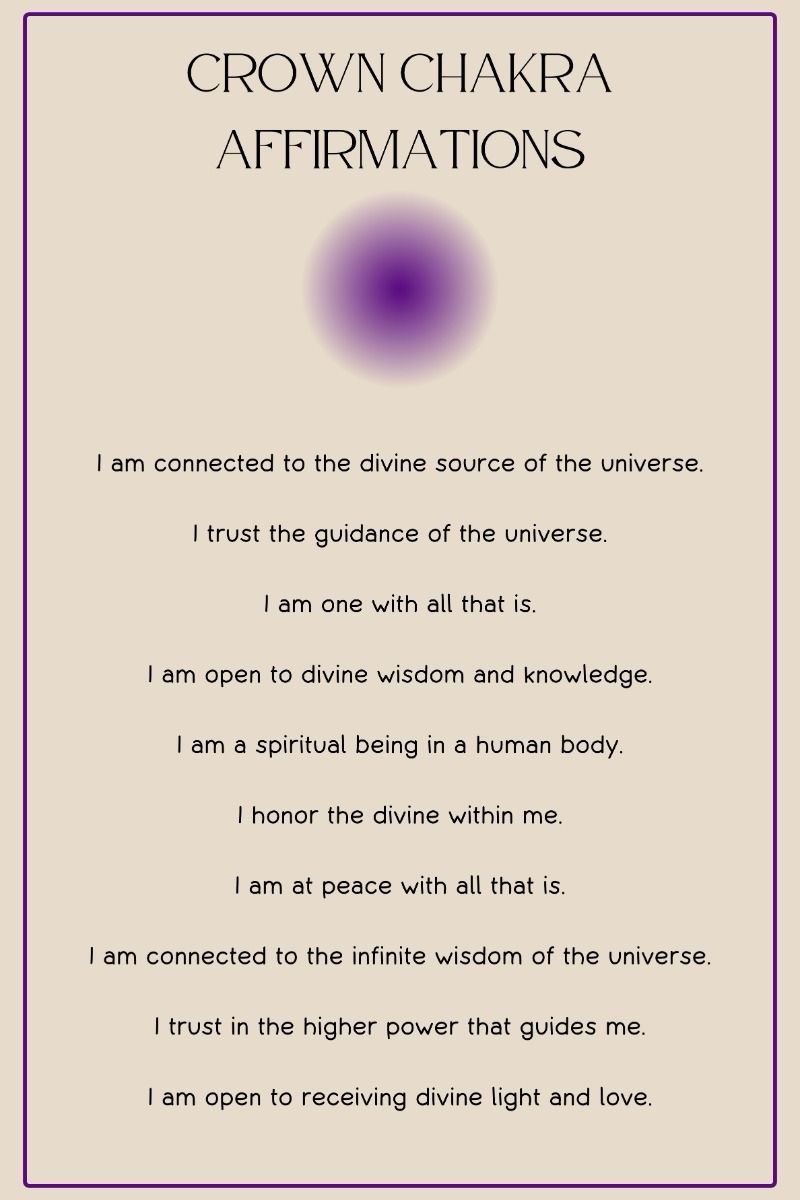
Crown Chakra: Your Connection to the Divine

At the top of the chakra system lies the Crown Chakra, known in Sanskrit as Sahasrara, meaning “thousand-petaled lotus.” Located at the crown of the head, this chakra represents spiritual connection, enlightenment, and the vastness of the universe. It is the bridge between your individual self and something greater—whether you see it as divine energy, the universe, or pure consciousness.

If the Third Eye Chakra is about seeing truth, the Crown Chakra is about becoming one with it. It is where wisdom, peace, and transcendence reside.


A Glimpse into the History

The Crown Chakra has long been associated with higher states of consciousness. In Hindu and Buddhist traditions, it is linked to spiritual awakening and enlightenment, symbolizing the dissolution of ego and the merging with universal energy. In many depictions, saints, sages, and deities are shown with halos—representing an open and radiant Crown Chakra.

The color violet or white is associated with this chakra, signifying purity, clarity, and divine wisdom. Its element is pure consciousness, beyond the physical and material world.


Signs Your Crown Chakra May Be Blocked

When your Crown Chakra is blocked or imbalanced, you may feel disconnected—from yourself, others, or a sense of purpose. Here are some signs:

Feeling Disconnected from Life’s Meaning: Struggling with a sense of purpose or questioning existence

Lack of Inspiration: Feeling uninspired, unmotivated, or stuck in daily routines without deeper fulfillment

Closed-Mindedness: Rejecting new ideas, feeling spiritually disconnected, or resisting growth

Chronic Stress or Overwhelm: An overactive mind with constant anxiety about the unknown

Physical Symptoms: Headaches, dizziness, trouble sleeping, or feeling mentally drained

An overactive Crown Chakra may lead to feeling detached from reality, overly focused on spirituality while neglecting the physical world, or experiencing an inflated sense of superiority. Balance is key!


How to Unblock and Balance Your Crown Chakra

Unlike other chakras, which are balanced through action, the Crown Chakra requires stillness, surrender, and trust. Here’s how to align with it:

1. Meditate Daily: The best way to connect with the Crown Chakra is through meditation—sitting in stillness and allowing yourself to be present.

2. Spend Time in Silence: Disconnect from distractions and allow space for inner wisdom to emerge.

3. Connect with Nature: Watch the sunrise, stargaze, or simply sit in nature to feel connected to something greater.

4. Practice Gratitude: Appreciate the beauty of life, both big and small. Gratitude raises your energy and deepens your connection.

5. Seek Spiritual Knowledge: Read spiritual texts, listen to wisdom teachings, or explore different perspectives on life’s mysteries.

6. Use Essential Oils: Frankincense, lavender, and sandalwood can help promote relaxation and higher awareness.

7. Affirmations: Use statements like “I am connected to divine wisdom” and “I trust the universe’s plan for me.”

8. Let Go of Control: The Crown Chakra reminds us that not everything is meant to be understood—sometimes, we must surrender and trust in the unknown.


Final Thought

The Crown Chakra is your gateway to peace, wisdom, and divine connection. When balanced, you feel a deep sense of purpose, inner peace, and trust in the flow of life.

You are not just a drop in the ocean—you are the ocean in a drop.

You were meant to lead with faith—trust in the journey, and allow yourself to expand beyond limits.

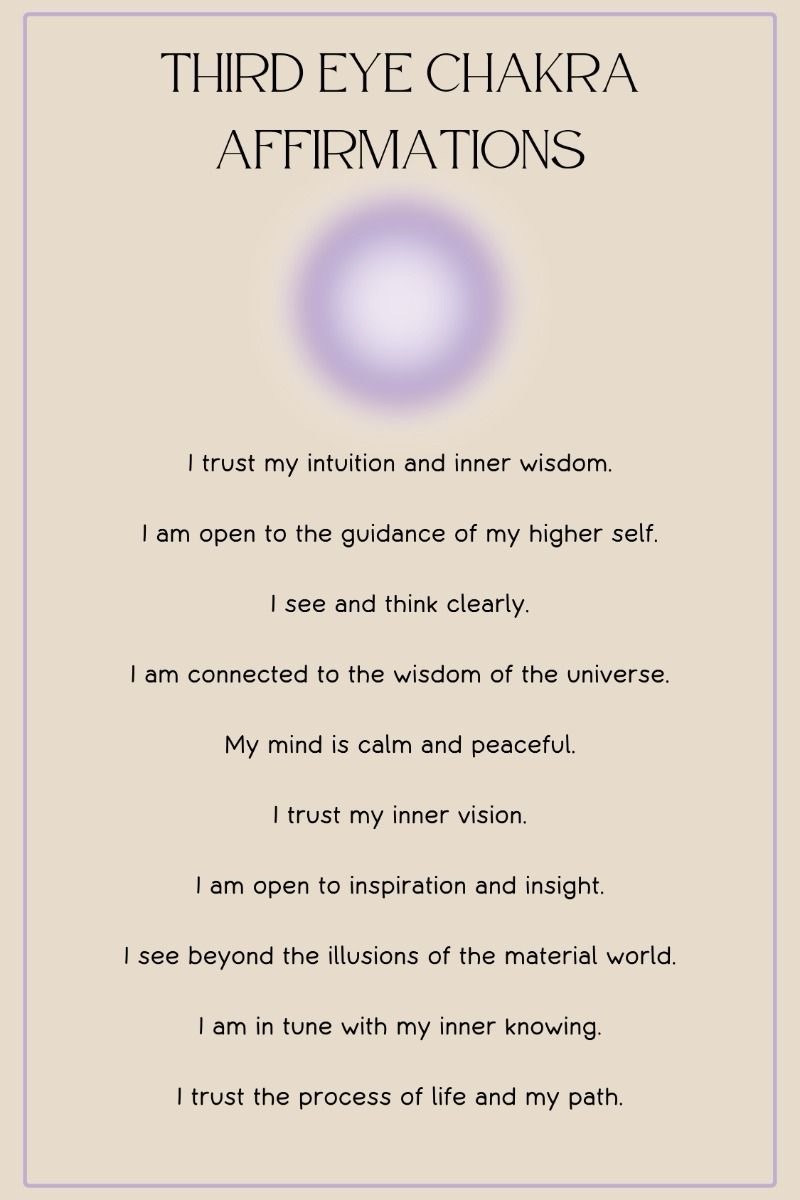
Third Eye Chakra: The Seat of Intuition and Inner Wisdom

As we move higher, we reach the Third Eye Chakra, known in Sanskrit as Ajna, meaning “to perceive” or “to command.” Located between the eyebrows, this chakra is the center of intuition, insight, and inner wisdom. It allows us to see beyond the physical world and connect with our deeper knowing.

If the Throat Chakra is about speaking truth, the Third Eye Chakra is about seeing truth—within yourself and beyond illusions. It governs clarity of thought, spiritual awareness, and the ability to trust your intuition.


A Glimpse into the History

The Third Eye has been a symbol of higher consciousness across many ancient traditions. In Hinduism, it represents divine sight, associated with wisdom and enlightenment. In Buddhism, it signifies awakening and the ability to perceive reality beyond illusion. Many cultures have depicted the Third Eye as a portal to inner knowledge and deeper truths.

The Ajna Chakra is represented by a two-petaled lotus and is associated with the color indigo, symbolizing deep perception, wisdom, and imagination. Its element is light, illuminating both the inner and outer worlds.


Signs Your Third Eye Chakra May Be Blocked

When your Third Eye Chakra is blocked or imbalanced, you may struggle with doubt, confusion, or an inability to trust your inner voice. Here are some signs:

Feeling Lost or Directionless: Difficulty making decisions or seeing your life path clearly

Overthinking & Mental Fog: Constant worry, overanalyzing, or lack of focus

Disconnected from Intuition: Doubting yourself or ignoring your gut feelings

Limited Imagination or Creativity: Struggling to visualize possibilities or lacking inspiration

Physical Symptoms: Frequent headaches, eye strain, dizziness, or sinus issues

An overactive Third Eye Chakra may cause paranoia, delusions, or feeling disconnected from reality. Balance is key!


How to Unblock and Balance Your Third Eye Chakra

To strengthen and harmonize your Third Eye Chakra, you must trust your inner wisdom and embrace stillness. Here’s how:

1. Practice Meditation & Visualization: Close your eyes and focus on your inner world. Visualizing a deep indigo light at your Third Eye can enhance clarity and intuition.

2. Listen to Your Inner Voice: Start trusting your gut instincts instead of seeking constant external validation.

3. Engage in Mindfulness: Spend time in nature, journal your thoughts, and observe the world without judgment.

4. Limit External Noise: Reduce distractions like excessive social media or overconsumption of negative news. Clarity comes in stillness.

5. Consume Brain-Nourishing Foods: Eat purple and blue foods like blueberries, grapes, and dark chocolate to support cognitive function.

6. Do Yoga Poses for the Third Eye: Try Child’s Pose (Balasana) and Downward Dog (Adho Mukha Svanasana) to encourage mental clarity.

7. Affirmations: Use statements like “I trust my intuition” and “I see clearly beyond illusion.”

8. Explore Dream Work: Pay attention to your dreams—they are often messages from your subconscious.


Final Thought

Your Third Eye Chakra is the key to inner wisdom—it helps you see beyond fear, doubt, and illusion to uncover the truth within.

When balanced, you trust yourself, make decisions with clarity, and feel connected to a deeper understanding of life. The answers you seek are already within you—you just have to learn to listen.

You were meant to see with clarity—I trust in your vision, and let your intuition guide the way.

Throat Chakra: The Power of Truth, Expression, and Authenticity

Moving upward, we arrive at the Throat Chakra, known in Sanskrit as Vishuddha, meaning “pure” or “purification.” This chakra is located at the center of the throat and is the gateway between your heart and mind, governing communication, self-expression, and truth.

If the Heart Chakra is about feeling and receiving love, the Throat Chakra is about speaking that love into existence. It is the center of your voice—your ability to express your thoughts, emotions, and beliefs with clarity and confidence.


A Glimpse into the History

The Throat Chakra has long been recognized in ancient spiritual traditions as the seat of truth. Symbolized by a sixteen-petaled lotus, it is associated with the color blue, representing wisdom, clarity, and depth. Its element is ether (space), which signifies limitless expression and expansion.

In yogic philosophy, Vishuddha is considered the purification center—where we cleanse ourselves of dishonesty, repression, and fear, allowing only truth to remain. Many traditions believe that speaking one’s truth aligns the soul with its highest purpose.


Signs Your Throat Chakra May Be Blocked

When your Throat Chakra is blocked or imbalanced, you may struggle to communicate honestly, fear judgment, or feel unheard. Here are some signs:

Fear of Speaking Up: Holding back opinions, avoiding difficult conversations

Inability to Express Emotions: Struggling to say how you truly feel

Feeling Unheard or Misunderstood: Thinking no one listens to you or values your words

Lying or Hiding Truths: Saying what others want to hear rather than what you truly mean

Creativity Blocks: Feeling uninspired or unable to share your creative work

Physical Signs: Sore throat, thyroid issues, jaw tension, frequent coughing

On the other hand, an overactive Throat Chakra may result in talking excessively, interrupting, gossiping, or dominating conversations. Balance is key!


How to Unblock and Balance Your Throat Chakra

To restore harmony to your Throat Chakra, you must embrace your authentic voice and allow truth to flow freely. Here’s how:

1. Speak Your Truth: Practice honest, open communication—whether in conversations, journaling, or self-reflection.

2. Sing or Chant: Vibrations help clear energetic blockages—try humming, chanting “HAM” (the Throat Chakra mantra), or simply singing along to your favorite songs.

3. Throat-Opening Yoga Poses: Try Fish Pose (Matsyasana), Shoulder Stand (Sarvangasana), and Lion’s Breath (Simhasana) to release tension in the throat.

4. Affirmations: Use statements like “My voice is powerful,” or “I speak with confidence and clarity.”

5. Hydrate & Nourish: Drink plenty of water and consume soothing blue foods like blueberries, herbal teas, and raw honey.

6. Write or Create Freely: Express yourself through writing, poetry, painting, or music—let your truth take form.

7. Listen to Yourself & Others: Practice mindful speaking and active listening. A balanced Throat Chakra allows both self-expression and the ability to truly hear others.


The Gift of the Throat Chakra

Your Throat Chakra is more than just a center for speech—it is a bridge between your thoughts and the world, between your heart and your expression. When balanced, it allows you to speak with clarity, share your creativity, and stand confidently in your truth.

Too often, we silence ourselves—out of fear, doubt, or the belief that our voice doesn’t matter. But the gift of the Throat Chakra is the ability to express who you truly are, without apology.

When your Throat Chakra is open, you:

Speak with confidence and honesty—not just what others want to hear, but what you truly feel.

Express your creativity freely—through writing, singing, storytelling, or any form of self-expression.

Set boundaries with clarity—saying “no” when needed and standing up for yourself without guilt.

Listen deeply—not just hearing others, but understanding them with an open heart.

Align with your purpose—your words reflect your truth, guiding you toward what is meant for you.

The Throat Chakra reminds you that your voice holds power—it can heal, inspire, and shape the world around you.

So speak your truth. Sing your song. Write your story. Let your voice be heard.

Heart Chakra: The Power of Love, Connection, and Healing

As we move upward through the chakras, we arrive at the Heart Chakra, known in Sanskrit as Anahata, meaning “unstruck” or “unhurt.”

Located at the center of the chest, this chakra is the bridge between the lower (physical) and upper (spiritual) chakras. It governs love, compassion, forgiveness, and emotional balance—not just in relationships with others, but also in how you love and accept yourself.

If the Solar Plexus Chakra is your fire, the Heart Chakra is your breath—it expands and contracts, giving and receiving, connecting you to the world with warmth, empathy, and truth.


A Glimpse into the History

The Heart Chakra has been recognized in ancient yogic and spiritual traditions for centuries. It is symbolized by a twelve-petaled lotus and is associated with the color green, representing renewal, harmony, and growth. Its element is air, symbolizing openness, freedom, and movement.

Many traditions, from Buddhism to Sufism, emphasize the heart as the seat of the soul, the place where divine love flows.

In yogic philosophy, it is where duality dissolves into unity, allowing us to see ourselves and others through the eyes of compassion rather than fear.


Signs Your Heart Chakra May Be Blocked

A blocked Heart Chakra can manifest as difficulty in giving or receiving love, emotional detachment, or deep-seated resentment. Here are some signs of imbalance:

Difficulty Trusting Others: Fear of vulnerability, emotional walls, or pushing people away

Holding Onto Past Hurts: Struggling with forgiveness or carrying emotional wounds

Loneliness or Isolation: Feeling disconnected from loved ones or avoiding relationships

Self-Criticism: Being hard on yourself, struggling with self-love or self-worth

Physical Signs: Heart-related issues, lung problems, poor circulation, or tension in the chest

When this chakra is closed, it can make love feel like a risk rather than a gift. On the other hand, an overactive Heart Chakra may lead to overgiving, people-pleasing, or losing yourself in relationships.


How to Unblock and Balance Your Heart Chakra

To bring harmony to the Heart Chakra, you must release past pain, open yourself to love, and allow yourself to both give and receive without fear. Here’s how:

1. Practice Self-Love: Speak kindly to yourself, engage in self-care, and honor your needs.

2. Heart-Opening Yoga: Try poses like Camel Pose (Ustrasana), Cobra Pose (Bhujangasana), and Bridge Pose (Setu Bandhasana) to expand your chest.

3. Affirmations: Use statements like “I am open to love,” or “I give and receive love freely.”

4. Forgiveness Work: Release grudges, whether toward yourself or others, to lighten your heart.

5. Breathe Deeply: Practice pranayama (breathwork) like Anulom Vilom (Alternate Nostril Breathing) to bring balance to your emotions.

6. Connect with Nature: Spend time outside, especially in green spaces, to absorb the healing energy of the Heart Chakra.

7. Wear or Surround Yourself with Green: Green represents renewal and heart-centered energy—bring it into your life through clothing, decor, or even food like spinach, avocados, and green tea.


Final Thought

Your Heart Chakra is where true connection begins—with yourself, with others, and with the world. Love is not just an emotion; it is a force, a healer, and the very essence of life itself.

When you live with an open heart, you allow love to flow freely—without fear, without resistance. You learn that love is not something you must chase; it is something you are.

You were meant to love boldly—keep your heart open, and let love move through you.

Money Isn’t Lost; It’s Transferred Into *Abundance*

We often look at money through the lens of subtraction. You swipe your card, hand over cash, and—poof—it’s gone.

There’s an almost automatic reaction of stress or scarcity, especially when the numbers in your bank account shrink.

But what if we shifted that mindset? What if, instead of seeing money as something that’s lost, we saw it as something that’s transferred into abundance?

When you spend $200 on groceries, it’s easy to focus on the dent it made in your budget. But pause for a moment. What did you receive in return? You didn’t just “lose” $200—you exchanged it for shelves stocked with food to nourish your family. You gained the convenience of not having to hunt, gather, or grow that food yourself. You have fresh produce, snacks for your kids, meals that will bring your family together around the table. That’s not a loss. That’s abundance.

Think about your morning coffee. Maybe you spend $5 at your favorite café. It’s not just coffee—it’s a warm ritual that starts your day, crafted by someone else so you didn’t have to grind the beans, boil the water, and perfect the brew. That small purchase buys comfort, convenience, and a little moment of joy.

Money is always an exchange. It’s never just disappearing into the void. It’s flowing—transforming into goods, services, experiences, and opportunities. The key is to recognize what it’s transforming into.

When we approach spending with gratitude for what we receive, the stress tied to money begins to loosen. Instead of thinking, “I had $200, and now I don’t,” we can think, “I’ve exchanged $200 for nourishment, convenience, and the ability to provide for my family.”

This mindset shift doesn’t ignore the importance of budgeting or financial responsibility. It simply reframes how we view the natural flow of money in and out of our lives.

By seeing spending as an investment in abundance—whether it’s food, shelter, education, or small joys—we soften the grip of scarcity thinking.

Now, just to be clear—I’m not saying,

“Okay, go wild and buy everything your heart desires!” — (“Put the online shopping cart down…don’t say YES to everything in your amazon “save for later” list.)

I’m simply offering a new way to look at your money—a way to encourage a healthier, more abundant relationship with it. One where spending isn’t just a loss, but a conscious exchange that brings value into your life.

So the next time you feel that sting of spending, ask yourself:

What abundance did I just receive in return?

This shift of mindset will also allow you to see how many blessings truly surround you.